


ГДЗ по английскому языку 10 класс Афанасьева Spotlight Базовый уровень страница - 22

Авторы: О. В. Афанасьева, Д. Дули, И. В. Михеева, Б. Оби, В. Эванс
Серия: Spotlight
Тип книги: Учебник
Год: 2015-2024


 Премиум

### Итоговый ответ
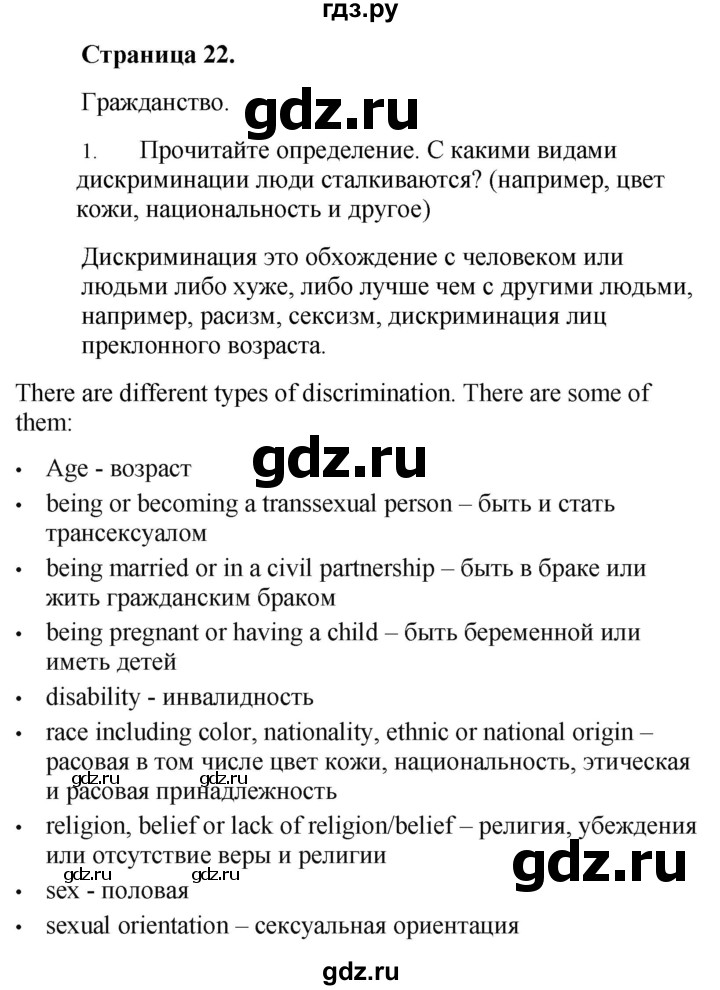
#### 1. Kinds of discrimination
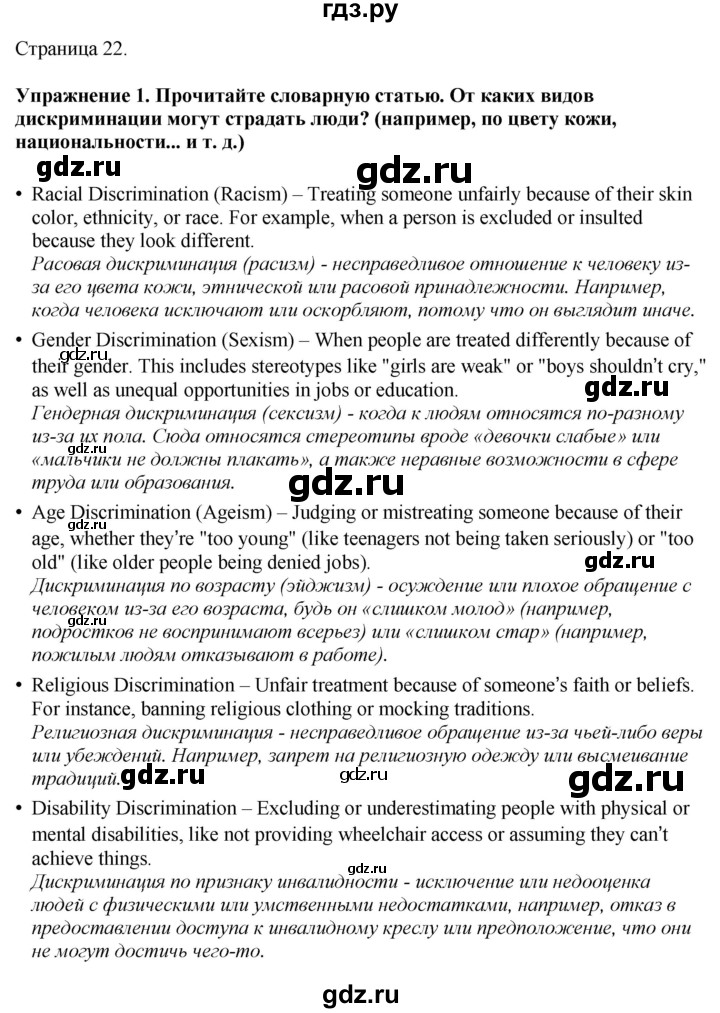
People can suffer from discrimination based on:
* **skin colour / race** (раса / цвет кожи — *racism*)
* **nationality / ethnic origin** (национальность / происхождение)
* **gender / sex** (пол — *sexism*)
* **age** (возраст — *ageism*)
* **appearance / style** (внешность / стиль одежды)
* **religion / beliefs** (религия / убеждения)
* **disability / physical abilities** (физические возможности / инвалидность — *ableism*)
* **social status / wealth** (социальное или материальное положение)
---
#### 2a. Case Studies (Who is discriminating and why?)
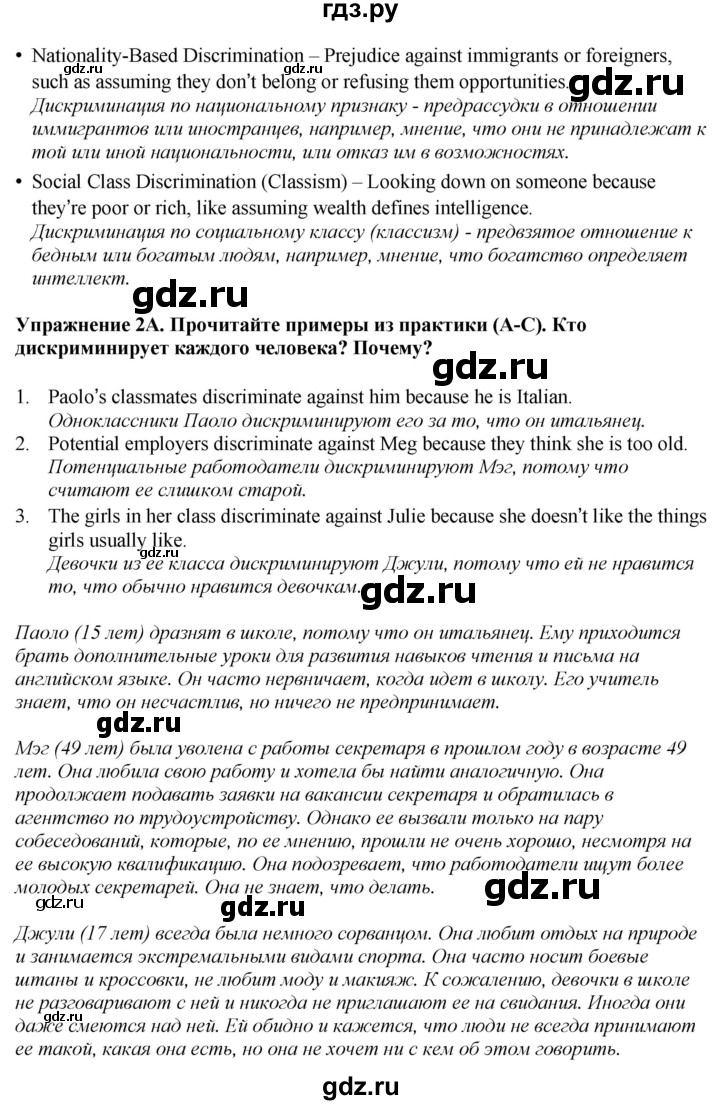
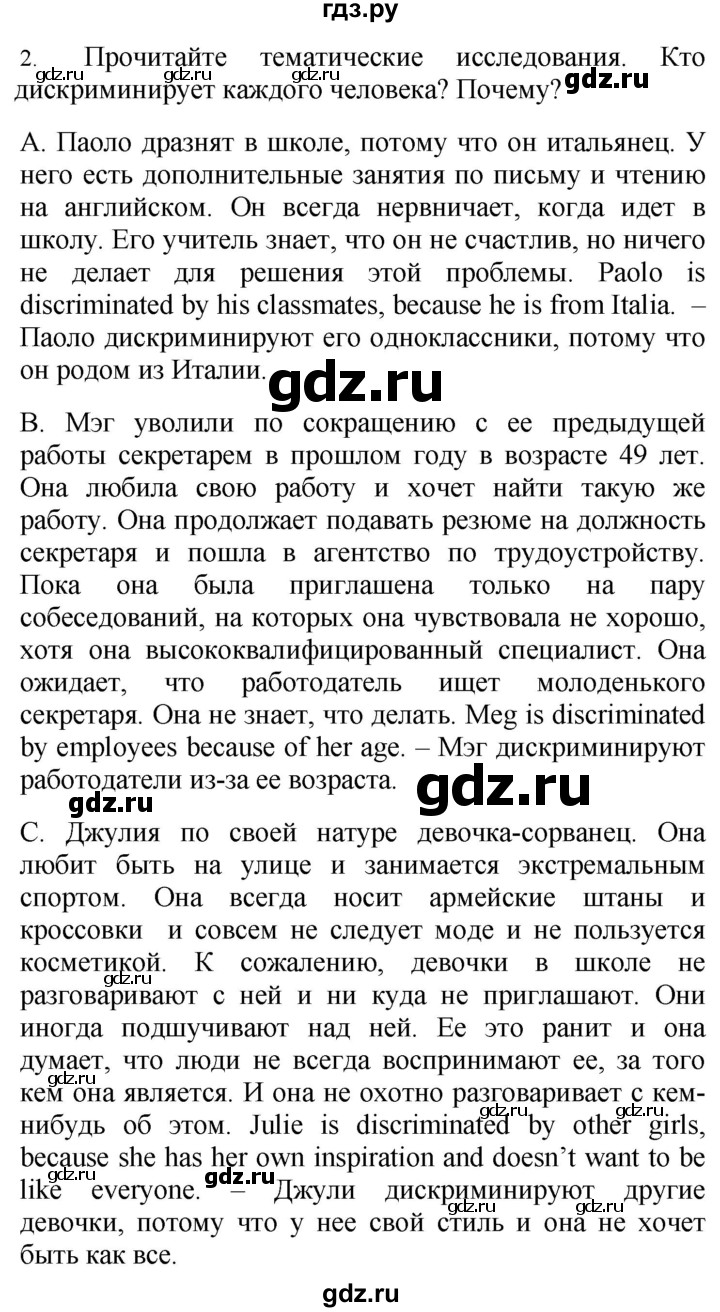
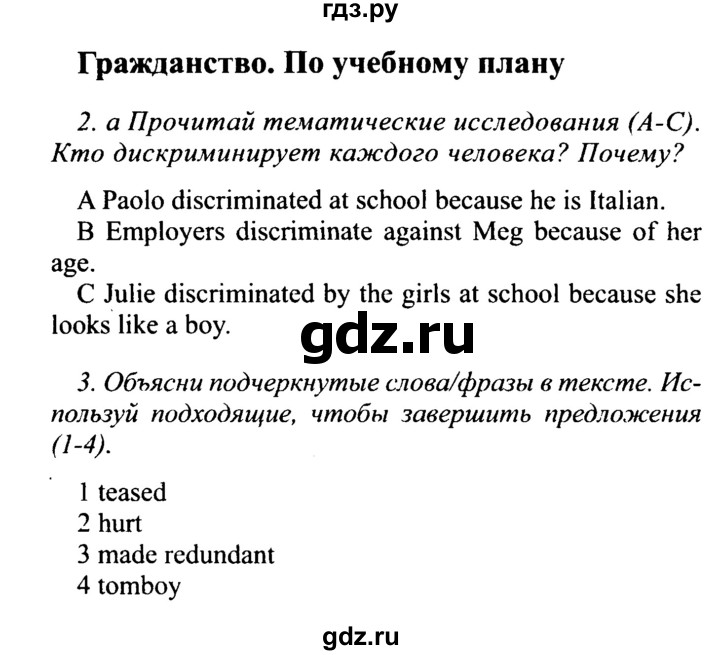
* **A (Paolo):** Other students/classmates are discriminating against Paolo because of his nationality (he is Italian) and his language difficulties.
* **B (Meg):** Potential employers are discriminating against Meg because of her age (she is 49 years old).
* **C (Julie):** The girls at her school are discriminating against Julie because of her appearance and interests (she is a tomboy and doesn't follow typical fashion or make-up trends).
---
#### 2b. Advice for Paolo, Meg, and Julie
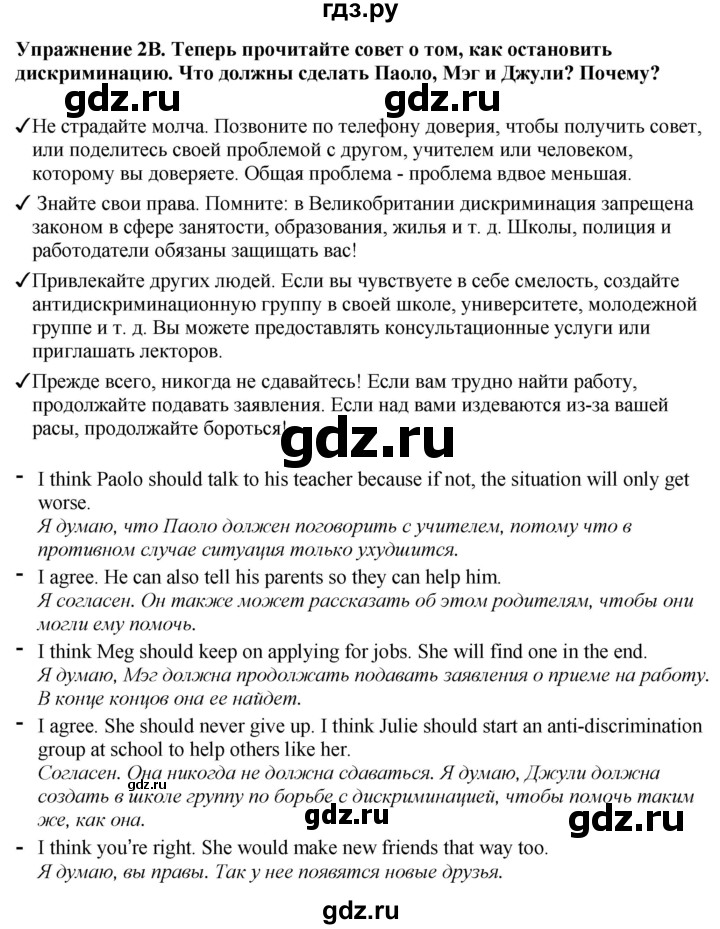
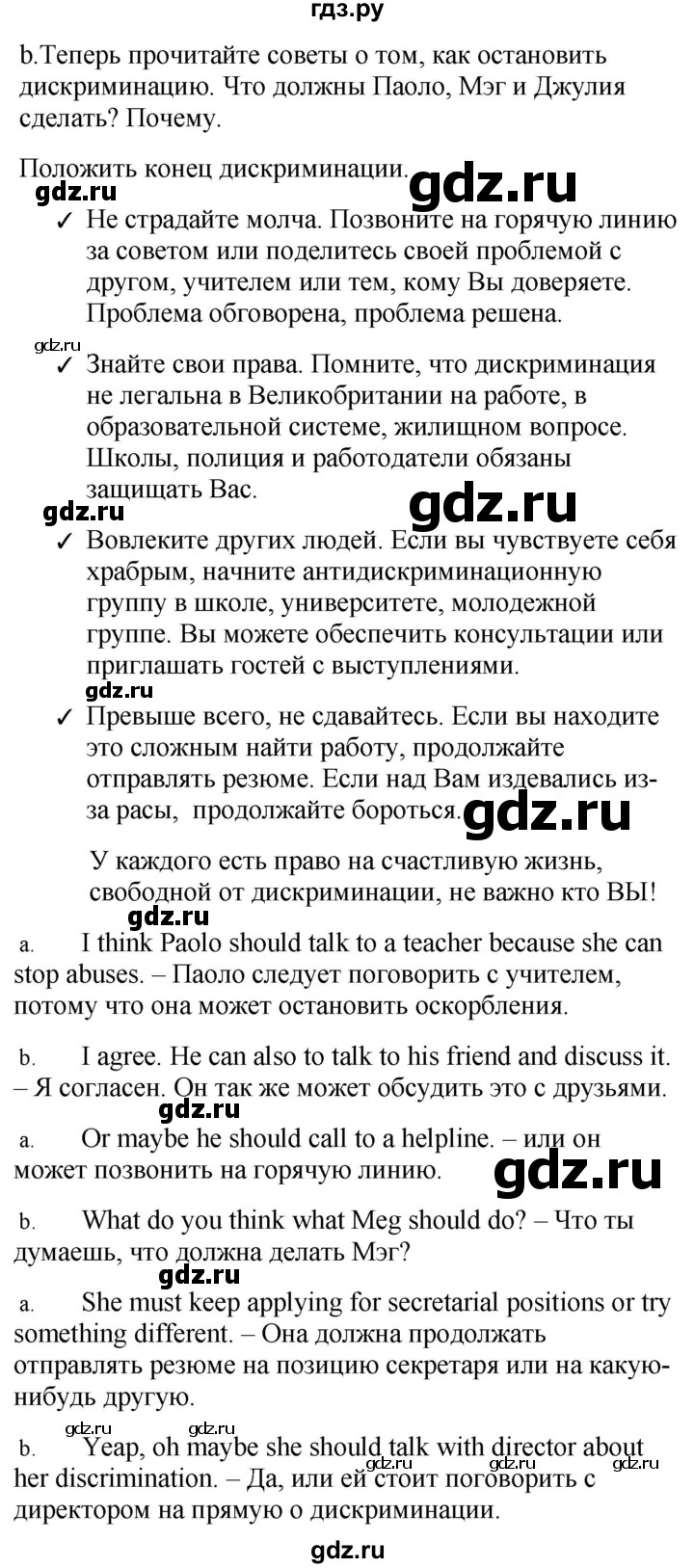
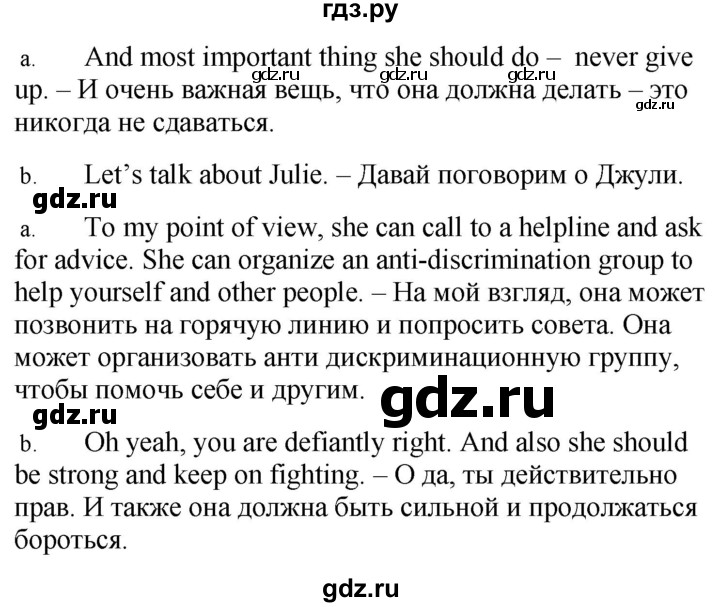
* **Paolo:** He should not suffer in silence and talk to a teacher, school counselor, or his parents about the bullying because teachers and schools have a legal responsibility to protect students from discrimination. He could also help start an anti-discrimination group at school.
* **Meg:** She should keep applying for jobs and not give up, as well as remember her rights because age discrimination in employment is illegal in Great Britain. If needed, she could seek legal advice or call a helpline.
* **Julie:** She should share her problem with a close friend, parents, or a teacher to get emotional support. She can also look for friends outside of school who share her passion for extreme sports and outdoor activities.
---
#### 3. Explaining words & Completing sentences
**Definitions (Значения слов):**
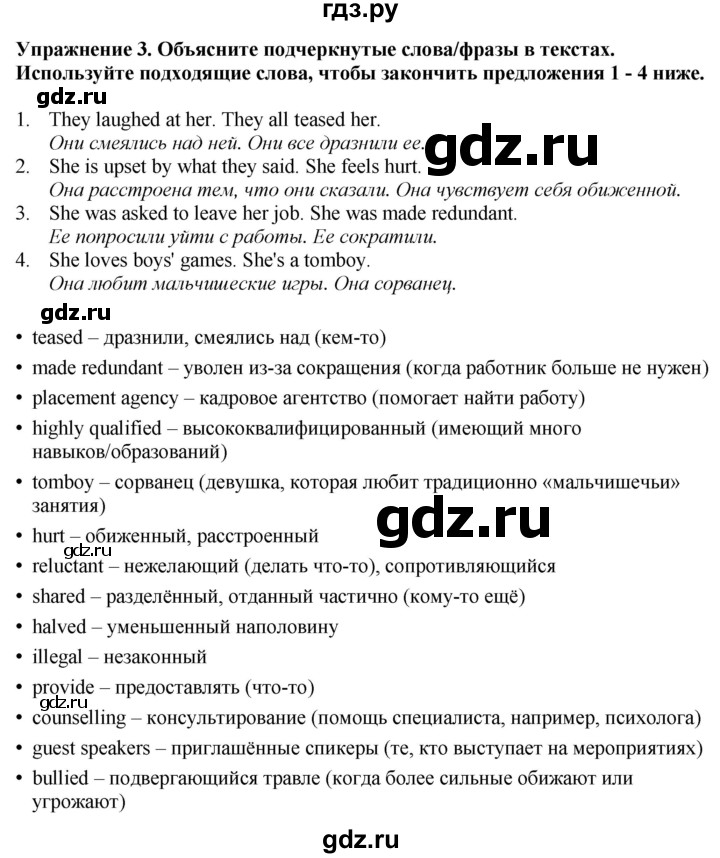
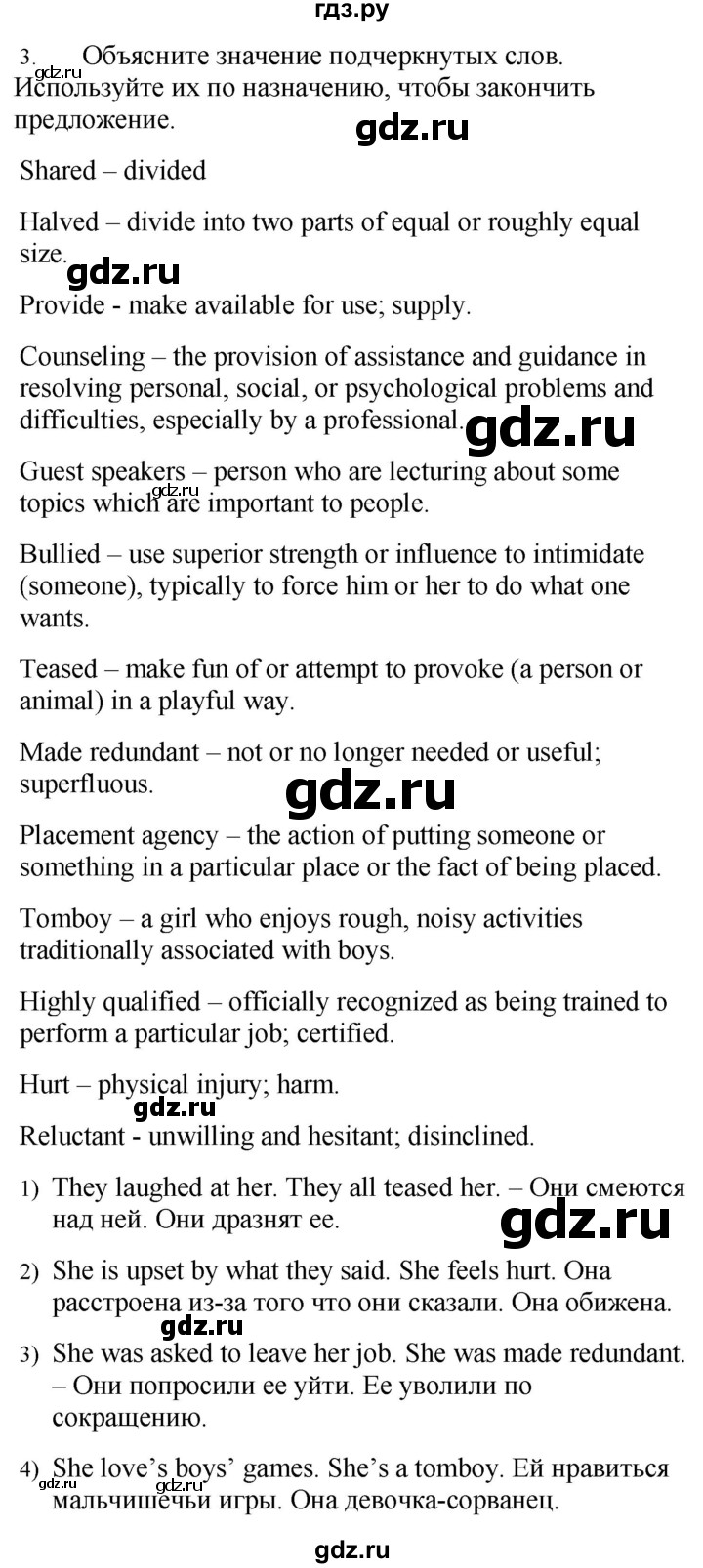
* **teased / made fun of** — laughed at unkindly, mocked (дразнили, высмеивали).
* **made redundant** — dismissed from a job because the position is no longer needed (уволена по сокращению штата).
* **tomboy** — a girl who behaves or dresses in a way traditionally associated with boys (пацанка, сорванец).
* **hurt** — emotionally upset, pained, or offended (обижена, задета за живое).
**Completed sentences:**
1. They laughed at her. They all **teased / made fun of** her.
2. She is upset by what they said. She feels **hurt**.
3. She was asked to leave her job. She was **made redundant**.
4. She loves boys' games. She's a **tomboy**.
---
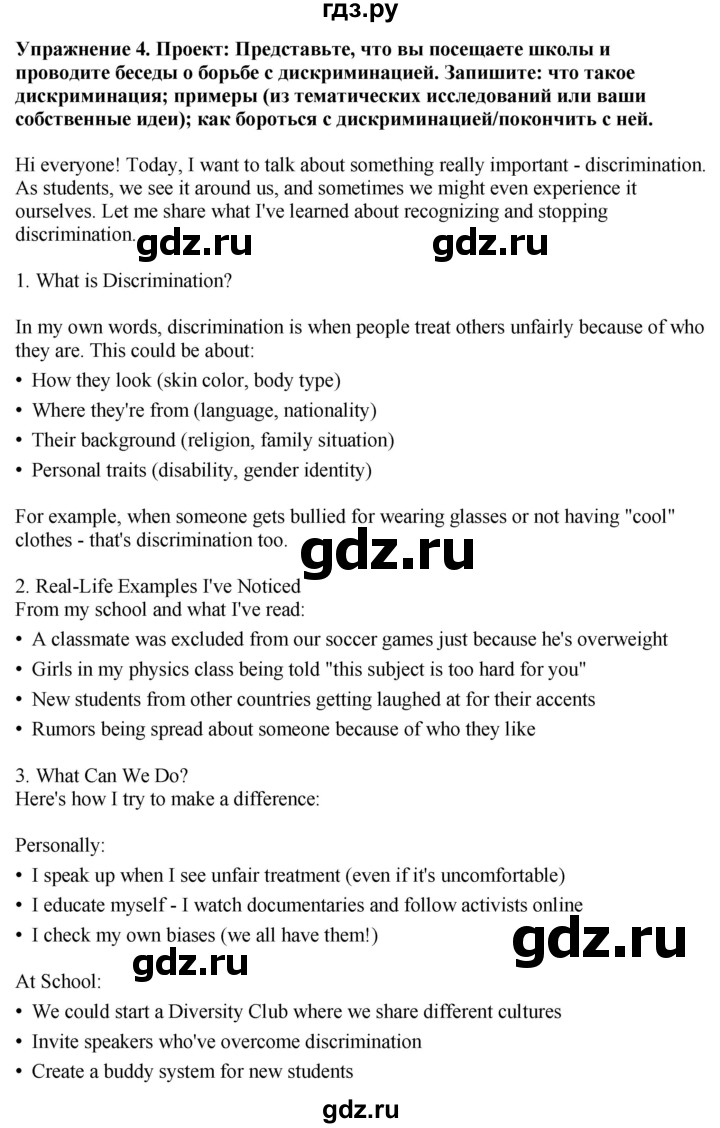
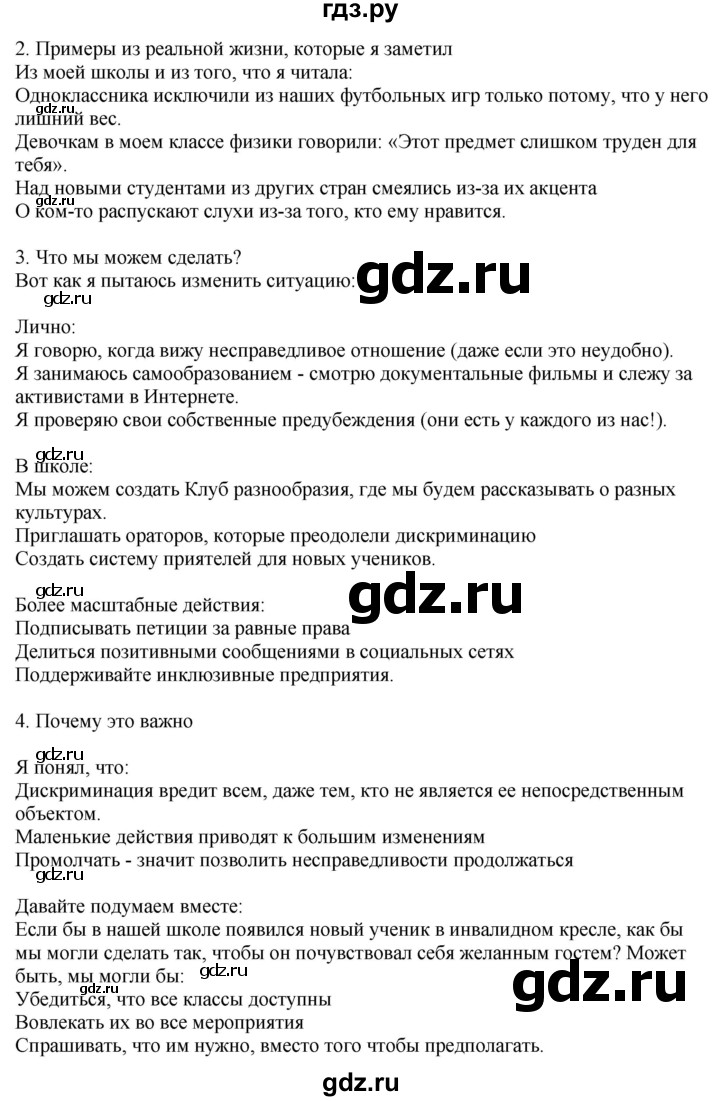
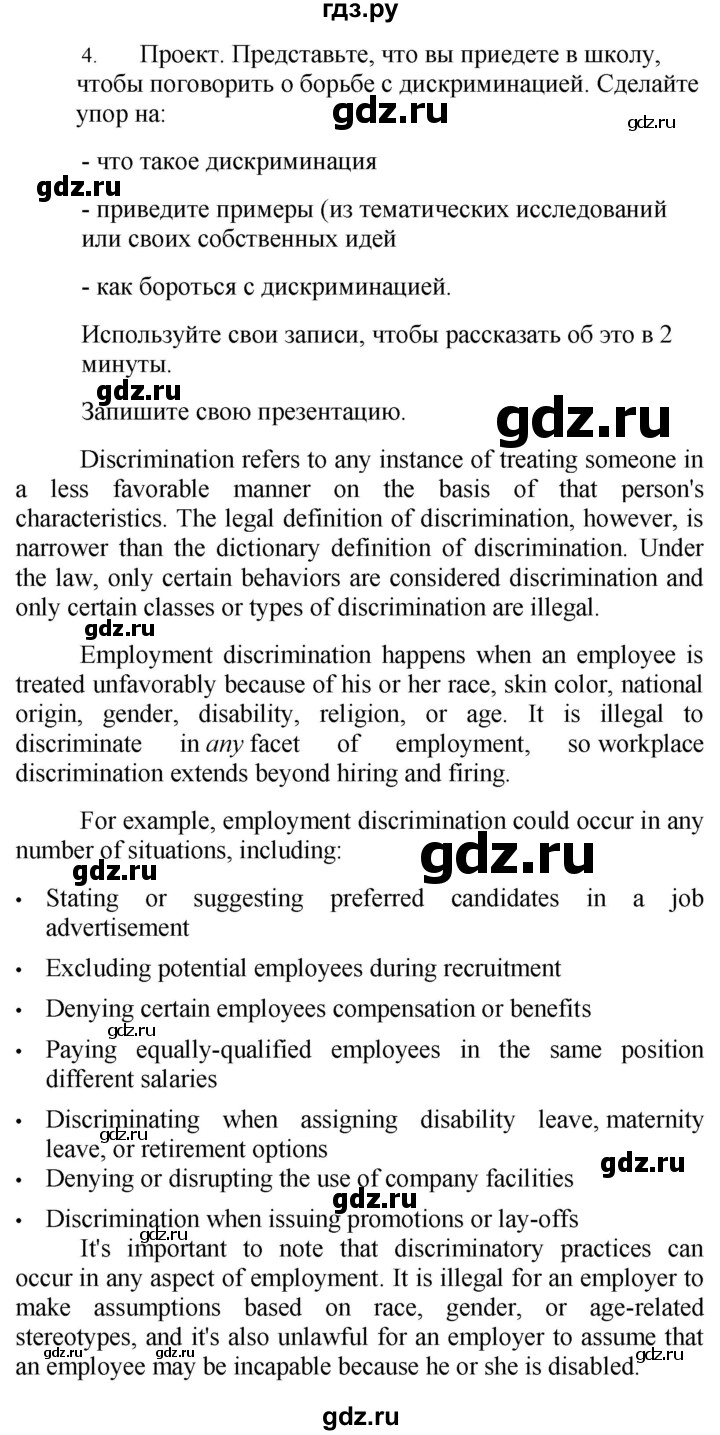
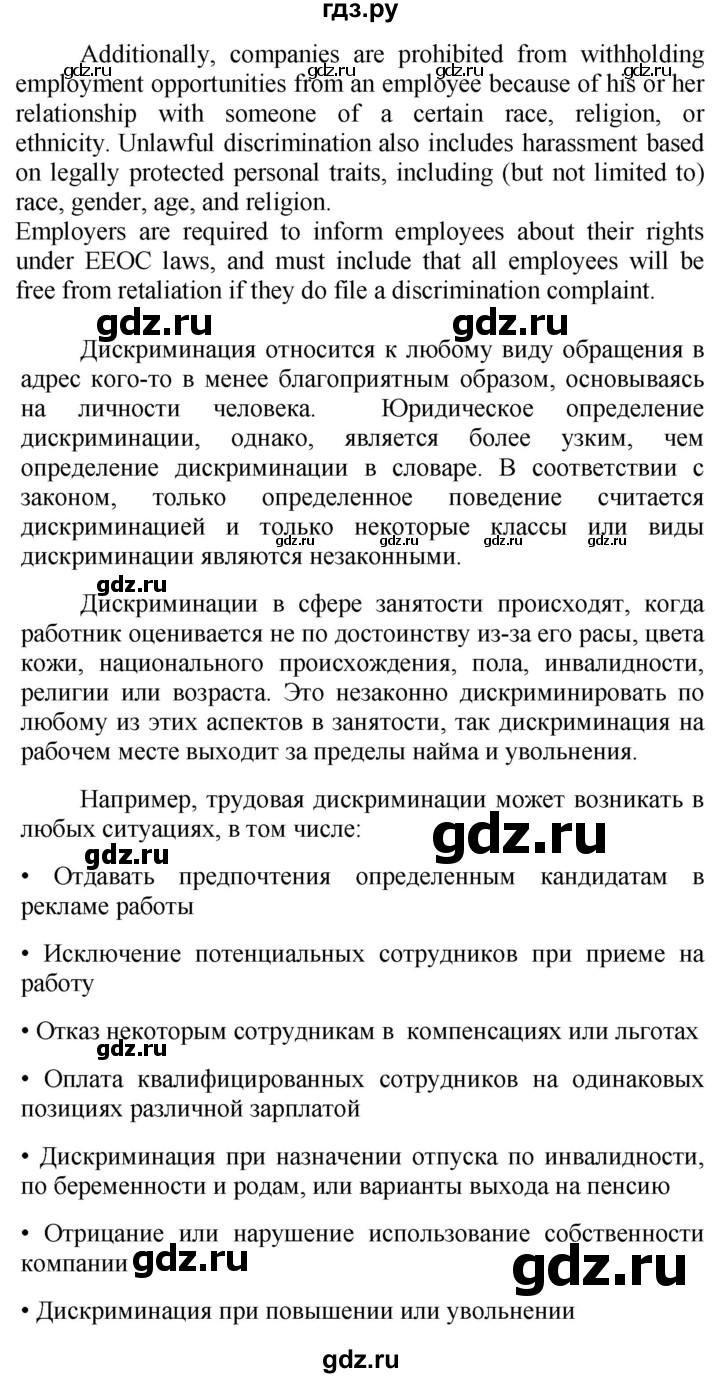
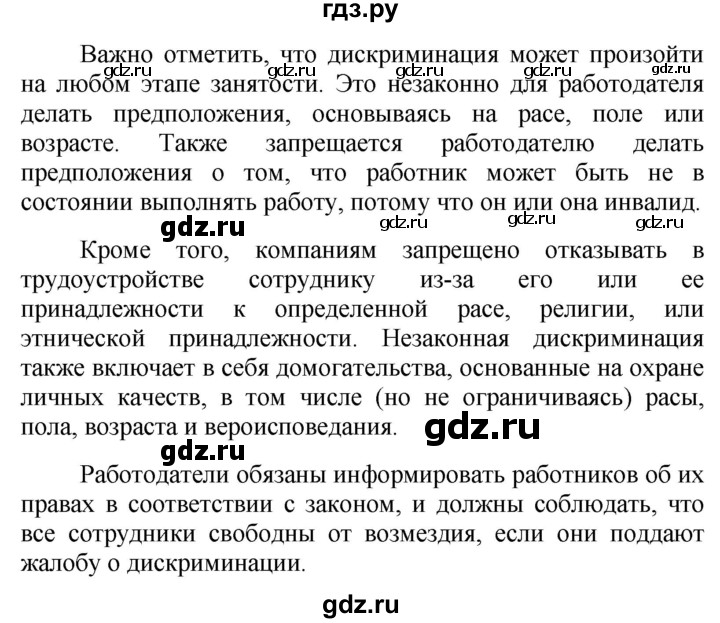
#### 4. Project: Two-minute Talk & Notes
**Presentation Notes:**
1. **Definition:** Discrimination is treating someone unfairly or unequally because of who they are (race, age, gender, appearance, nationality, etc.).
2. **Examples:**
* Bullying a foreign student at school (nationality).
* Not hiring a qualified specialist because they are over 40 (ageism).
* Excluding someone because of their style or hobbies (appearance/gender stereotypes).
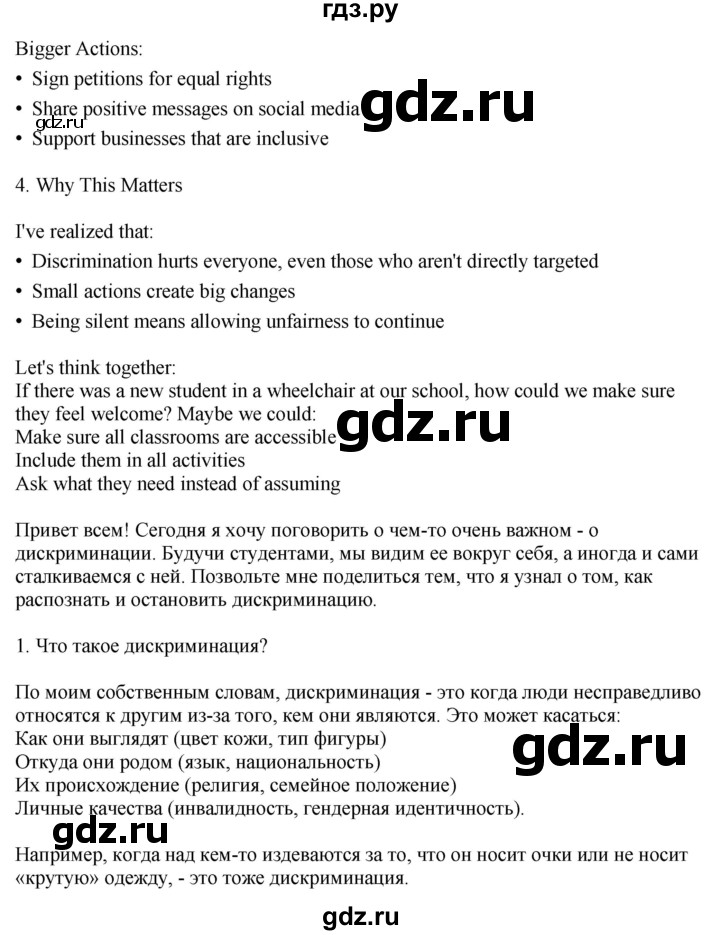
3. **How to fight it:**
* Speak out and don't suffer in silence (talk to teachers, parents, call helplines).
* Know your legal rights (discrimination is illegal).
* Create support groups and raise awareness.
* Stand up for others who are being bullied.
**Speech (Пример двухминутного выступления):**
> "Hello everyone! Today, I’d like to talk about a very important issue that affects many people around the world — discrimination.
>
> What is discrimination? In simple words, it means treating a person unfairly or disrespectfully just because they are different. People often face discrimination because of their race, nationality, age, gender, or even the way they dress.
>
> For instance, a teenager might be bullied at school just because of their accent or nationality. An experienced and talented professional might be rejected at job interviews simply because of their age. Someone might be ignored and laughed at because they don't follow the latest fashion trends.
>
> All of these situations are unfair, harmful, and unacceptable. So, how can we put an end to discrimination?
> First, never suffer in silence. If you are being bullied or mistreated, reach out to someone you trust — a teacher, a parent, or a helpline.
> Second, know your rights. Discrimination is illegal in education, employment, and public life.
> Finally, stand up for each other. If you see someone being excluded or teased, support them. Start anti-bullying clubs, invite speakers, and promote kindness.
>
> Remember: everyone deserves respect and the right to live freely and happily, no matter who they are. Thank you for your attention!"
---
### Подробное объяснение
1. **Задание 1:** Опираясь на определение (*treating a person less fairly*), мы расширяем список факторов: помимо *skin colour* (расизм) и *age* (эйджизм), люди сталкиваются с дискриминацией по признаку пола (*gender*), вероисповедания (*religion*), особенностей здоровья (*disability*) и стиля жизни (*appearance*).
2. **Задание 2a:** В каждом тексте четко указана причина предвзятого отношения:
* Паоло — итальянец, ему тяжело дается английский (дискриминация по национальности).
* Мэг — 49 лет, работодатели отдают предпочтение молодым кадрам (дискриминация по возрасту).
* Джули — не интересуется косметикой и платьями, ведет себя активно, как «мальчишка» (неприятие индивидуальности и гендерные стереотипы).
3. **Задание 2b:** Советы в рамке (*Put an end to discrimination!*) предлагают конкретные шаги: *Don't suffer in silence*, *Know your rights*, *Never give up*. Мы применяем эти рекомендации к конкретной ситуации каждого героя.
4. **Задание 3:** Подбираем точные лексические эквиваленты из текстов:
* *laughed at* = *made fun of* или *teased* (в тексте встречаются оба варианта);
* *upset* = *hurt*;
* *asked to leave her job* = *made redundant*;
* *loves boys' games / tomboyish behavior* = *tomboy*.
5. **Задание 4:** Структура выступления для устной речи построена логично: введение с определением $\rightarrow$ жизненные примеры $\rightarrow$ действенные решения $\rightarrow$ яркое заключение с призывом к взаимному уважению.
Спасибо за оценку!

Открой больше возможностей
Войди через VK — задавай вопросы ИИ и сохраняй ГДЗ в избранное
