


ГДЗ по английскому языку 8 класс Баранова Starlight Углубленный уровень страница - 98

Авторы: Баранова К.М., Дули Д., Копылова В.В., Мильруд Р.П., Эванс В.
Серия: Starlight
Тип книги: Учебник
Год: 2017-2023
Рекомендуем посмотреть


Подробное решение страница № 98 по английскому языку Starlight для учащихся 8 класса Starlight Углубленный уровень, авторов Баранова, Дули, Копылова, Мильруд, Эванс 2017-2023
Ниже представлены готовые ответы и разбор всех заданий со страницы **98** учебника **Starlight 8 (Higher education)**.
---
### Итоговый ответ
#### **Vocabulary: Higher education**
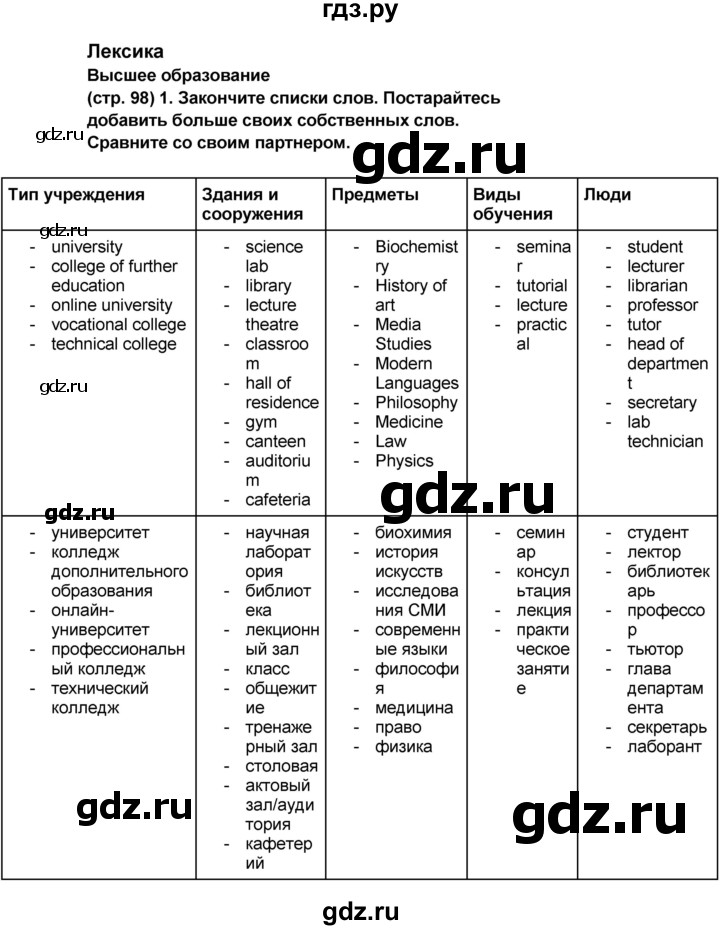
**Exercise 1. Complete the word lists**
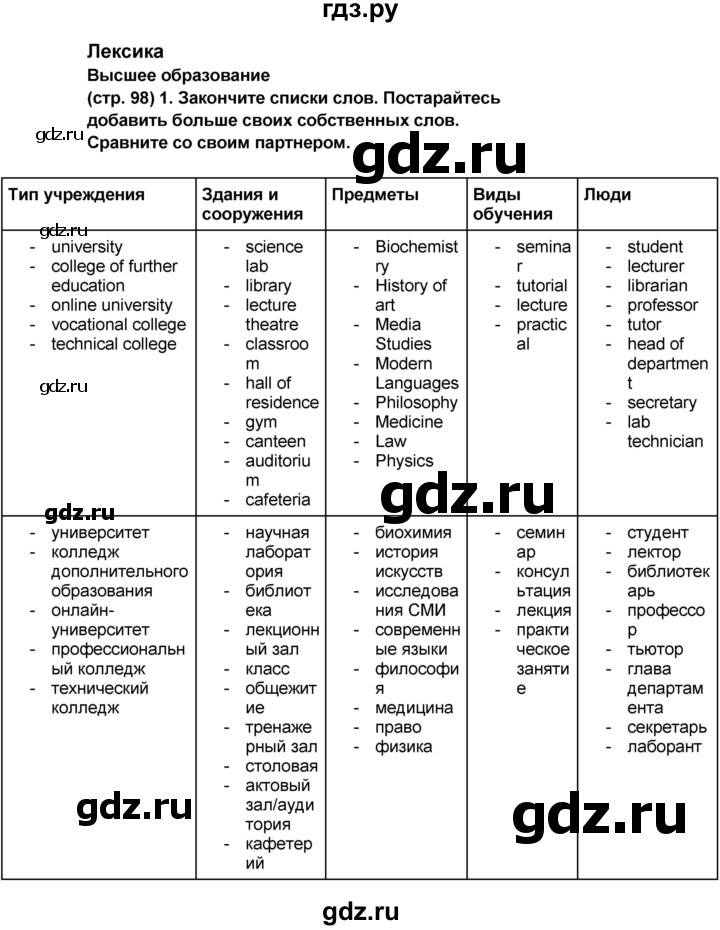
* **Institutions (Учебные заведения):** university, college of further education, *online university*, *vocational college* (свои примеры: *academy*, *business school*).
* **Buildings / Facilities (Здания и инфраструктура):** science lab, library, *lecture theatre*, *classroom*, *hall of residence*, *gym*, *canteen* (свои примеры: *computer lab*, *campus*).
* **Subjects (Предметы / Дисциплины):** Biochemistry, History of Art, *Media Studies*, *Modern Languages*, *Philosophy*, *Medicine* (свои примеры: *Law*, *Economics*).
* **People (Люди):** student, lecturer, *librarian*, *professor*, *tutor*, *head of department* (свои примеры: *undergraduate*, *dean*).
* **Types of learning (Форматы обучения):** seminar, tutorial, *lecture* (свои примеры: *workshop*, *online course*, *distance learning*).
---
#### **Speaking**
**Exercise 2**
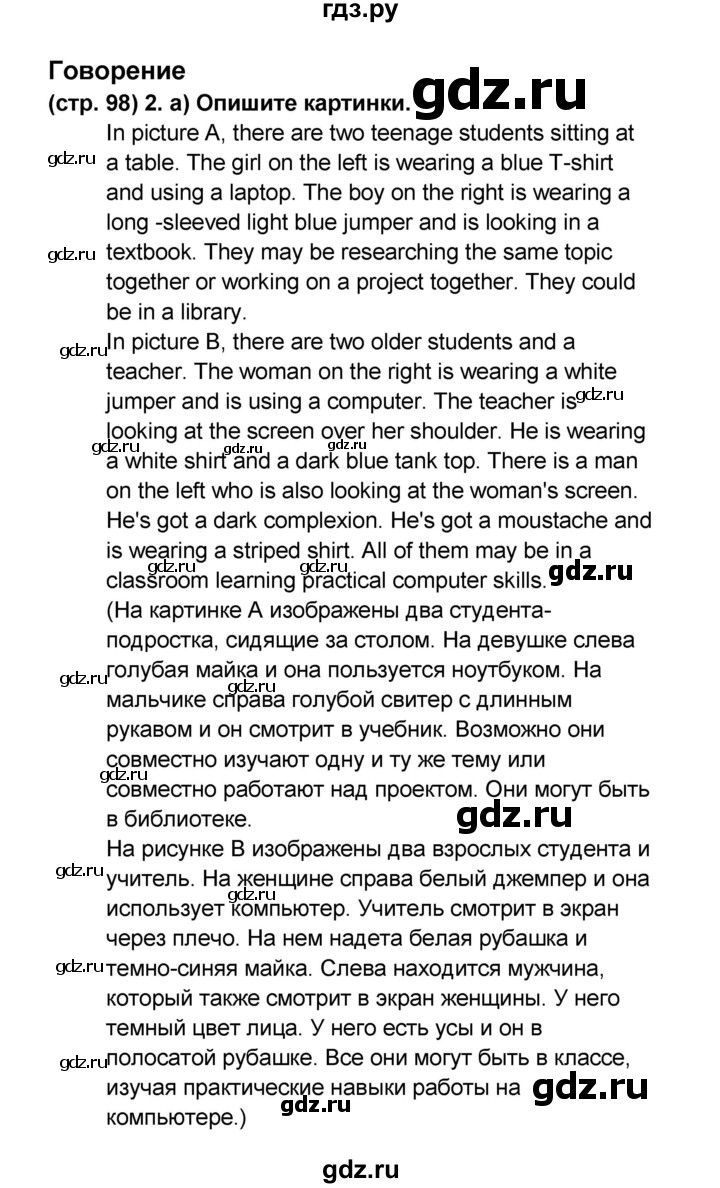
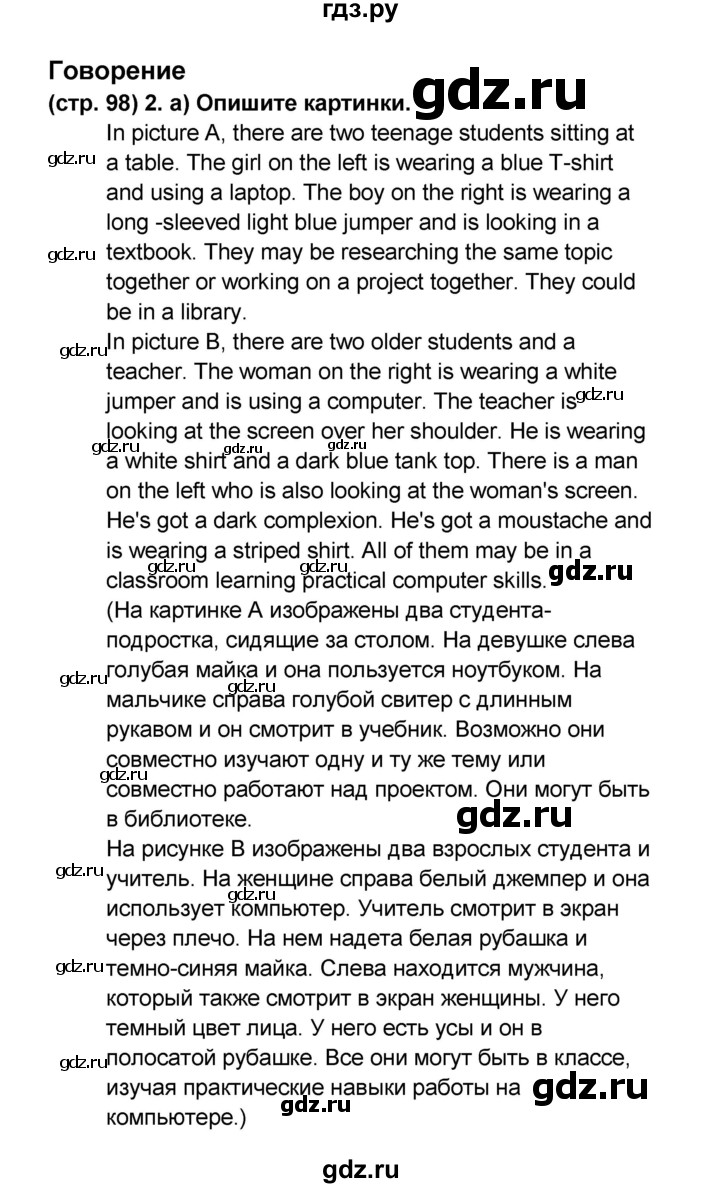
* **a)** **Sample Description (Pictures A & B):**
* *In picture A, we can see a large lecture theatre filled with students listening attentively to a lecturer and taking notes.*
* *In picture B, a student is studying individually using a laptop/computer at home or in a library.*
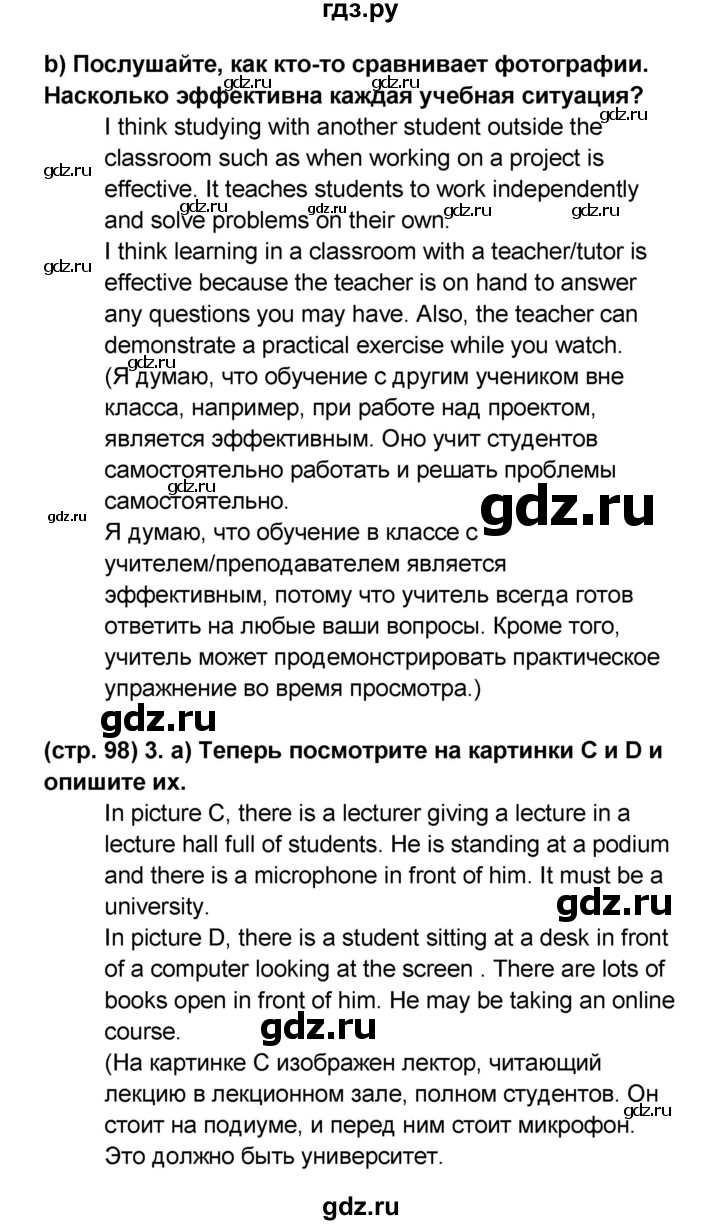
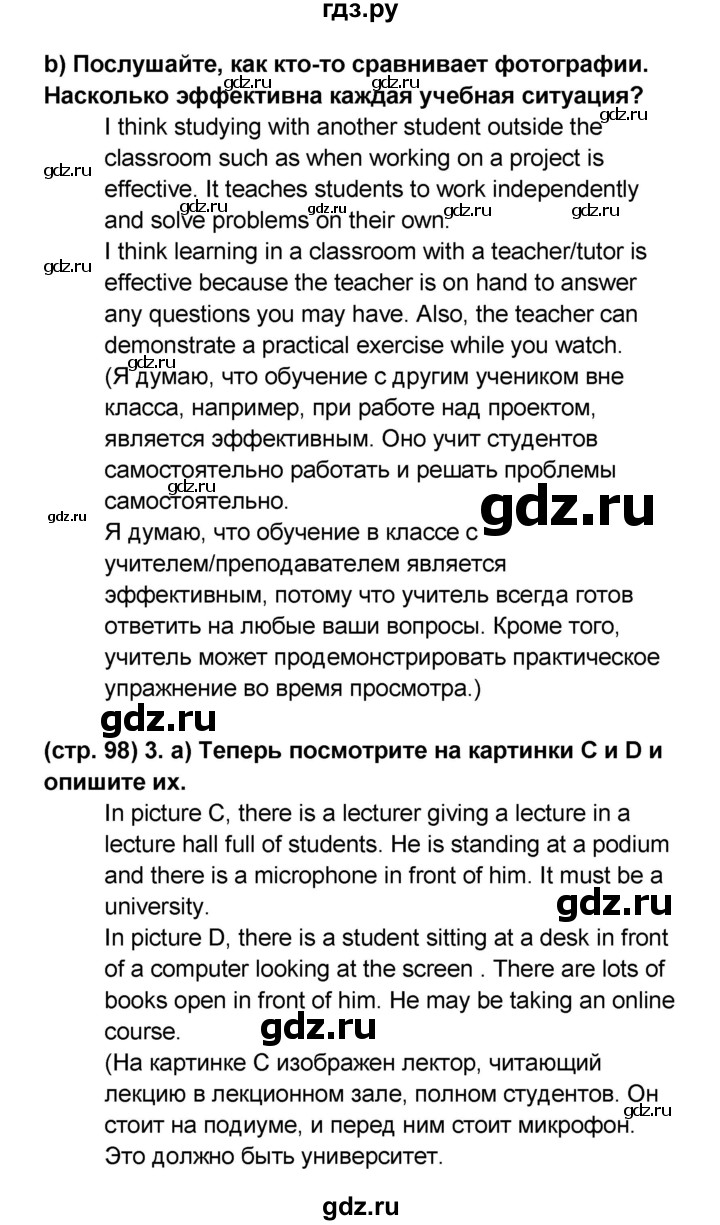
* **b)** **How each learning situation is effective:**
* *Lectures are effective because an expert gives structured information, an overview of main themes, and a reading list for further research.*
* *Individual/online study is effective because it allows students to work at their own pace, choose a convenient schedule, and develop self-discipline.*
**Exercise 3**
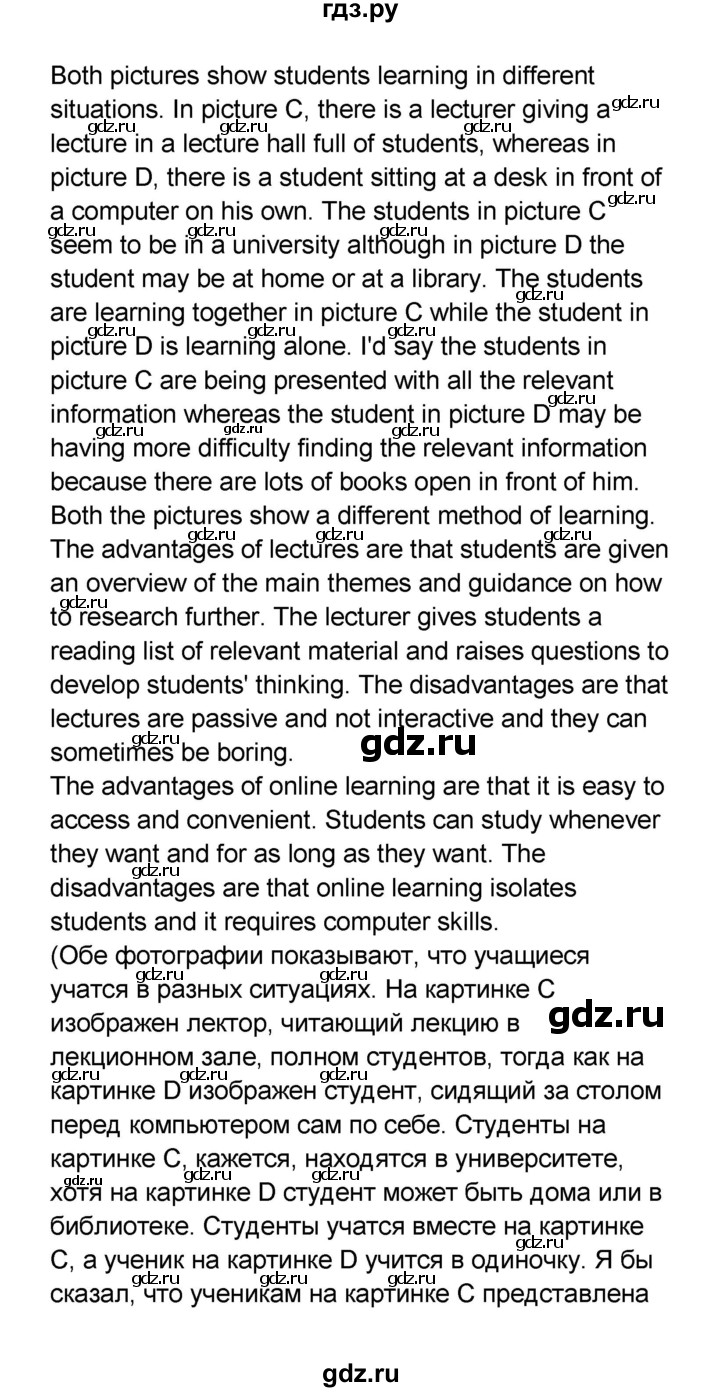
* **a) Sample Description (Pictures C & D):**
* *Picture C shows students working collaboratively in a small group or seminar, discussing a project.*
* *Picture D shows a student focused on distance/online learning.*
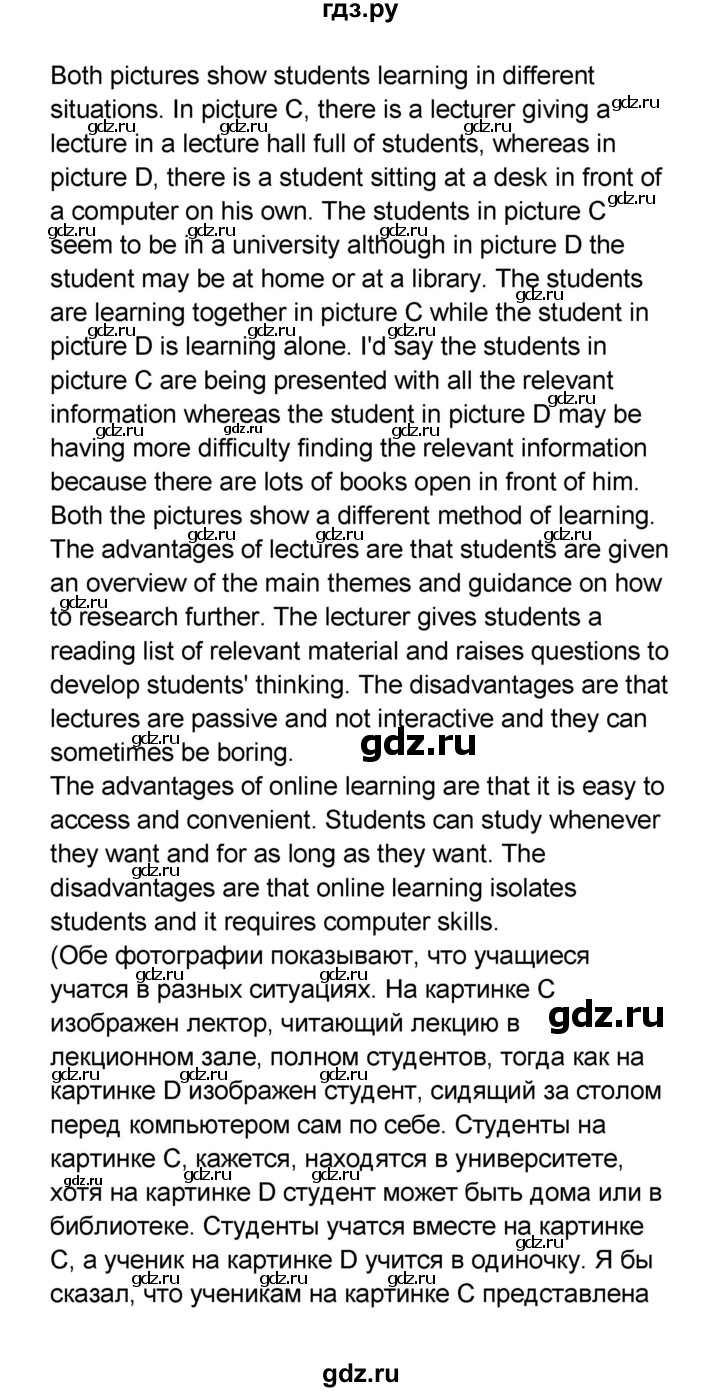
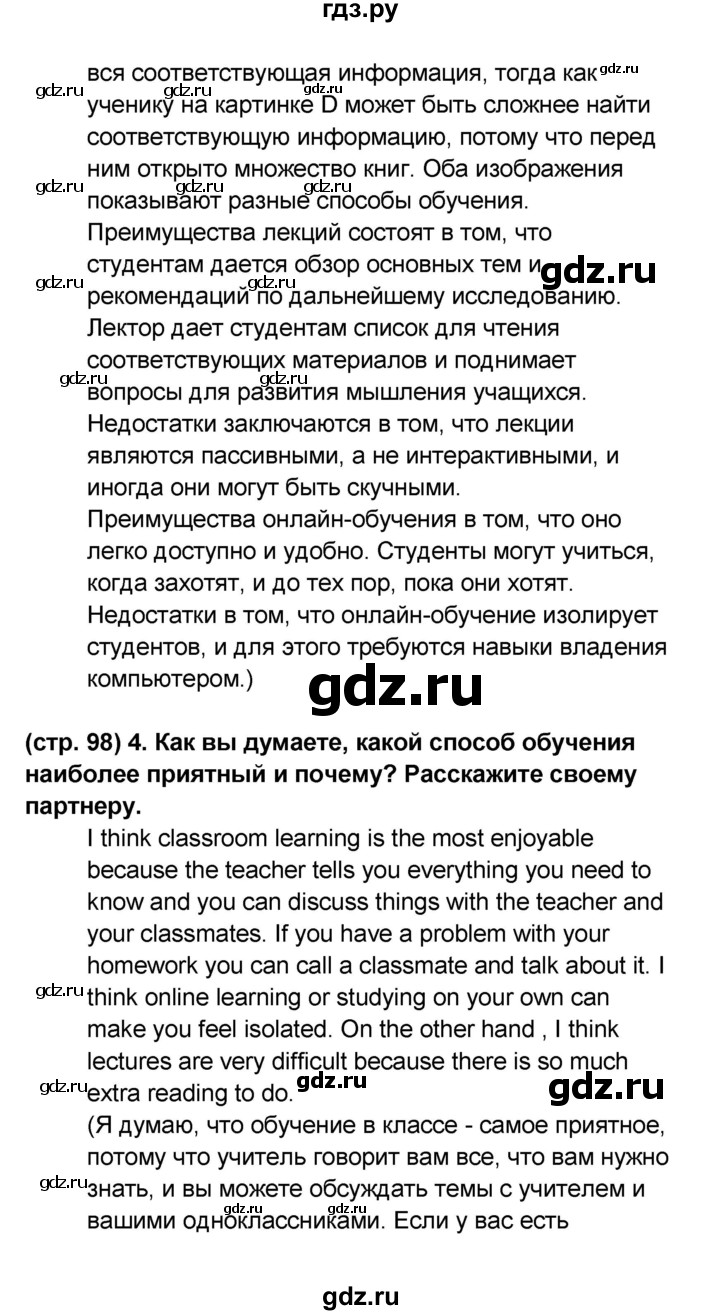
* **b) Comparison & Pros/Cons (Model Answer):**
> *"Both pictures show different ways of learning. In picture A/C, students are attending a traditional lecture or seminar, while in picture B/D, the person is engaged in online learning.*
> *On the one hand, traditional lectures give a comprehensive overview of the main topics and provide clear guidance from a professor. However, they can be passive and not interactive enough, and some students find them boring.*
> *On the other hand, online learning is convenient and easy to access from anywhere, allowing people to study whenever they want. Nevertheless, it isolates students from their peers and requires strong computer skills and high self-motivation."*
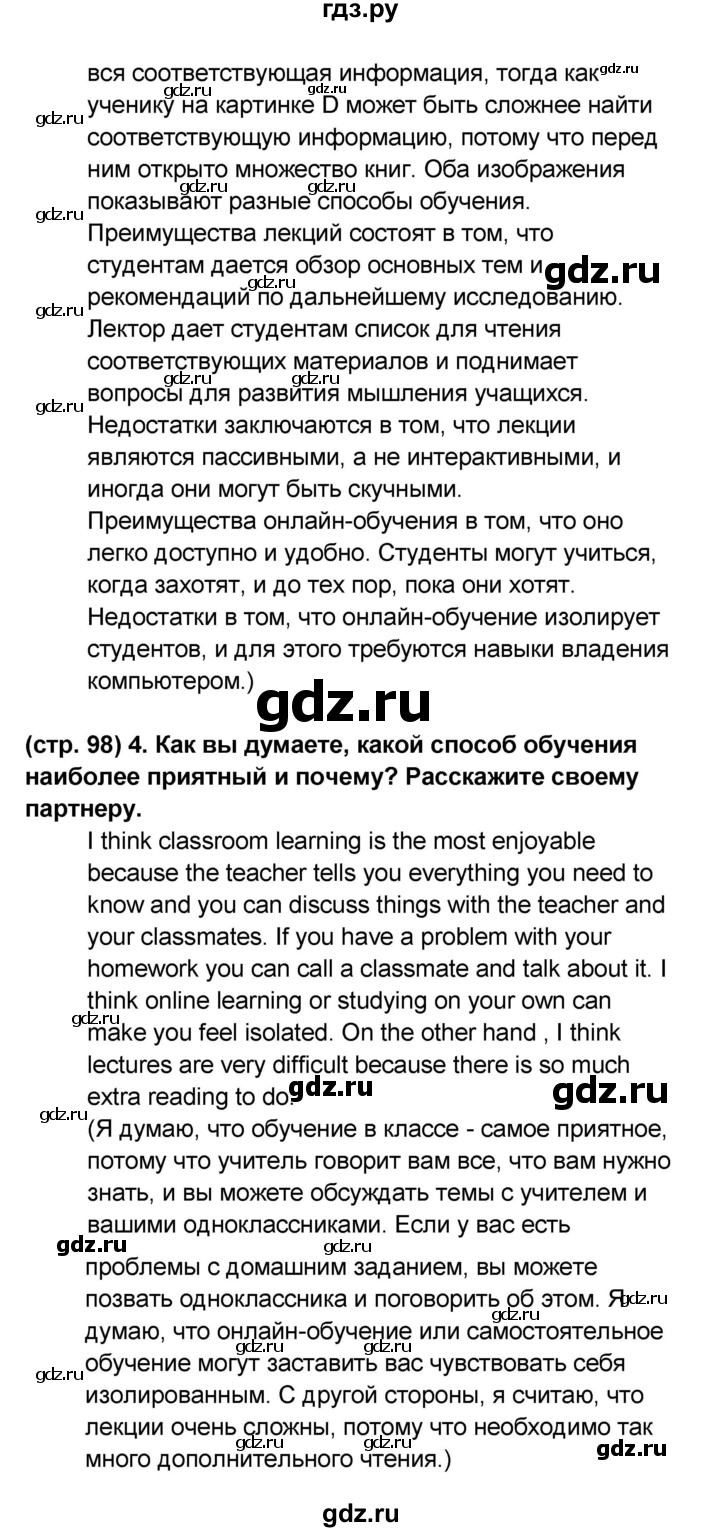
**Exercise 4**
* **Sample Answer:**
> *"In my opinion, seminars and group projects are the most enjoyable way of learning because they are interactive. You can discuss ideas, ask questions directly, exchange viewpoints with classmates, and learn through communication rather than just listening to a teacher."*
---
#### **Listening**
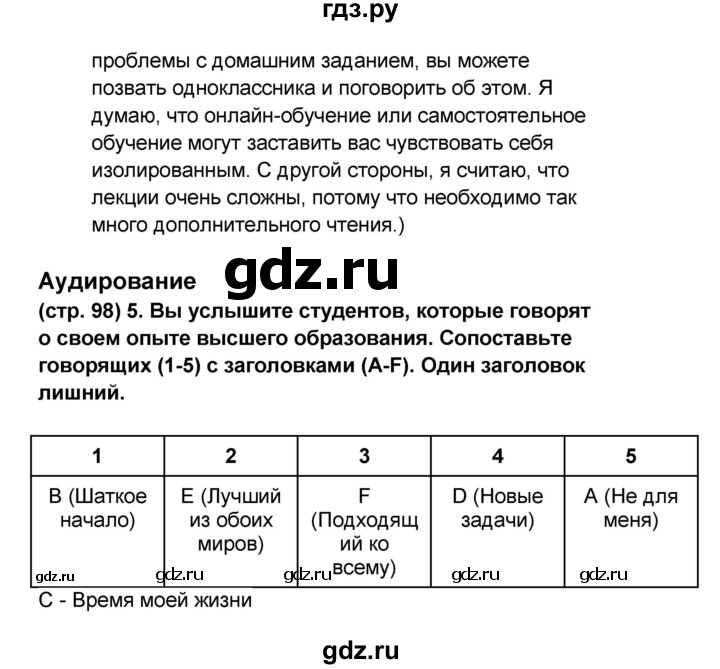
**Exercise 5 (RNE)**
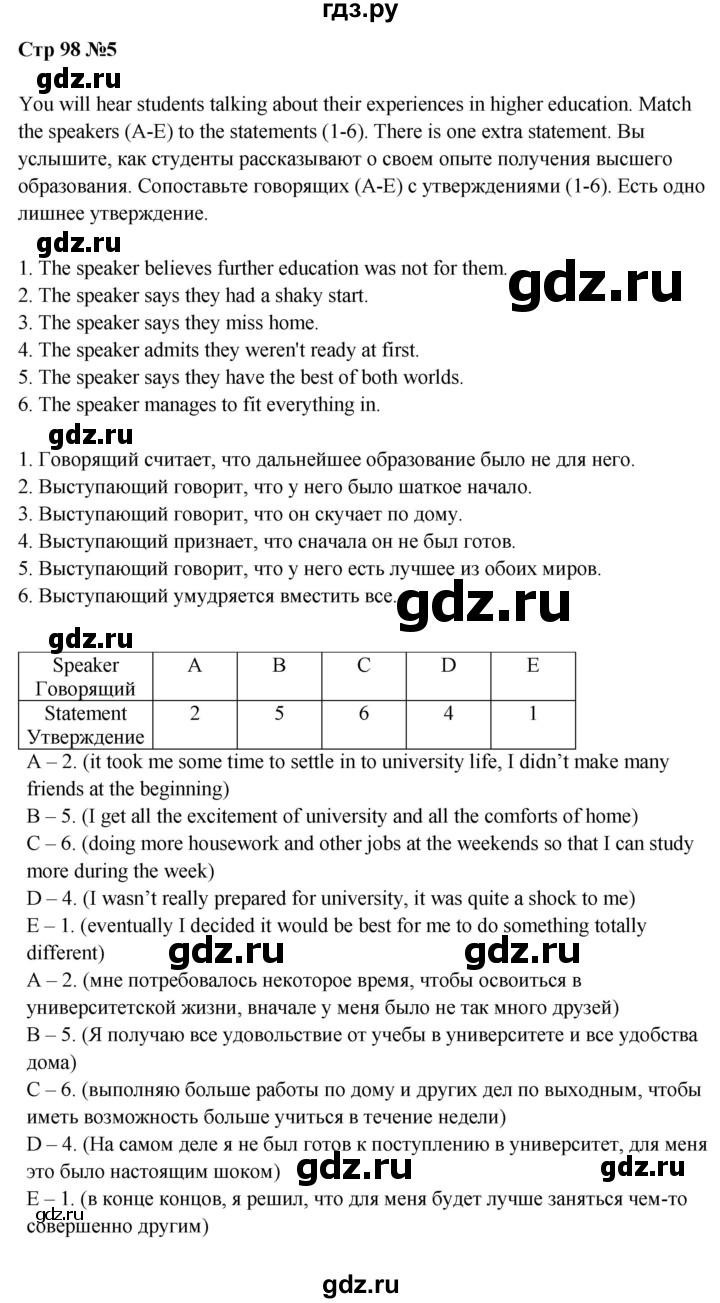
| Speaker | A | B | C | D | E |
|:---:|:---:|:---:|:---:|:---:|:---:|
| **Statement** | **2** | **5** | **4** | **6** | **1** |
*(Лишнее утверждение: **3** — The speaker says they miss home).*
---
### Подробное объяснение и перевод
#### **1. Тематическая лексика (Ex. 1)**
* **Institutions (Учебные заведения):**
* *online university* — интернет-университет / дистанционный вуз;
* *vocational college* — профессионально-технический колледж / ПТУ.
* **Buildings/Facilities (Помещения / Удобства):**
* *lecture theatre* — лекционная аудитория (обычно амфитеатром);
* *classroom* — классная комната / аудитория;
* *hall of residence* — студенческое общежитие;
* *gym* — спортивный зал;
* *canteen* — столовая.
* **Subjects (Предметы):**
* *Media Studies* — изучение медиа и СМИ;
* *Modern Languages* — современные иностранные языки;
* *Philosophy* — философия;
* *Medicine* — медицина.
* **People (Люди):**
* *librarian* — библиотекарь;
* *professor* — профессор;
* *tutor* — куратор, тьютор, репетитор;
* *head of department* — заведующий кафедрой.
* **Types of learning (Форматы обучения):**
* *lecture* — лекция.
---
#### **2. Советы по устному ответу (Speaking — Ex. 2–4)**
При сравнении картинок следуйте структуре памятки (*Study skills*):
1. **Вводная фраза (General summary):** о чем обе картинки (*"Both photos show forms of higher education..."*).
2. **Сравнение (Comparison):** сопоставьте плюсы и минусы обоих методов с помощью связок *while, whereas, on the one hand, on the other hand, however*.
3. **Предположения (Speculating):** используйте вводные конструкции *it looks like, they seem to be, perhaps*.
4. **Собственное мнение (Your opinion):** объясните, какой формат ближе вам и почему (*"As for me, I prefer..."*).
---
#### **3. Аудирование (Listening — Ex. 5)**
* **Speaker A $\rightarrow$ 2 (shaky start):** Рассказывает о трудностях в самом начале учебы (неуверенность, сложности с адаптацией), которые удалось преодолеть.
* **Speaker B $\rightarrow$ 5 (best of both worlds):** Говорит о совмещении двух преимуществ (например, учебы и интересной студенческой жизни/работы).
* **Speaker C $\rightarrow$ 4 (wasn't ready at first):** Признает, что сразу после школы был не готов к самостоятельной жизни и нагрузке в университете.
* **Speaker D $\rightarrow$ 6 (fit everything in):** Объясняет, как распределяет время, чтобы успевать абсолютно всё (учебу, спорт, хобби).
* **Speaker E $\rightarrow$ 1 (further education was not for them):** Понял, что высшее образование — это не его путь, и решил выбрать другой вид деятельности.
Спасибо за оценку!





Открой больше возможностей
Войди через VK — задавай вопросы ИИ и сохраняй ГДЗ в избранное
