


ГДЗ по английскому языку 10 класс Афанасьева Spotlight Базовый уровень страница - 91

Авторы: О. В. Афанасьева, Д. Дули, И. В. Михеева, Б. Оби, В. Эванс
Серия: Spotlight
Тип книги: Учебник
Год: 2015-2024


 Премиум

### Итоговый ответ
#### Exercise 3
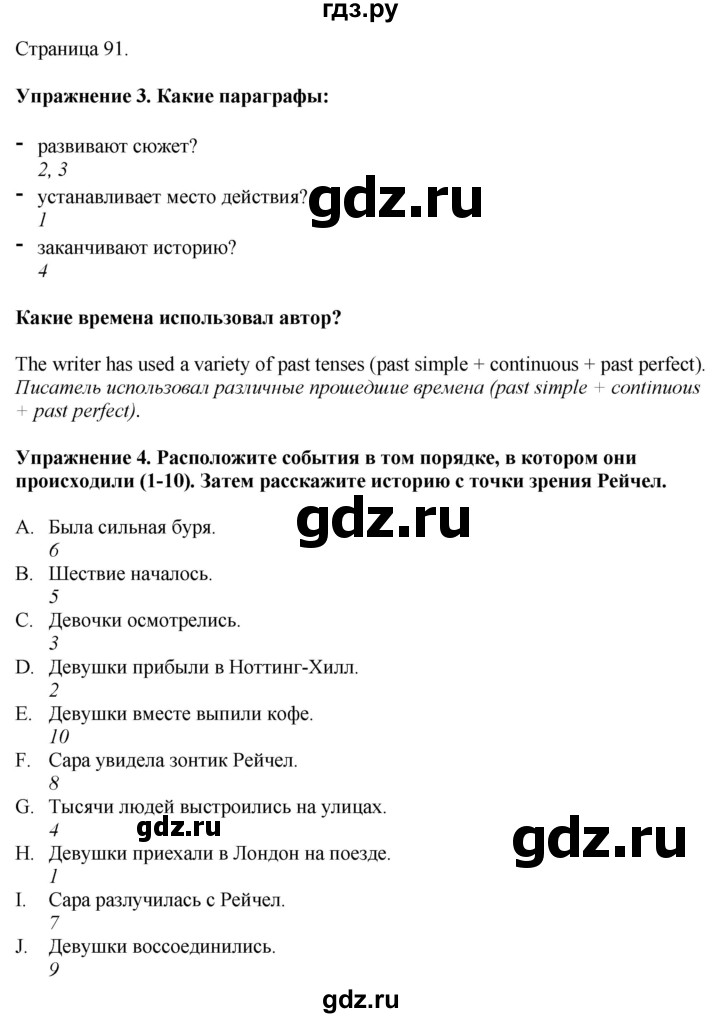
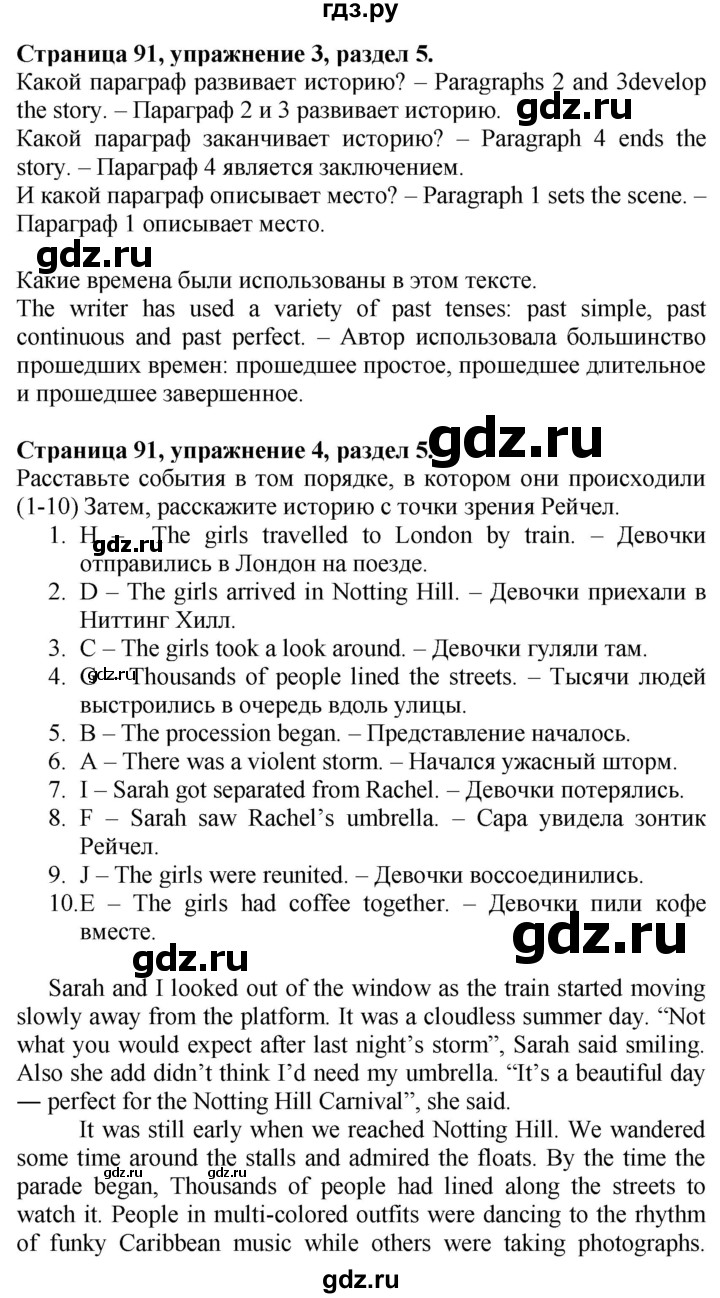
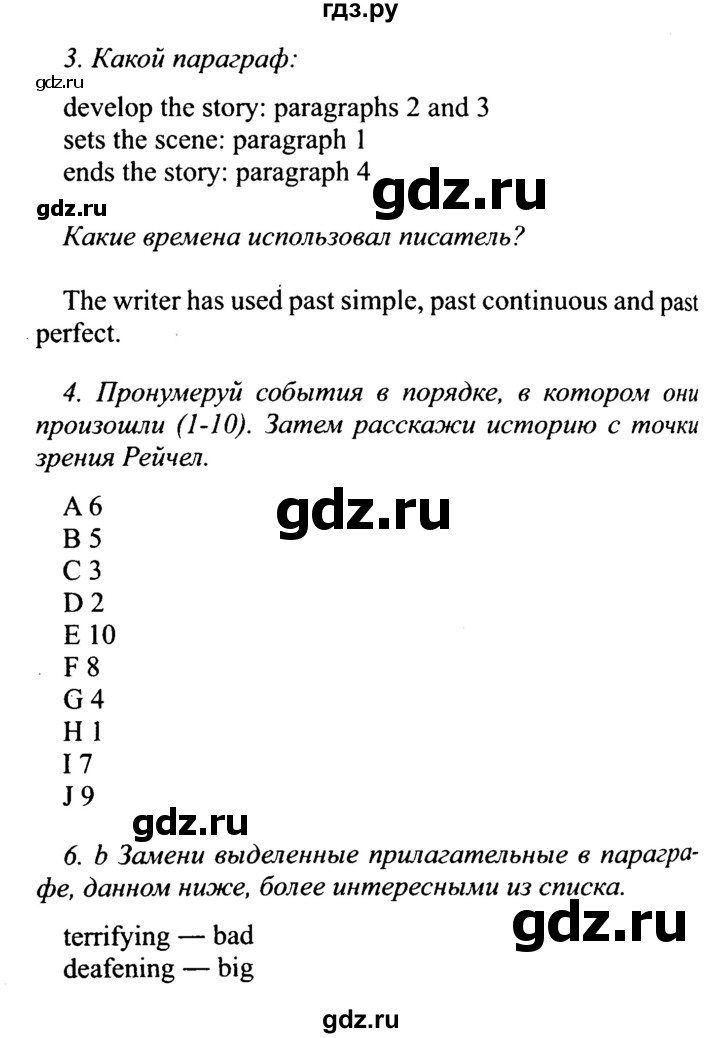
* **Which paragraph(s) set(s) the scene?** — Paragraph 1.
* **Which paragraph(s) develop(s) the story?** — Paragraphs 2 and 3.
* **Which paragraph(s) end(s) the story?** — Paragraph 4.
* **What tenses has the writer used?** — Past Simple (*arrived, started, saw*), Past Continuous (*was shining, were walking*), Past Perfect (*had decided, had lost*).
---
#### Exercise 4
**Chronological Order:**
1. **H** — The girls travelled to London by train.
2. **D** — The girls arrived in Notting Hill.
3. **G** — Thousands of people lined the streets.
4. **B** — The procession began.
5. **A** — There was a violent storm.
6. **I** — Sarah got separated from Rachel.
7. **C** — The girls took a look around.
8. **F** — Sarah saw Rachel's umbrella.
9. **J** — The girls were reunited.
10. **E** — The girls had coffee together.
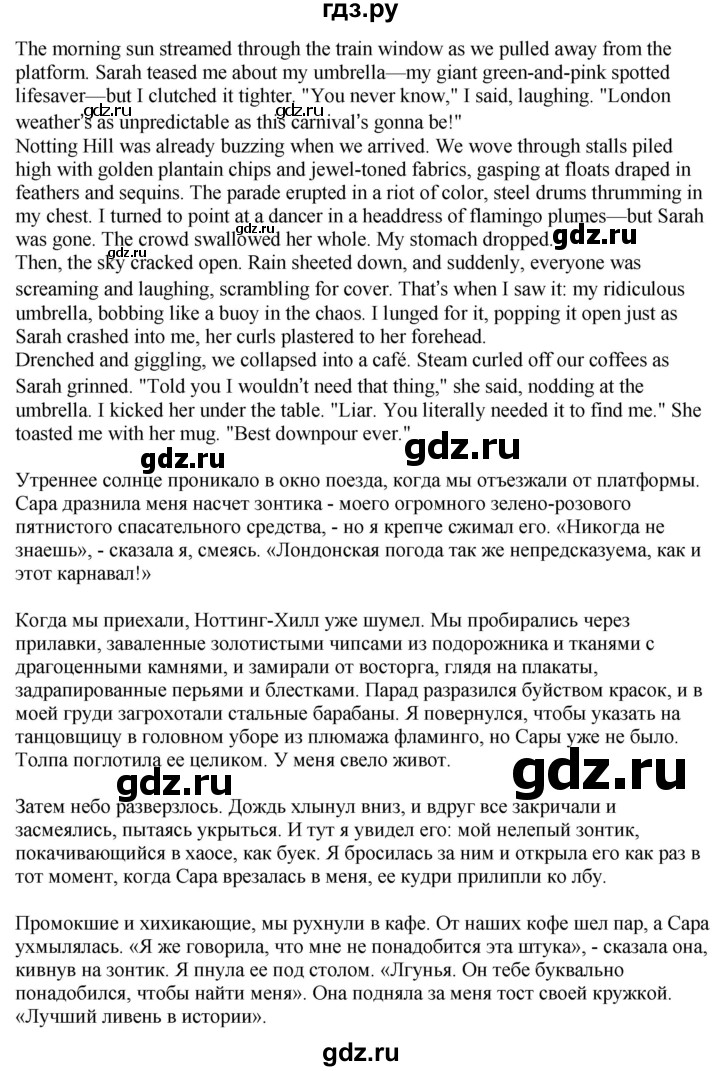
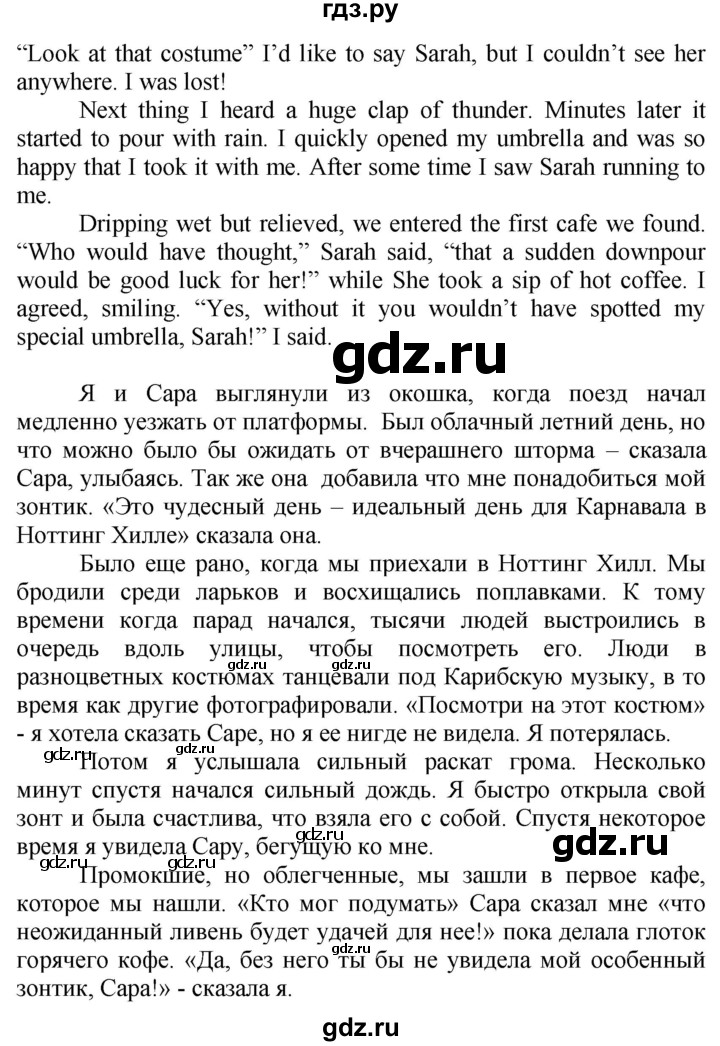
**Story from Rachel's point of view:**
> Sarah and I travelled to London by train to see the famous Notting Hill Carnival. When we arrived in Notting Hill, thousands of people lined the streets, excited and cheerful. Soon, the colourful procession began. Suddenly, the sky darkened and there was a violent storm. In the rushing crowd, I got separated from Sarah. I panicked and took a look around to find her. Luckily, Sarah spotted my bright umbrella, ran towards me, and we were reunited. After that, we found a cosy café and had coffee together, relieved that everything ended well.
---
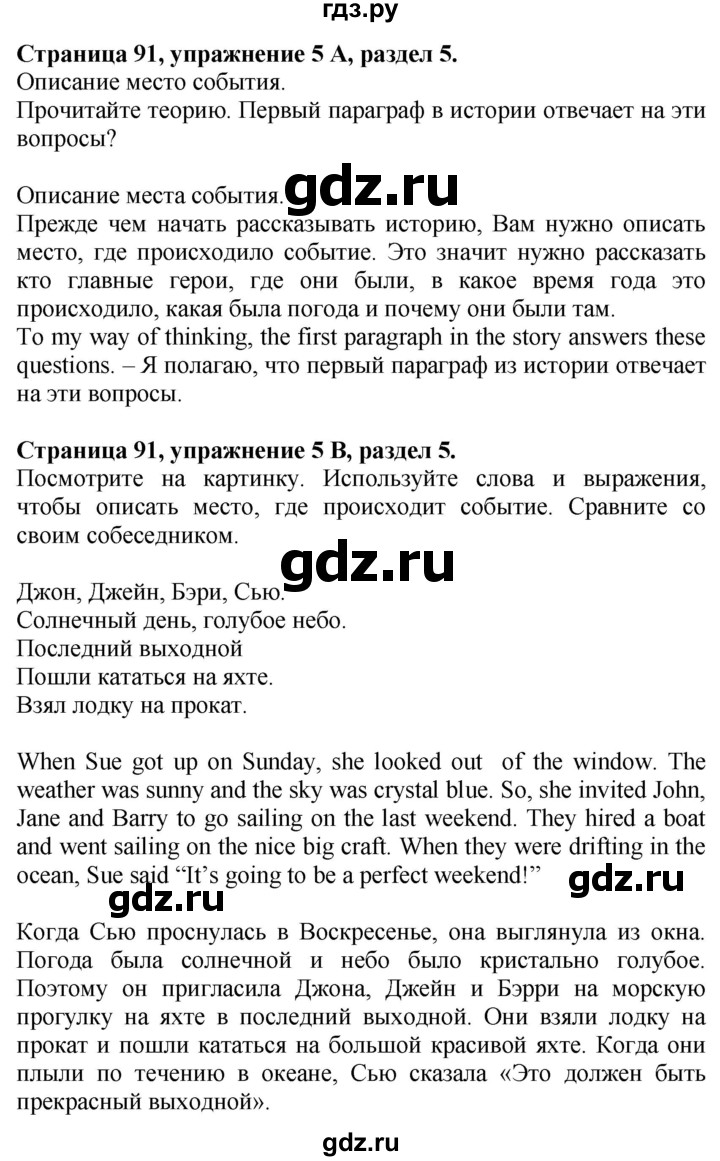
#### Exercise 5
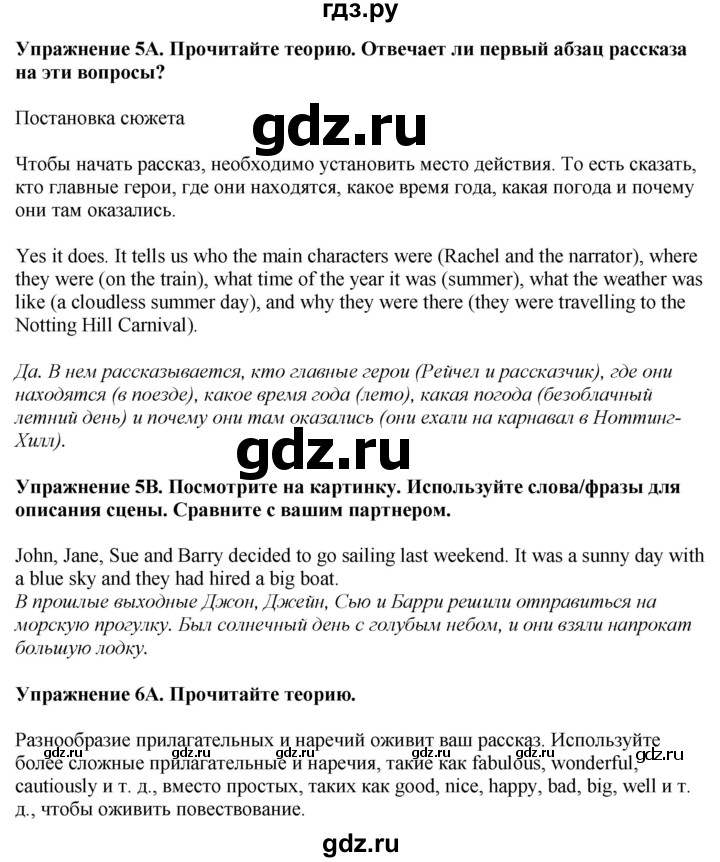
**a)** **Yes, it does.** The first paragraph sets the scene by answering who the main characters were (Sarah and Rachel), where they were (London / Notting Hill), when it happened (last August Bank Holiday), what the weather was like (sunny, hot), and why they were there (to attend the carnival).
**b)** **Setting the scene (Sample answer):**
> Last weekend, John, Jane, Barry, and Sue decided to go sailing. It was a beautiful sunny day with a bright blue sky. They arrived at the harbour early in the morning to hire a boat and spend a fantastic day on the water.
---
#### Exercise 6
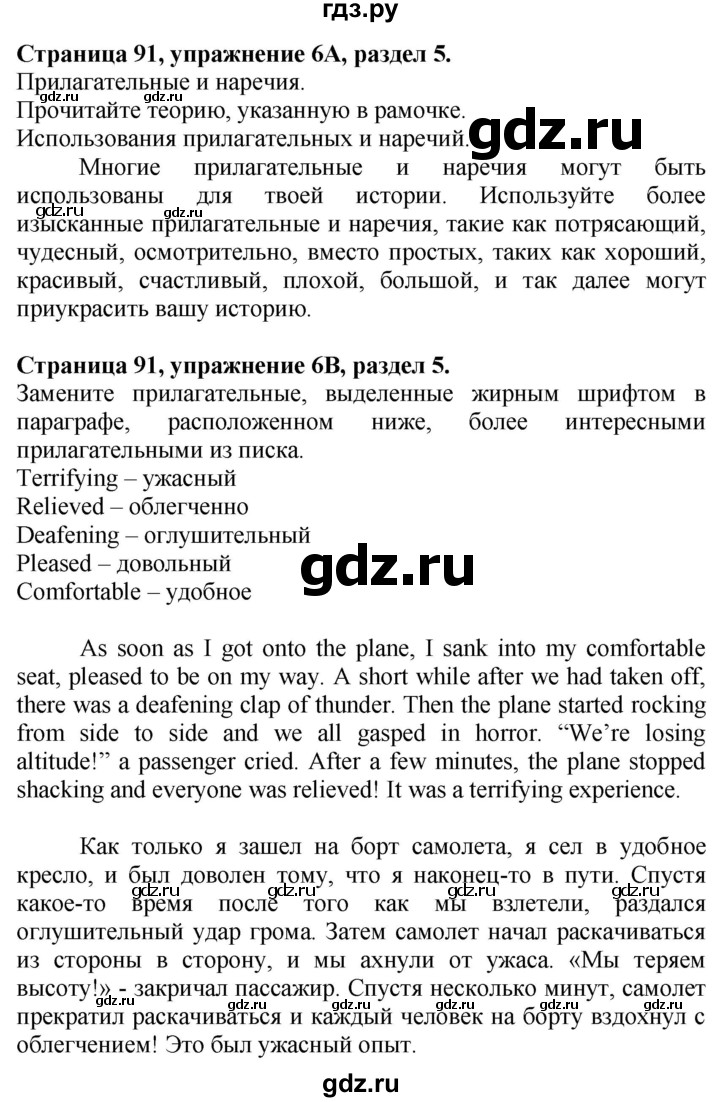
**a)** *(Ознакомление с теорией о замене простых прилагательных и наречий на более выразительные синонимы).*
**b)**
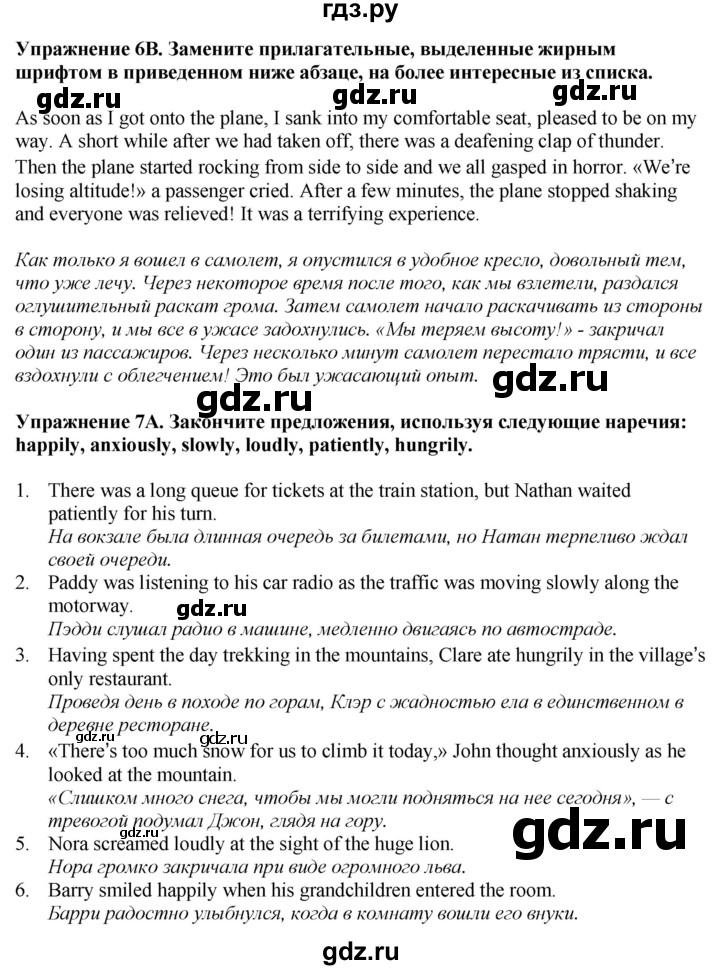
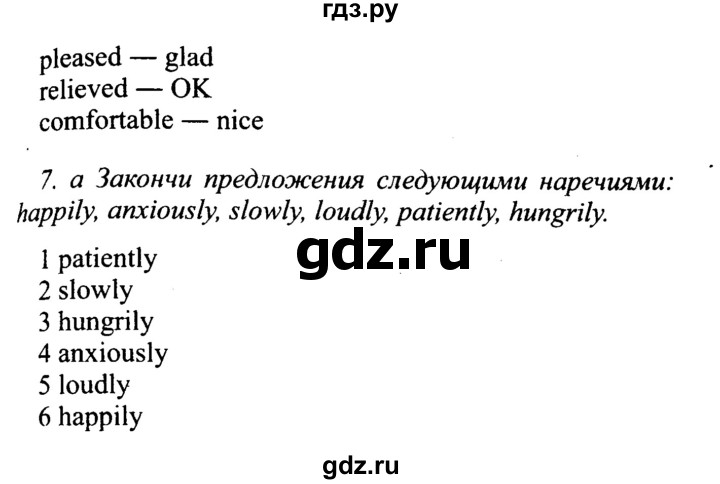
1. nice $\rightarrow$ **comfortable**
2. glad $\rightarrow$ **pleased**
3. big $\rightarrow$ **deafening**
4. OK $\rightarrow$ **relieved**
5. bad $\rightarrow$ **terrifying**
---
#### Exercise 7
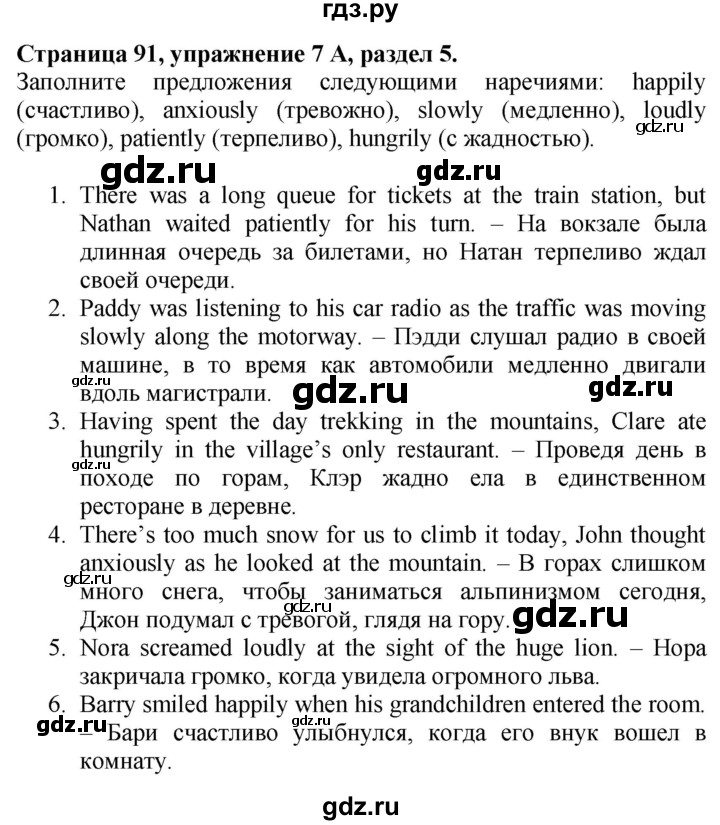
**a)**
1. There was a long queue for tickets at the train station, but Nathan waited **patiently** for his turn.
2. Paddy was listening to his car radio as the traffic was moving **slowly** along the motorway.
3. Having spent the day trekking in the mountains, Clare ate **hungrily** in the village's only restaurant.
4. “There's too much snow for us to climb it today,” John thought **anxiously** as he looked at the mountain.
5. Nora screamed **loudly** at the sight of the huge lion.
6. Barry smiled **happily** when his grandchildren entered the room.
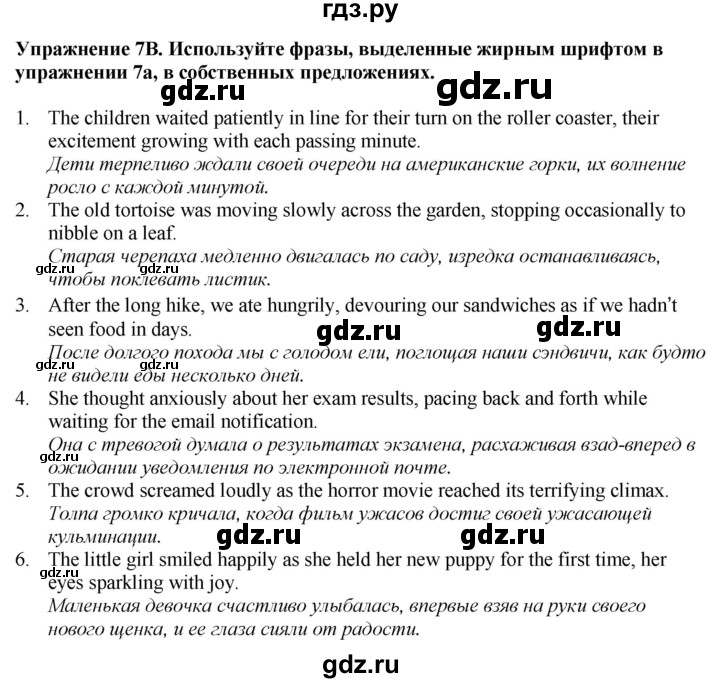
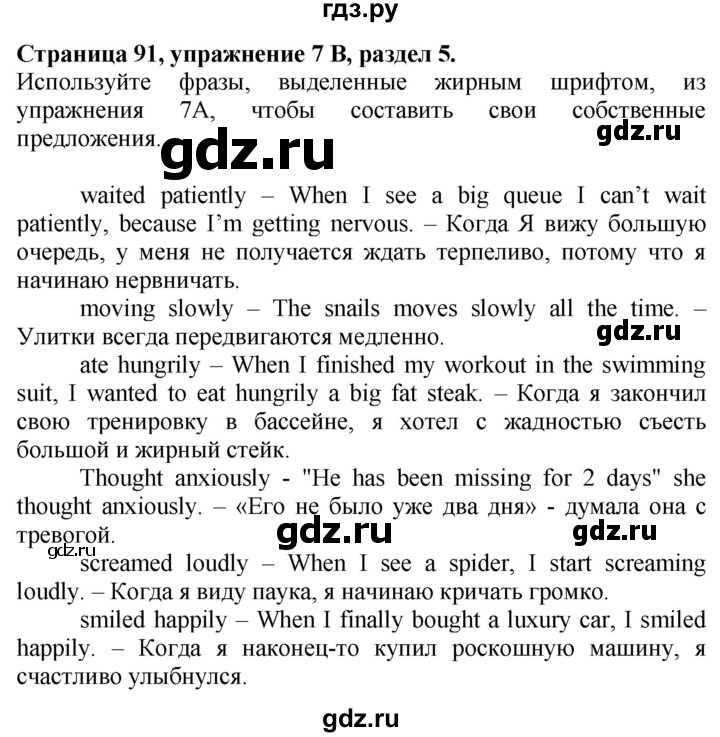
**b)** **Sentences with the phrases:**
1. **waited patiently:** The students **waited patiently** outside the classroom for the exam results.
2. **moving slowly:** The huge ship was **moving slowly** through the narrow canal.
3. **ate hungrily:** After playing football for three hours, the boys **ate hungrily**.
4. **thought anxiously:** She **thought anxiously** about the upcoming job interview.
5. **screamed loudly:** The children **screamed loudly** when they rode the roller coaster.
6. **smiled happily:** Anna **smiled happily** when she opened her birthday present.
---
### Подробное объяснение и перевод
#### Упражнение 3 (Структура рассказа и времена)
Классический нарратив (рассказ) в английском языке строится по следующему плану:
* **Вводный абзац (Introduction / Setting the scene):** задает контекст (герои, время, место, погода, цель).
* **Основная часть (Main body / Development):** 2–3 абзаца, где последовательно описываются события, нарастание напряжения и кульминация.
* **Заключение (Conclusion / Ending):** описывает развязку и чувства героев.
* **Времена (Narrative Tenses):** *Past Simple* — для цепи последовательных действий; *Past Continuous* — для описания атмосферы, фона и длительных действий; *Past Perfect* — для действий, случившихся ранее основных событий рассказа.
#### Упражнение 6b (Синонимы прилагательных)
* *comfortable seat* — удобное кресло (вместо простого *nice*);
* *pleased to be...* — довольный тем, что... (вместо *glad*);
* *deafening clap of thunder* — оглушительный раскат грома (вместо *big*);
* *everyone was relieved* — все почувствовали облегчение (вместо *OK*);
* *terrifying experience* — ужасающий/пугающий опыт (вместо *bad*).
#### Упражнение 7a (Употребление наречий)
* **patiently** (терпеливо) — относится к ожиданию в очереди (*waited*);
* **slowly** (медленно) — описывает движение транспорта в пробке (*moving*);
* **hungrily** (с жадностью, с аппетитом) — подходит к приему пищи после похода в горы (*ate*);
* **anxiously** (с тревогой / беспокойством) — передает сомнения и переживания героя (*thought*);
* **loudly** (громко) — описывает вскрик от испуга (*screamed*);
* **happily** (счастливо / радостно) — описывает теплую улыбку при встрече с внуками (*smiled*).
Спасибо за оценку!

Открой больше возможностей
Войди через VK — задавай вопросы ИИ и сохраняй ГДЗ в избранное
