


ГДЗ по английскому языку 10 класс Афанасьева Spotlight Базовый уровень страница - 31

Авторы: О. В. Афанасьева, Д. Дули, И. В. Михеева, Б. Оби, В. Эванс
Серия: Spotlight
Тип книги: Учебник
Год: 2015-2024


 Премиум

### Итоговый ответ
#### Ex. 7 (Listening)
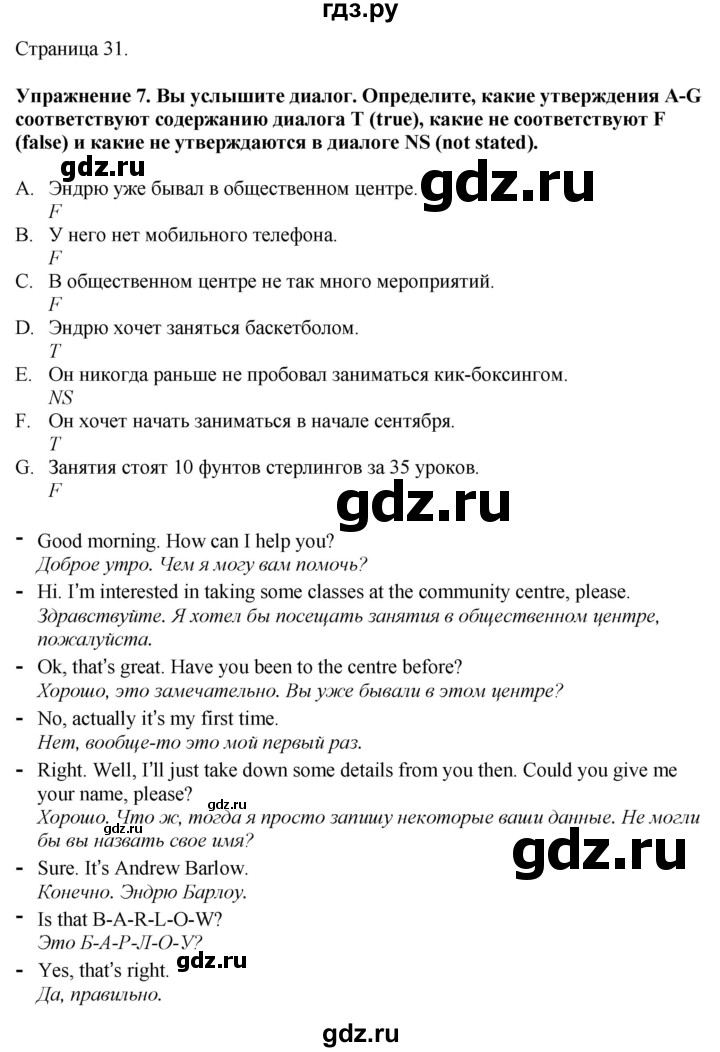
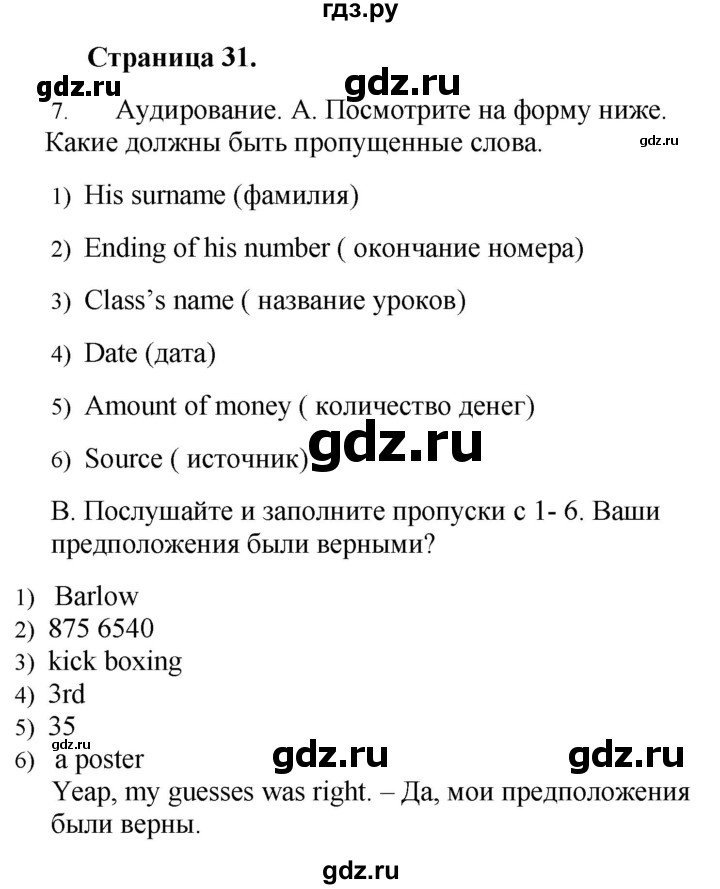
| STATEMENT | A | B | C | D | E | F | G |
| :---: | :---: | :---: | :---: | :---: | :---: | :---: | :---: |
| **ANSWER** | **F** | **F** | **F** | **F** | **T** | **T** | **F** |
---
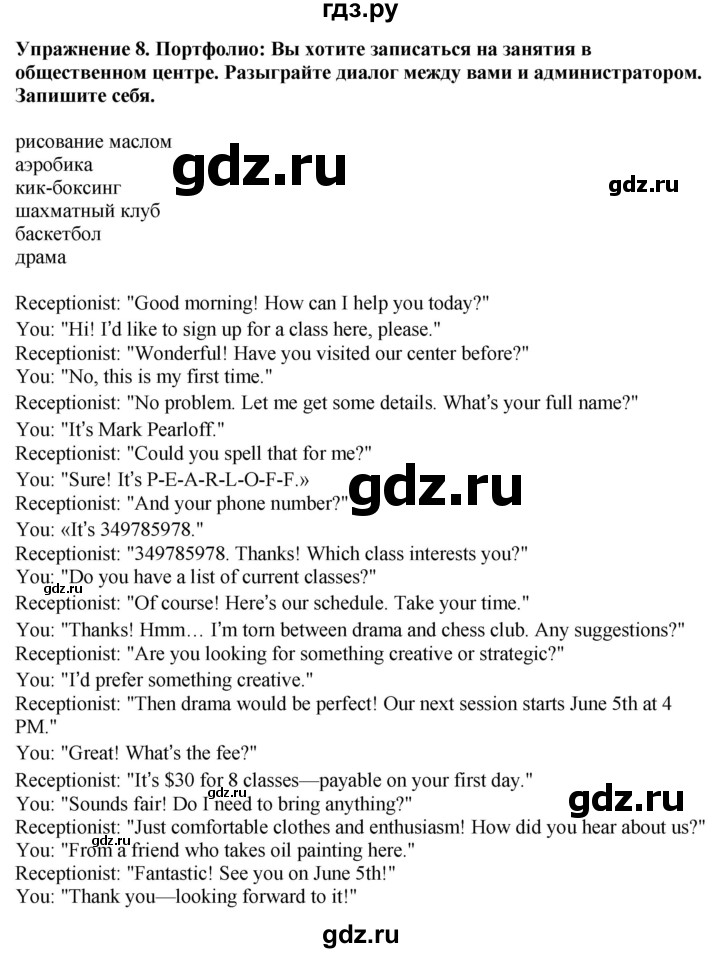
#### Ex. 8 (Speaking / Portfolio)
**Dialogue:**
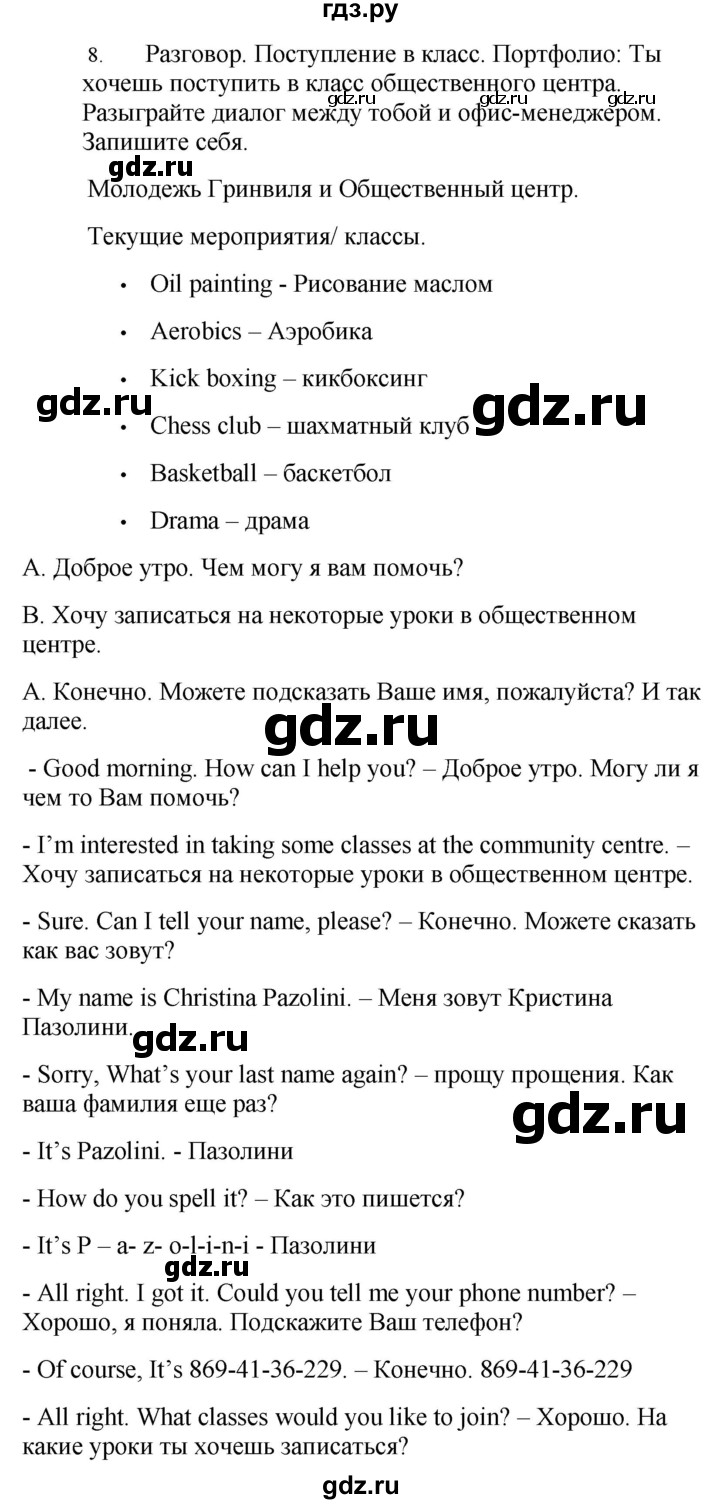
* **Receptionist:** Good morning. How can I help you?
* **You:** Good morning. I'm interested in taking some classes at the community centre.
* **Receptionist:** Sure. Can I take your name, please?
* **You:** Yes, my name is Alex Ivanov.
* **Receptionist:** Nice to meet you, Alex. Have you been here before?
* **You:** No, this is my first time.
* **Receptionist:** What classes are you interested in?
* **You:** I’d like to join the chess club and try kick boxing.
* **Receptionist:** Great choices! Chess club meets on Tuesdays at 5 pm, and kick boxing is on Thursdays at 6 pm. Can I have your phone number?
* **You:** It’s 07911 123456. How much do the lessons cost?
* **Receptionist:** It's £35 for 10 lessons.
* **You:** That sounds great. Sign me up, please!
* **Receptionist:** All done! Classes start next week.
---
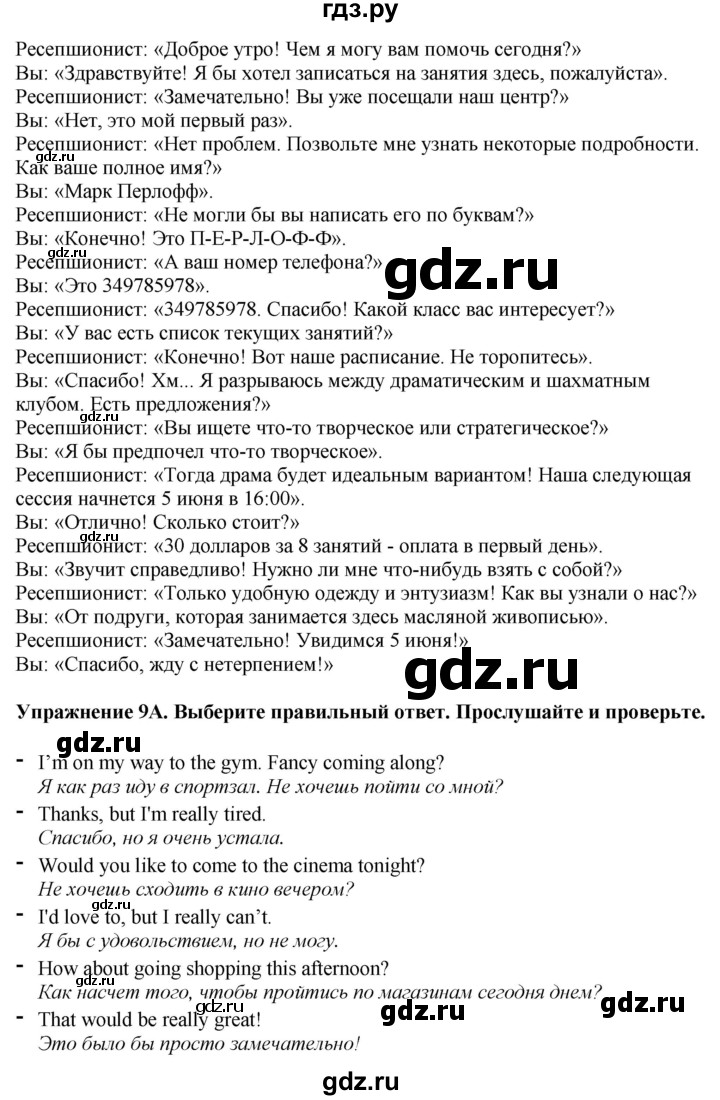
#### Ex. 9 (Say it right: Suggesting/Replying)
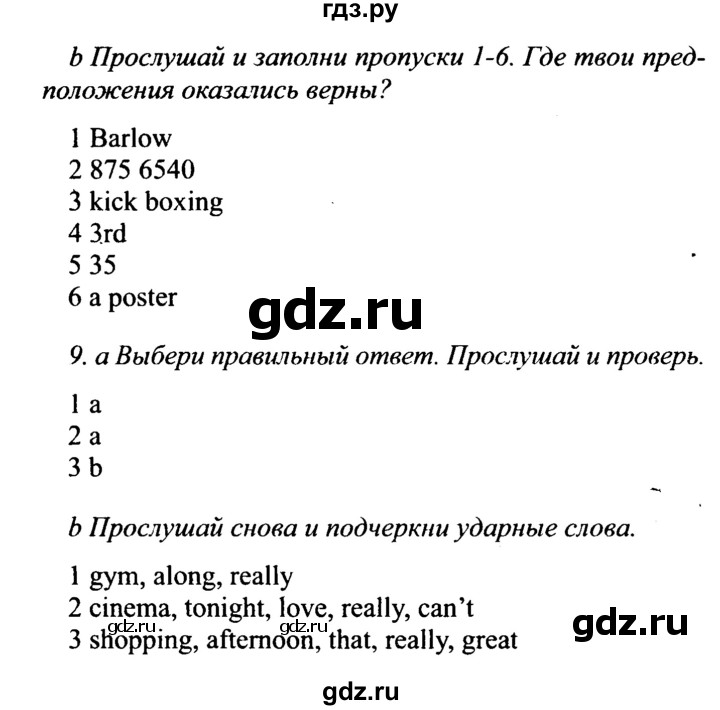
**a)**
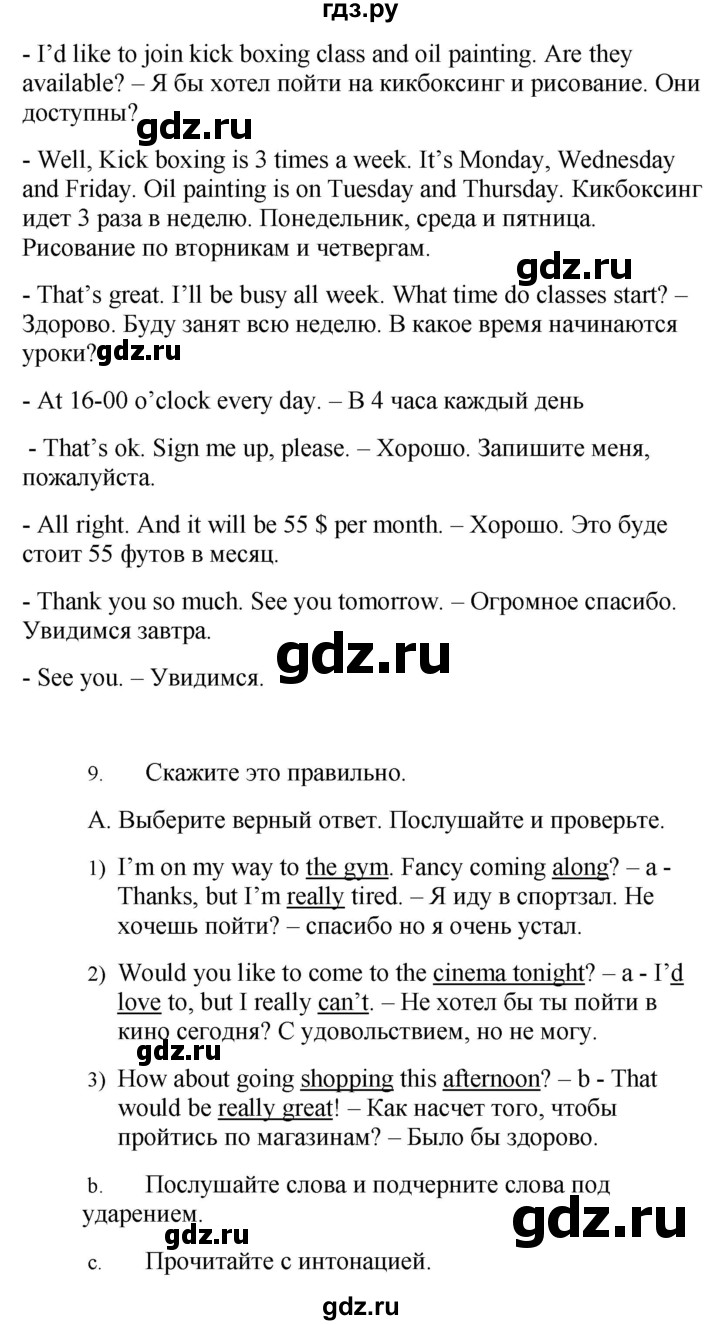
1. **a** (Thanks, but I'm really tired.)
2. **a** (I'd love to, but I really can't.)
3. **b** (That would be really great!)
**b)** Ударные слова (Stressed words):
1. A: **way**, **gym**, **Fancy**, **coming**? / B: **Thanks**, **really**, **tired**.
2. A: **like**, **come**, **cinema**, **tonight**? / B: **love**, **really**, **can't**.
3. A: **shopping**, **afternoon**? / B: **really**, **great**!
---
#### Ex. 10 (Making suggestions)
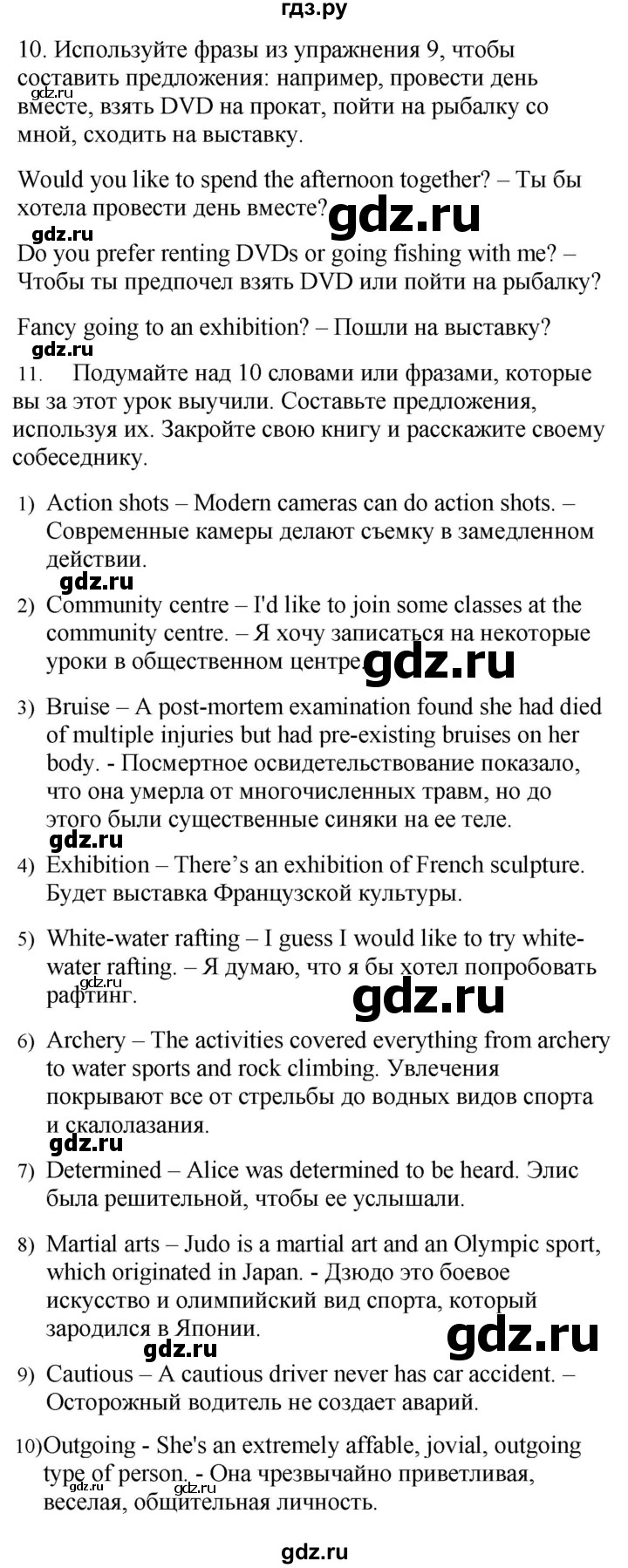
1. **A:** Would you like to spend the afternoon together?
**B:** That would be really great!
2. **A:** How about renting a DVD tonight?
**B:** I'd love to, but I really can't. I have to study.
3. **A:** Fancy coming fishing with me this weekend?
**B:** Thanks, but I'm really tired.
4. **A:** Would you like to go to an art exhibition on Sunday?
**B:** That sounds wonderful, I'd love to!
---
#### Ex. 11 (Ten words/phrases and sentences)
1. **enrol for a class** — I want to enrol for an oil painting class this autumn.
2. **community centre** — Our local community centre offers lots of interesting activities for teenagers.
3. **take up** — I decided to take up kick boxing to stay fit.
4. **fancy (doing something)** — Fancy coming along with us to the cinema?
5. **drama** — She joined the drama club because she wants to be an actress.
6. **available** — Are there any free places available for the aerobics course?
7. **aerobics** — Doing aerobics helps me stay energetic.
8. **fee** — The membership fee is quite reasonable.
9. **sign up** — You need to sign up before the end of the week.
10. **fill in a form** — Please fill in this registration form with your contact details.
---
### Объяснение и комментарии
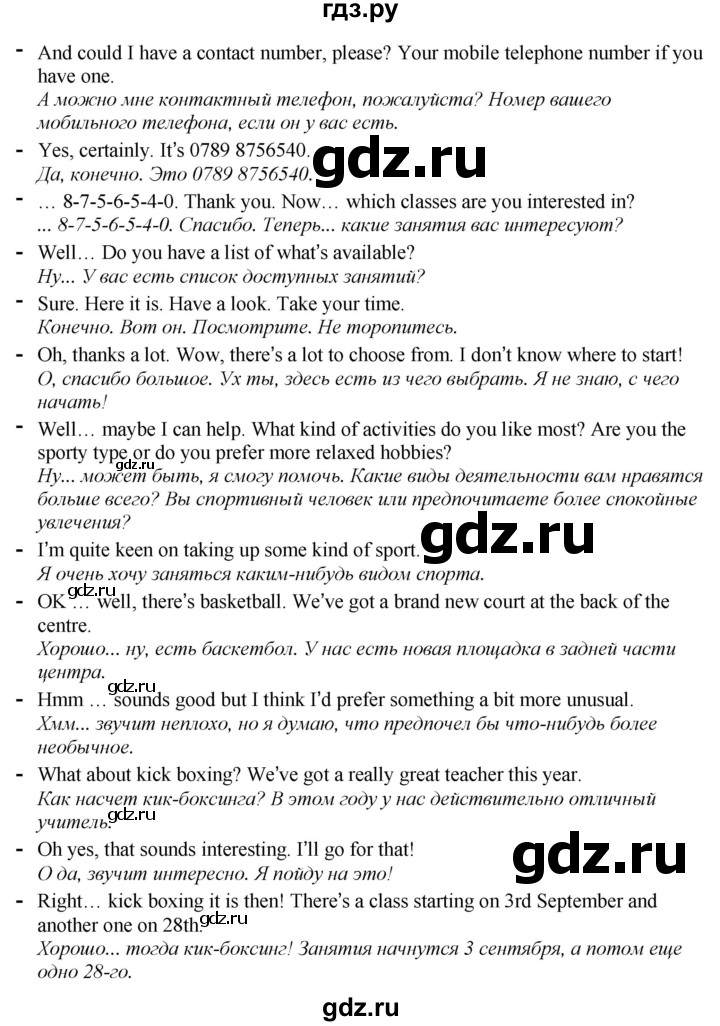
1. **Ex. 7:**
* **A (F):** Эндрю впервые в этом центре (*"No, this is my first time"*).
* **B (F):** У него есть мобильный телефон, и он диктует свой номер администратору.
* **C (F):** Центр предлагает широкий выбор кружков и секций.
* **D (F):** Эндрю выбирает кикбоксинг (*kick boxing*), а не баскетбол.
* **E (T):** Он говорит, что никогда раньше не занимался кикбоксингом (*"I've never done it before"*).
* **F (T):** Занятия начинаются в начале сентября, что его устраивает.
* **G (F):** Названа другая стоимость/количество уроков (£35 за 10 занятий).
2. **Ex. 9a:**
* На предложение *«Fancy coming along?»* (Не хочешь пойти со мной?) логичный вежливый отказ — вариант **a** (*Thanks, but I'm really tired*). Вариант *b* неверен, так как отвечает на вопрос о самочувствии (*How are you?*).
* На приглашение *«Would you like to come...»* правильный вежливый отказ — **a** (*I'd love to, but I really can't*). Фраза *b* звучит грубо и грамматически неестественно в данном контексте.
* На предложение *«How about going shopping...?»* согласием служит реплика **b** (*That would be really great!*). Реплика *a* используется для согласия с мнением/точкой зрения, а не с предложением о совместном действии.
3. **Ex. 9b:**
В английском предложении фразовое ударение падает на знаменательные части речи (существительные, смысловые глаголы, прилагательные, наречия, отрицания), тогда как служебные слова (предлоги, местоимения, вспомогательные глаголы) обычно редуцируются.
Спасибо за оценку!



Открой больше возможностей
Войди через VK — задавай вопросы ИИ и сохраняй ГДЗ в избранное
