


ГДЗ по английскому языку 10 класс Афанасьева Spotlight Базовый уровень страница - 135

Авторы: О. В. Афанасьева, Д. Дули, И. В. Михеева, Б. Оби, В. Эванс
Серия: Spotlight
Тип книги: Учебник
Год: 2015-2024


 Премиум

### Ответ к заданию
#### 1. Ответы на вопросы к картинкам (Pictures A–C)
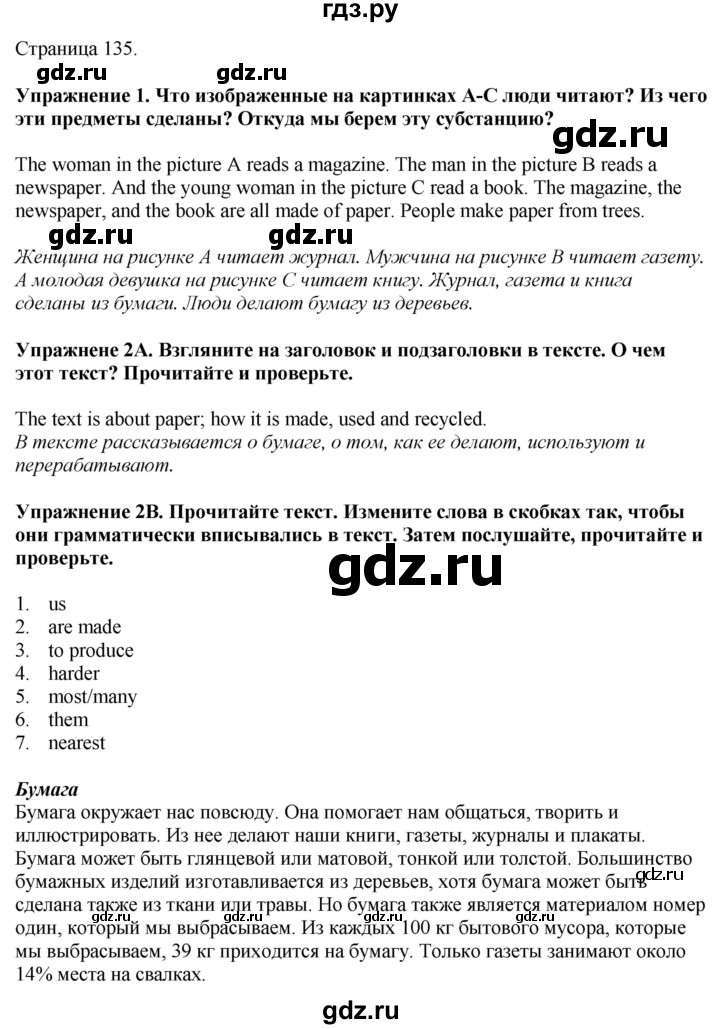
* **What are the people in the pictures reading?**
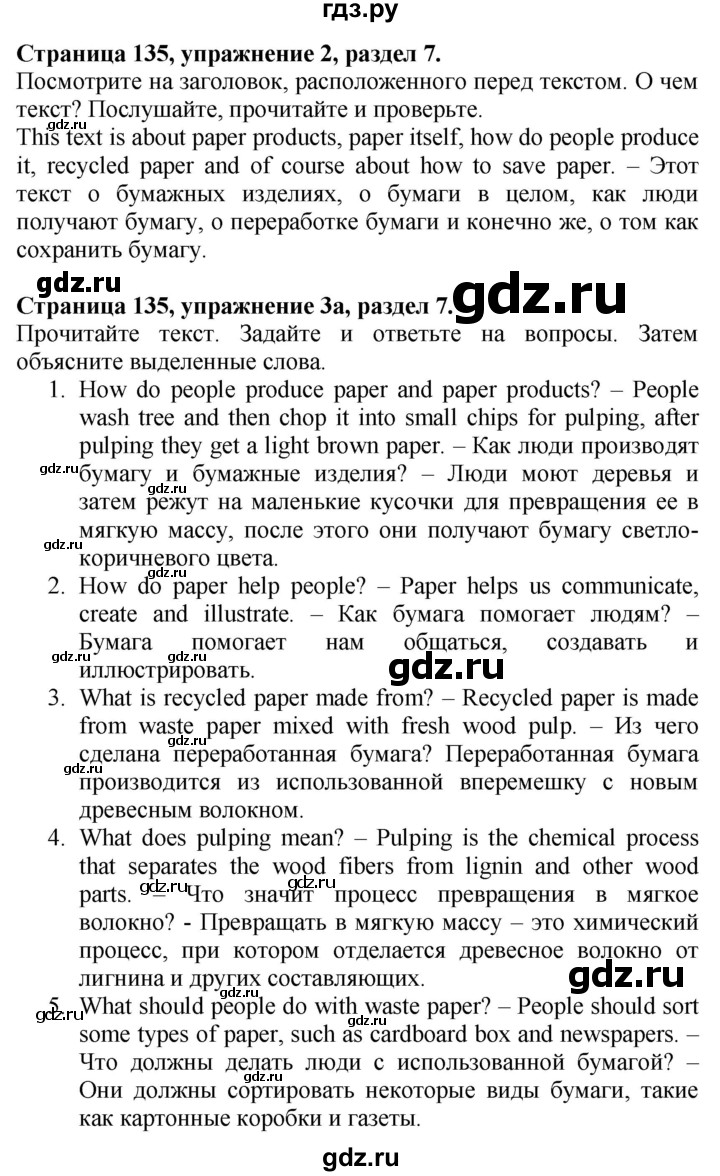
They are reading a book, a newspaper, and a magazine.
* **What are these objects made of?**
They are made of paper.
* **Where do we get this substance from?**
We get paper from trees (wood pulp / wood fibres).
---
#### 2. Работа с текстом и грамматика
**a) Предсказание темы текста:**
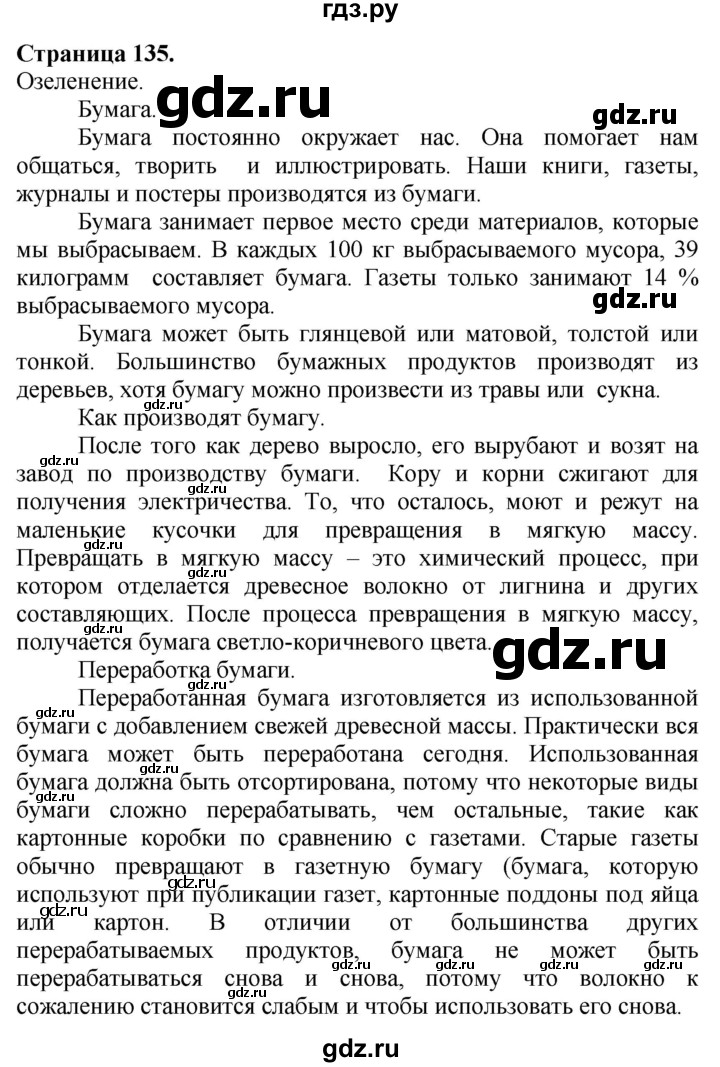
The text is about paper: how it is produced, how it is recycled, and practical ways to save and reuse paper in everyday life to protect the environment.
**b) Грамматическое преобразование слов (1–7):**
1. **us**
2. **are made**
3. **to produce**
4. **harder**
5. **many**
6. **them**
7. **nearest**
---
#### 3. Вопросы на понимание и словарный запас
**a) Вопросы и ответы по тексту (Comprehension questions):**
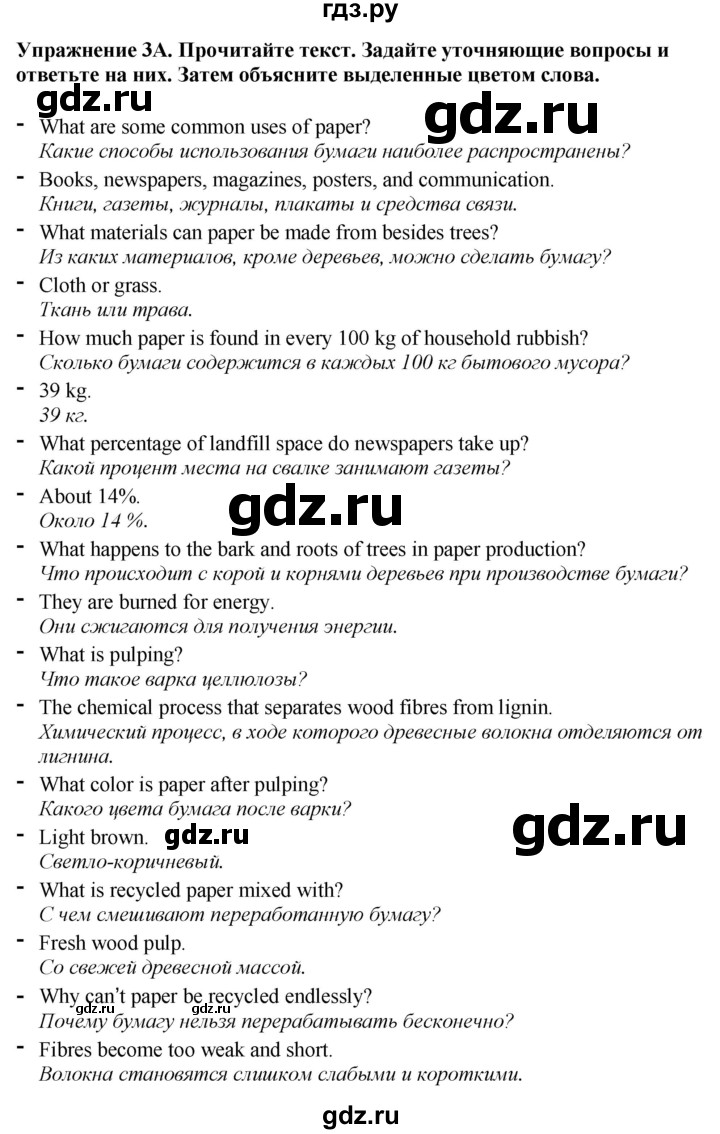
* **Q1:** What percentage of household rubbish is paper?
**A1:** 39% of household rubbish is paper.
* **Q2:** What happens to the bark and roots of trees at the factory?
**A2:** They are burned and used to produce energy.
* **Q3:** What is pulping?
**A3:** It is a chemical process that separates wood fibres from lignin and other wood parts.
* **Q4:** Why can't paper be recycled over and over again?
**A4:** Because the fibres eventually become too weak and short.
**Объяснение ключевых слов (Highlighted words):**
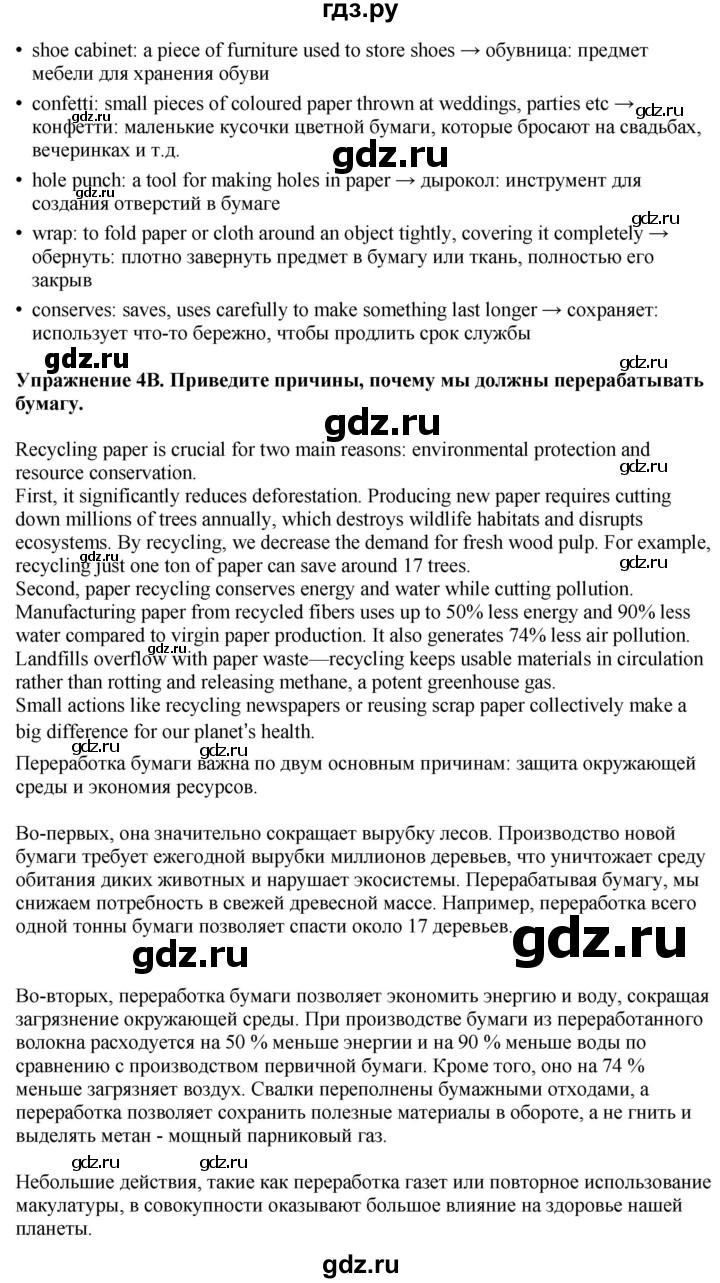
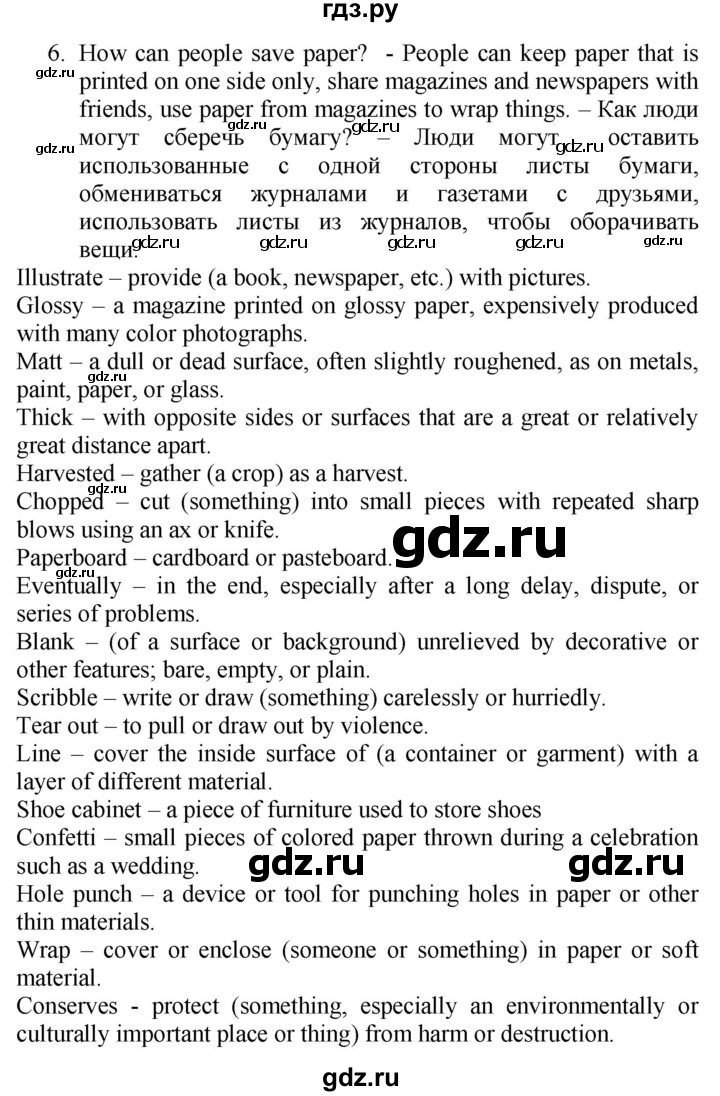
* **glossy** — smooth and shiny *(глянцевый)*.
* **matte** — dull, not shiny *(матовый)*.
* **harvested** — cut down and gathered for use *(срубленный, заготовленный)*.
* **pulping** — a chemical process of turning wood into pulp *(варка/производство целлюлозы)*.
* **fibres** — thin, thread-like strands of wood *(волокна)*.
* **scribble** — to write or draw something quickly and untidily *(черкать, делать быстрые заметки)*.
* **conserves** — saves, prevents from being wasted *(сберегает, экономит)*.
* **landfill** — a large hole or area where waste material is buried *(мусорная свалка)*.
**b) Две причины для переработки бумаги (Two reasons to recycle paper):**
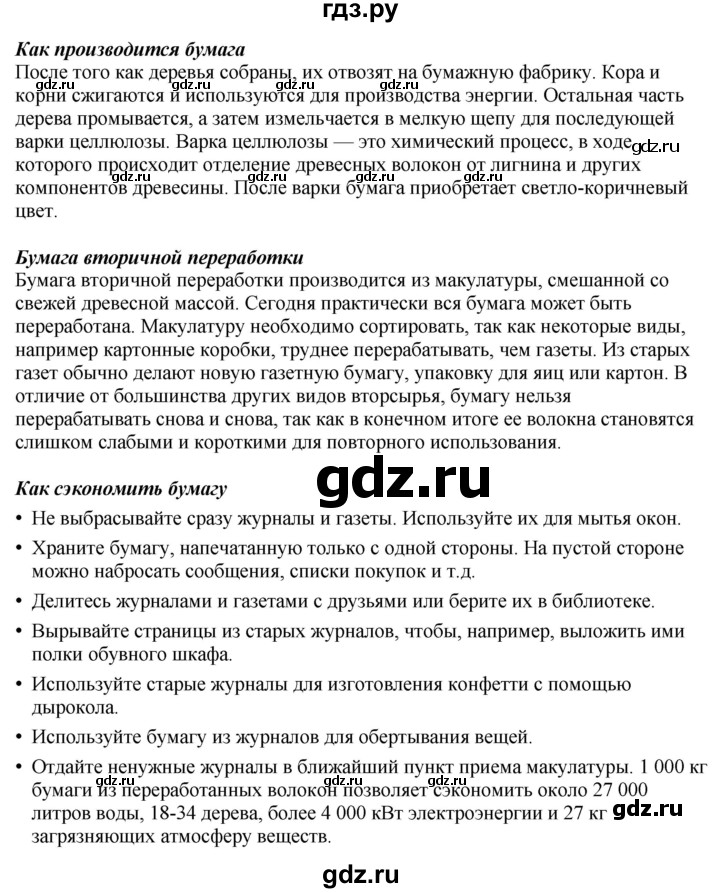
1. Recycling saves natural resources: 1,000 kg of recycled paper saves around 18–34 trees, 27,000 litres of water, and over 4,000 kW of electricity.
2. It reduces waste in landfills, as paper currently takes up about 14% of landfill space.
---
#### 4. Portfolio (Презентация для экскурсии на бумажную фабрику)
> **Speech: A Tour of a Paper Factory**
> *"Welcome to our paper factory! Today, I’ll tell you how paper is made. First, harvested trees are brought here. We burn the bark and roots to generate energy. Then, the logs are washed and chopped into chips. Next comes pulping — a chemical process that separates wood fibres from lignin, creating a light brown pulp that becomes paper.*
>
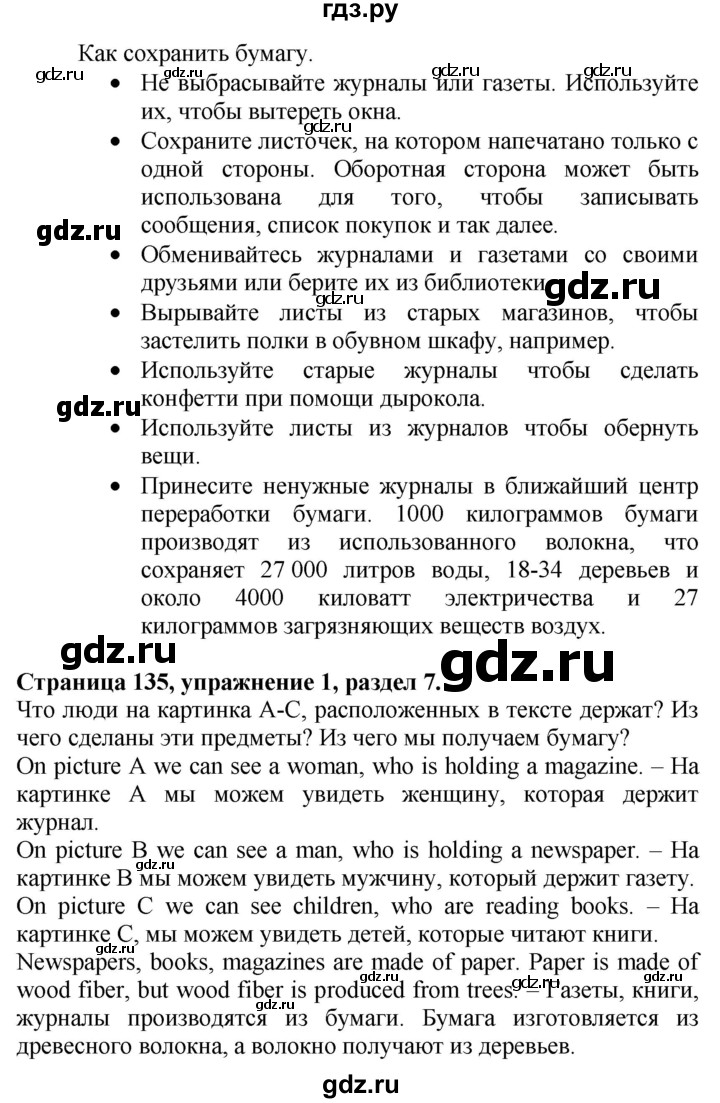
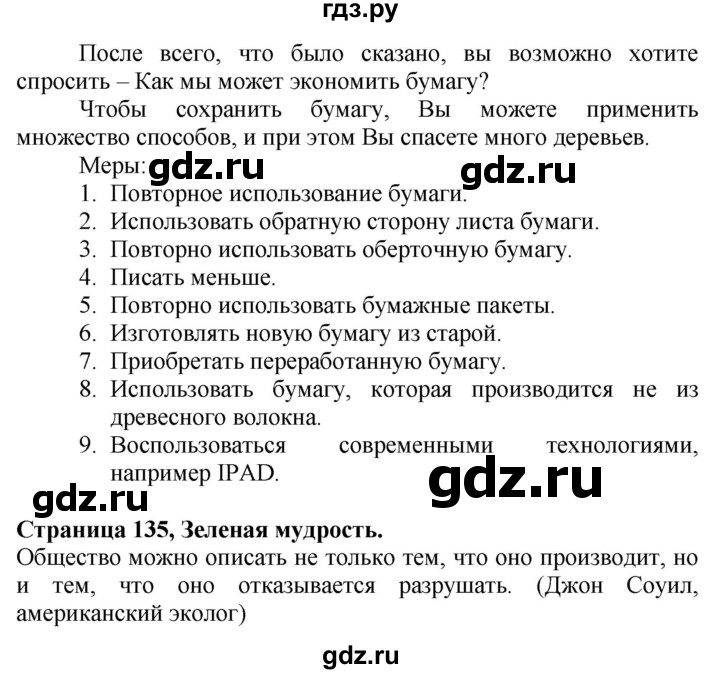
> *Paper production takes a lot of resources, so we must save paper. You can help by writing on both sides of each sheet, reusing old newspapers for cleaning windows, sharing magazines with friends, and taking unwanted paper to your nearest recycling centre. Thank you for your attention!"*
---
### Подробное грамматическое объяснение (задание 2b)
1. **us** — после глагола (*helps*) местоимение *we* ставится в объектном падеже (*helps us* — помогает нам).
2. **are made** — подлежащее *Most paper products* (мн. число) не производит действие само, действие совершается над ним. Требуется пассивный залог в Present Simple: глагол *to be* (*are*) + 3-я форма глагола (*made*).
3. **to produce** — от исходного слова *product* (продукт) образуется инфинитив цели (*to produce* — чтобы производить / для производства).
4. **harder** — сравнительная степень прилагательного *hard*. На сравнение указывает конструкция *compared to* (в сравнении с...).
5. **many** — слово *recyclables* (вторичное сырье) является исчисляемым существительным во множественном числе, поэтому форма *much* меняется на *many*.
6. **them** — местоимение *they* стоит после глагола (*borrow*), поэтому принимает форму объектного падежа (*borrow them* — одалживать их).
7. **nearest** — перед пропуском стоит определенный артикль *the*, а по смыслу требуется превосходная степень прилагательного *near* (*the nearest* — ближайший).
Спасибо за оценку!


Открой больше возможностей
Войди через VK — задавай вопросы ИИ и сохраняй ГДЗ в избранное
