
ГДЗ по английскому языку 10 класс Афанасьева Spotlight Базовый уровень страница - 117

Авторы: О. В. Афанасьева, Д. Дули, И. В. Михеева, Б. Оби, В. Эванс
Серия: Spotlight
Тип книги: Учебник
Год: 2015-2024


 Премиум


 ИИ-решебник / страница / 117
Ответ подготовлен нейросетью и может содержать ошибки
Объяснение и пошаговое решение
### Ответы к заданиям (Spotlight 10, p. 117)
---
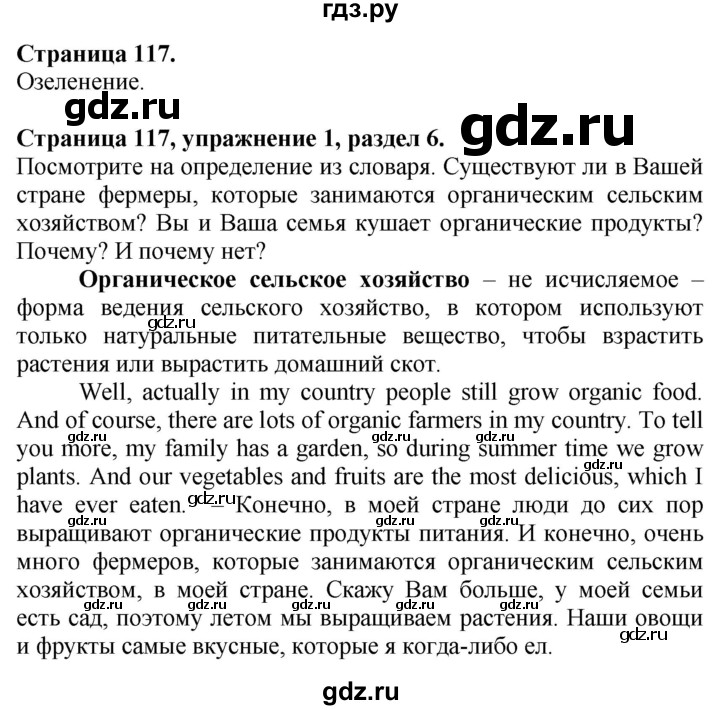
#### 1. Dictionary Entry & Questions
* **Are there organic farmers in your country?**
Yes, there are organic farmers in Russia. They grow vegetables, fruit, grains, and produce organic dairy and meat without chemical additives.
* **Do you / your family eat organic food? Why / Why not?**
Yes, my family tries to buy organic food whenever possible. We believe it is healthier, contains more vitamins, and doesn't contain dangerous pesticides or chemical residues. *(Или альтернативный вариант: No, we don't often buy it because it is usually much more expensive and harder to find in regular supermarkets.)*
---
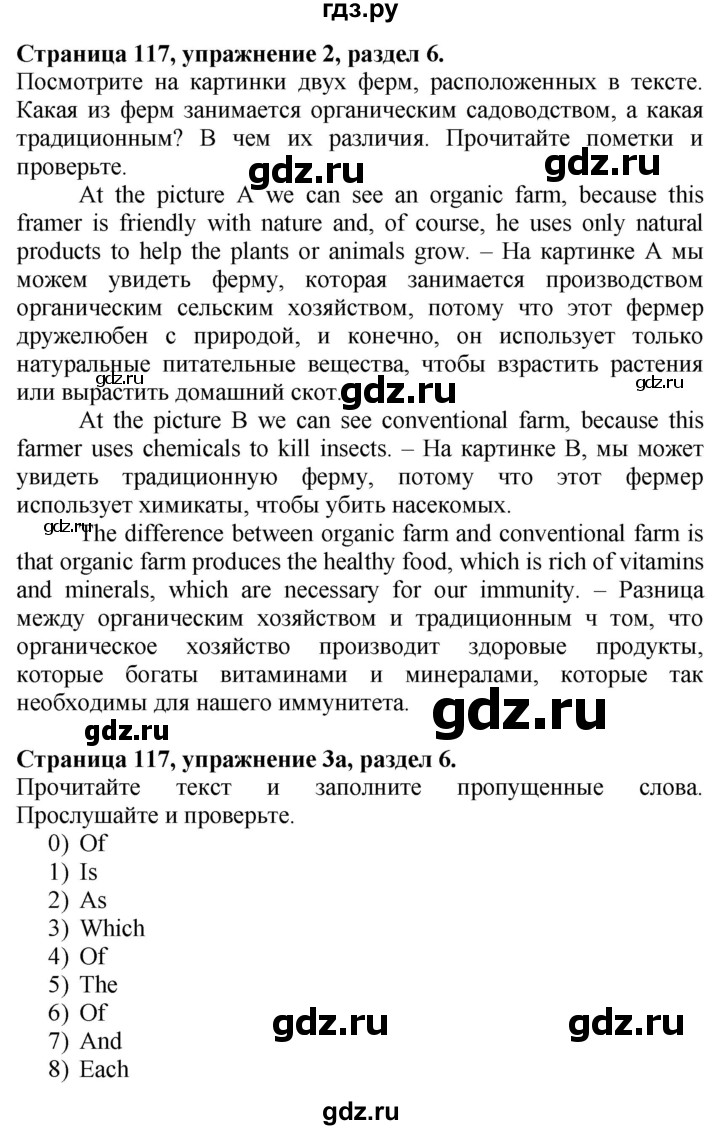
#### 2. Comparing the Farms
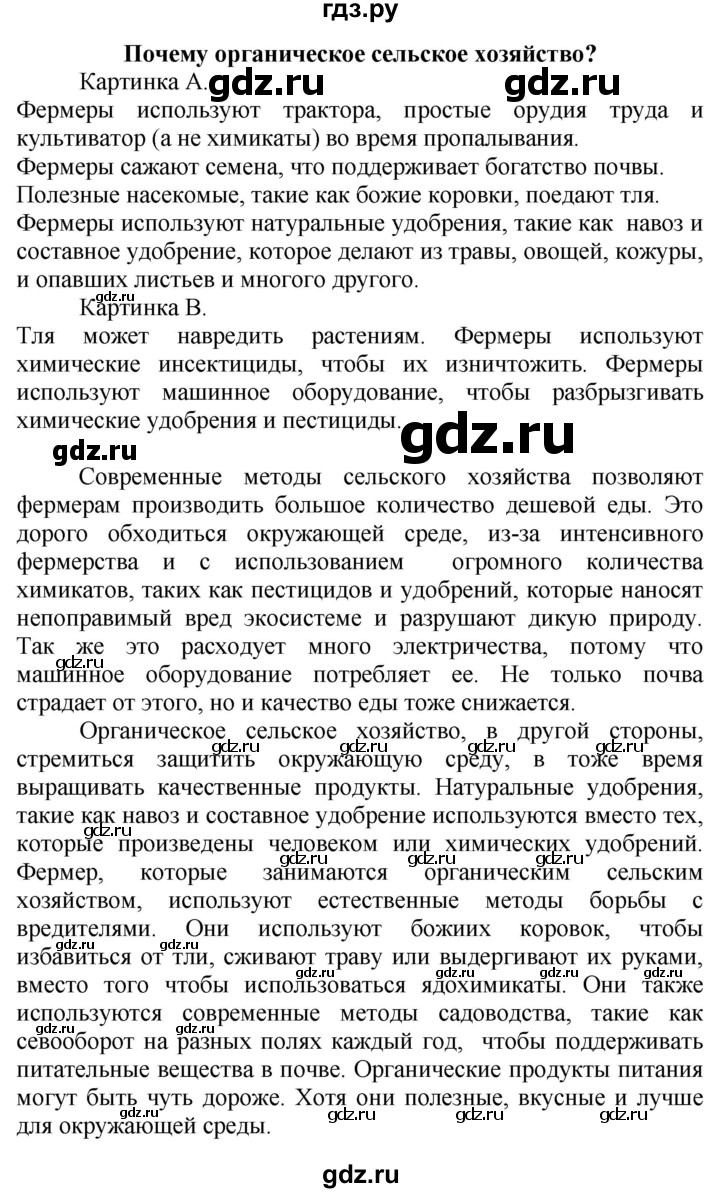
* **Farm 1 (Conventional farm):** Uses intensive methods, chemical pesticides, artificial fertilizers, and heavy machinery to produce large quantities of food.
* **Farm 2 (Organic farm):** Uses natural methods, such as organic compost and manure, natural pest control (e.g., ladybirds), crop rotation, and less machinery to protect the environment.
---
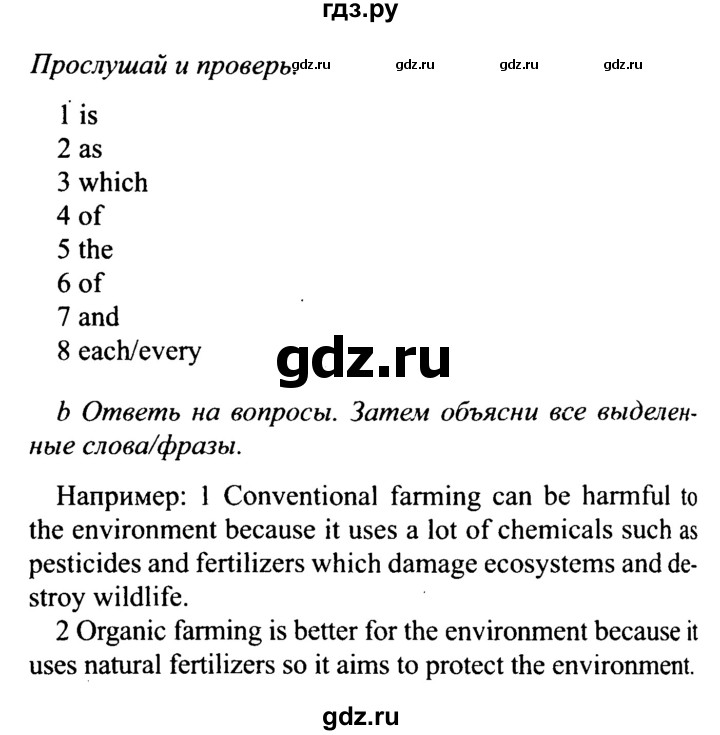
#### 3a. Read and choose the correct word
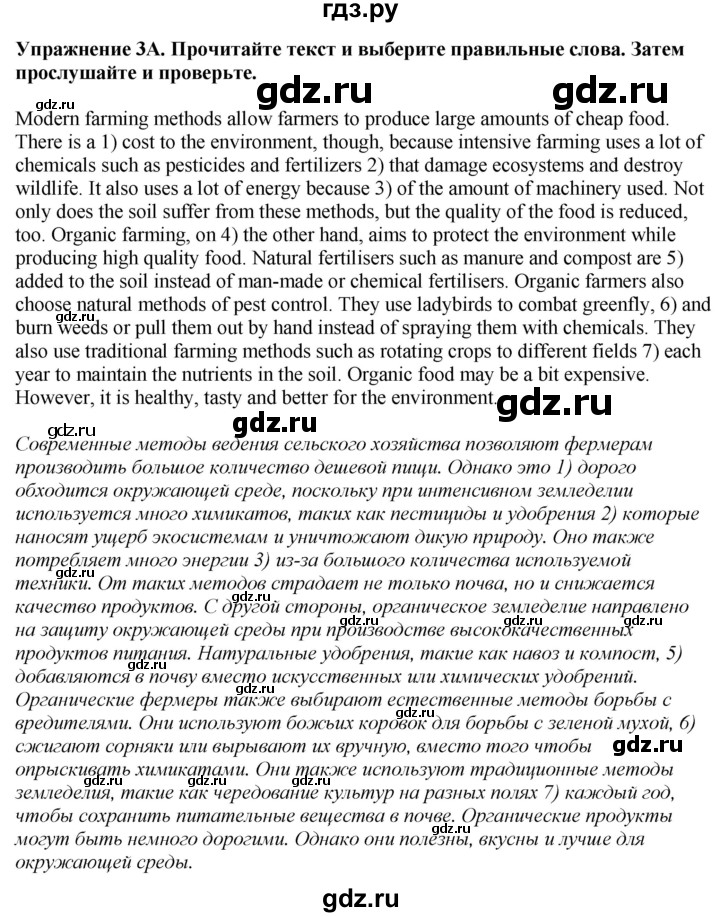
1. **cost** (*There is a cost to the environment...*)
2. **that** (*...pesticides and fertilizers that damage ecosystems...*)
3. **of** (*...because of the amount of machinery used.*)
4. **the** (*Organic farming, on the other hand...*)
5. **added** (*Natural fertilisers... are added to the soil...*)
6. **or** / **and** (*...to combat greenfly, or burn weeds...*)
7. **each** (*...rotating crops to different fields each year...*)
---
#### 3b. Comprehension Questions & Vocabulary Explanations
##### Questions:
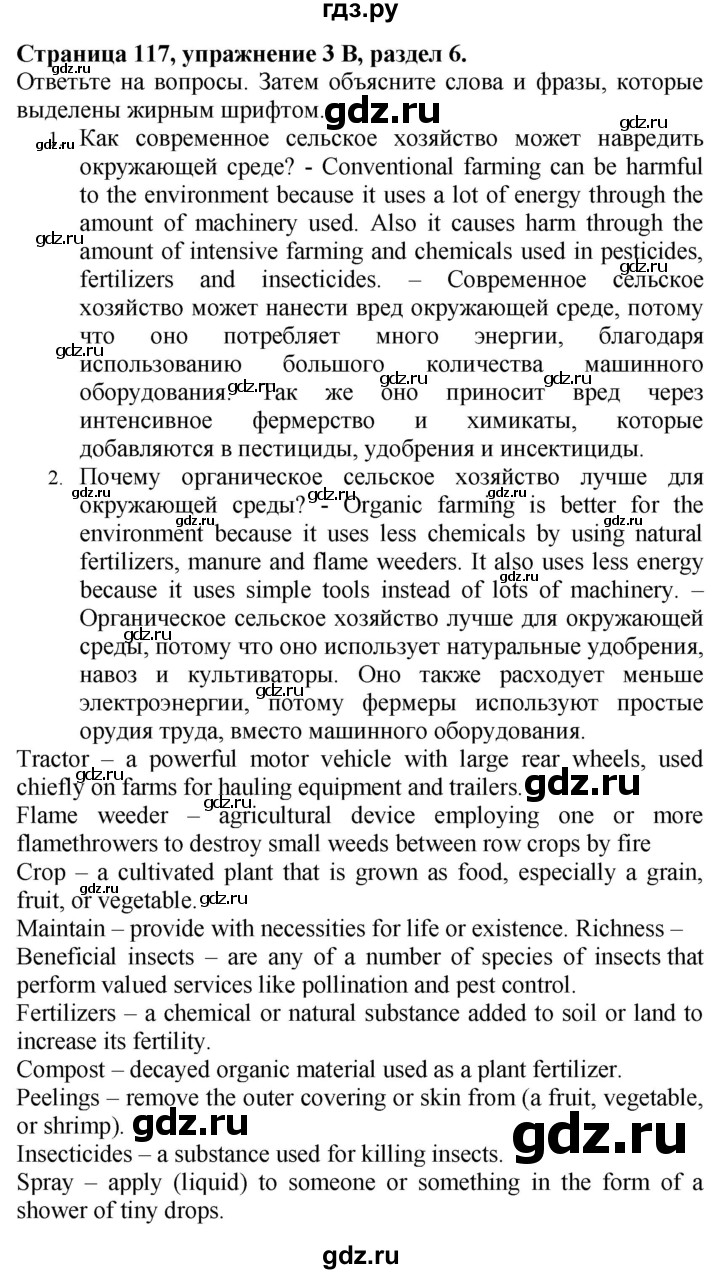
1. **How can conventional farming be harmful to the environment?**
Conventional farming uses synthetic chemicals (pesticides and fertilizers) that damage ecosystems, pollute water sources, and harm wildlife. It also consumes a large amount of energy due to heavy machinery and degrades the natural quality of the soil.
2. **Why is organic farming better for the environment?**
Organic farming avoids harmful chemicals, using natural fertilizers (manure and compost) and natural pest control. It uses methods like crop rotation to maintain soil nutrients naturally and preserve biodiversity.
##### Vocabulary Explanation (Key words & phrases):
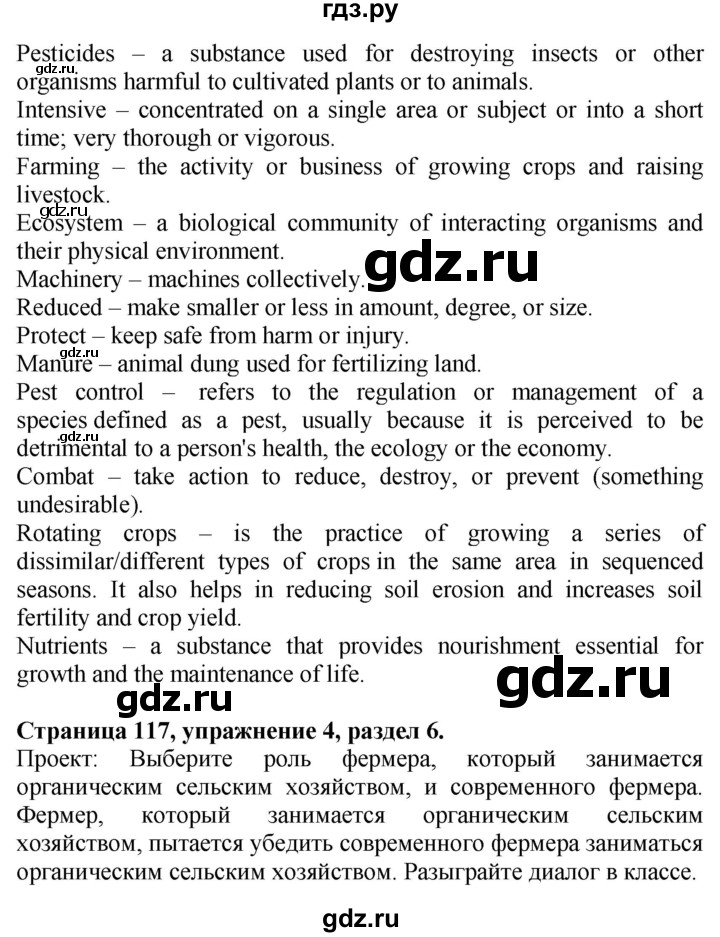
* **cost (to sth)** — негативные последствия, ущерб, наносимый чему-либо.
* **intensive farming** — интенсивное сельское хозяйство (с максимальным использованием химикатов и техники для получения большого урожая).
* **pesticides** — пестициды (химикаты для уничтожения вредителей).
* **fertilizers** — удобрения (вещества для ускорения роста растений).
* **ecosystems** — экосистемы (сообщества живых организмов и их среда обитания).
* **on the other hand** — с другой стороны (вводное выражение для противопоставления).
* **manure** — навоз (органическое удобрение животного происхождения).
* **compost** — компост (органическое удобрение из перегнивших растений).
* **pest control** — борьба с сельскохозяйственными вредителями.
* **rotating crops (crop rotation)** — севооборот (чередование посадки различных культур на полях для сохранения плодородия почвы).
---
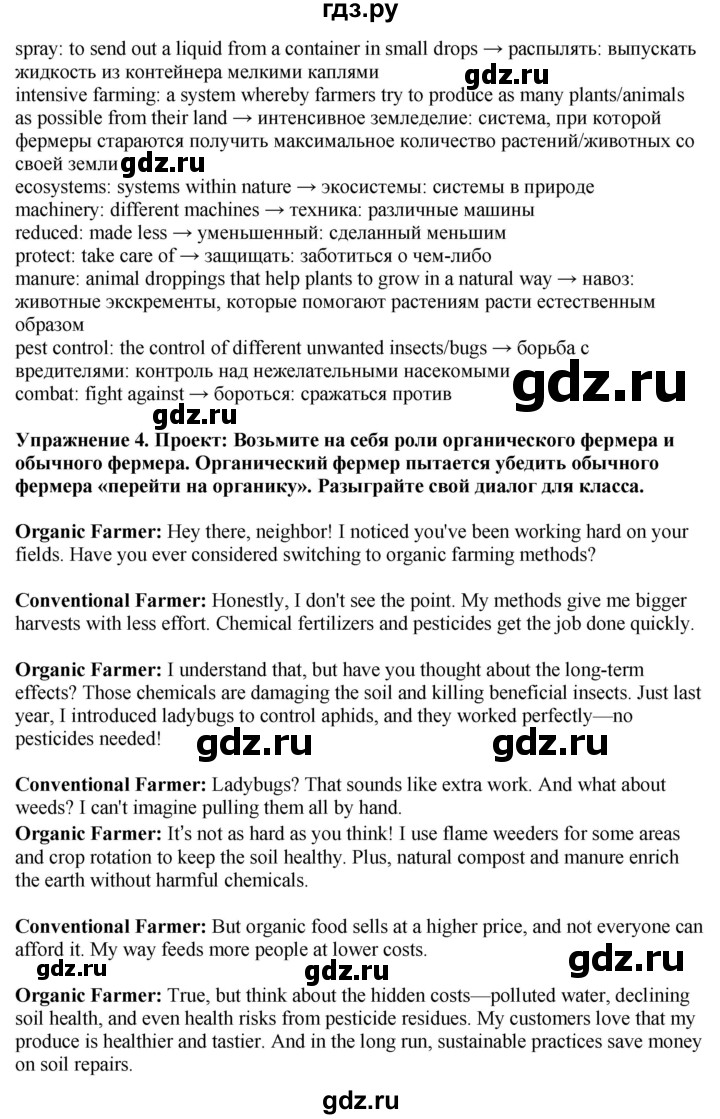
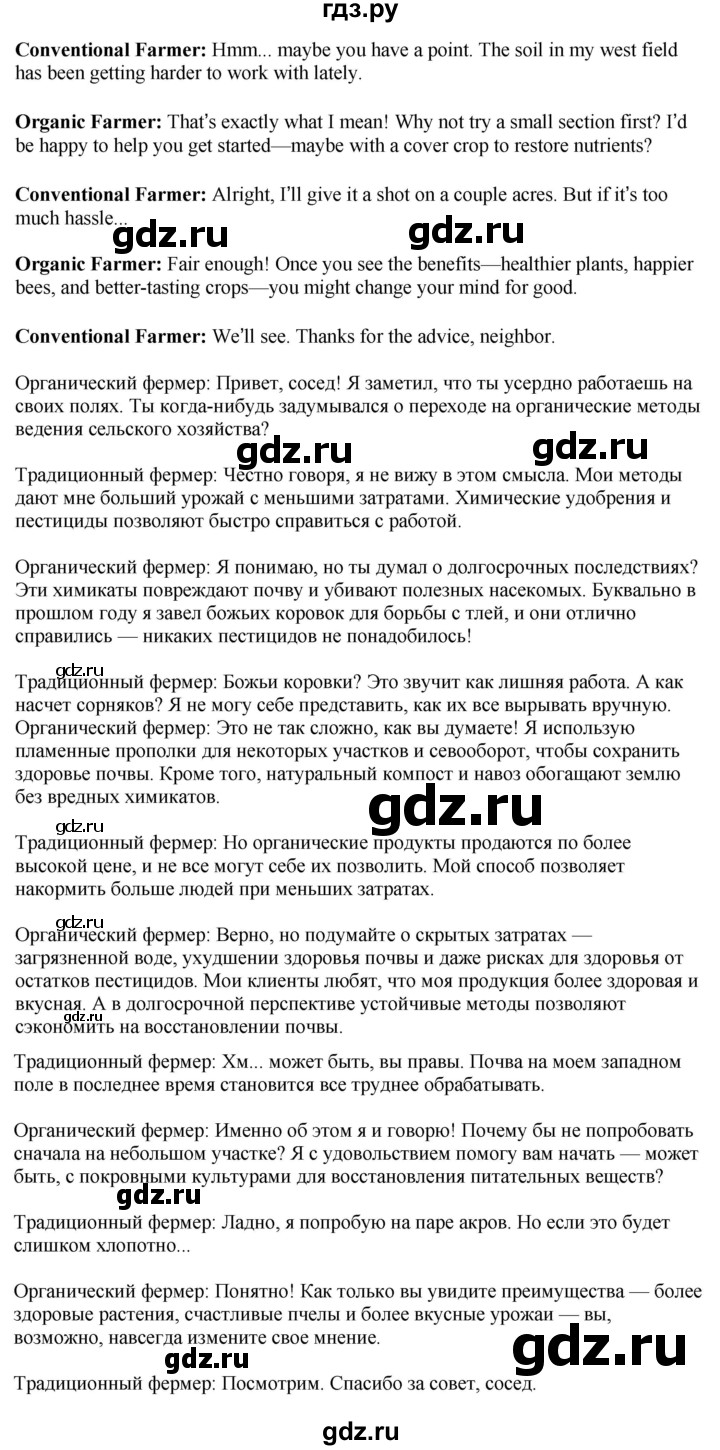
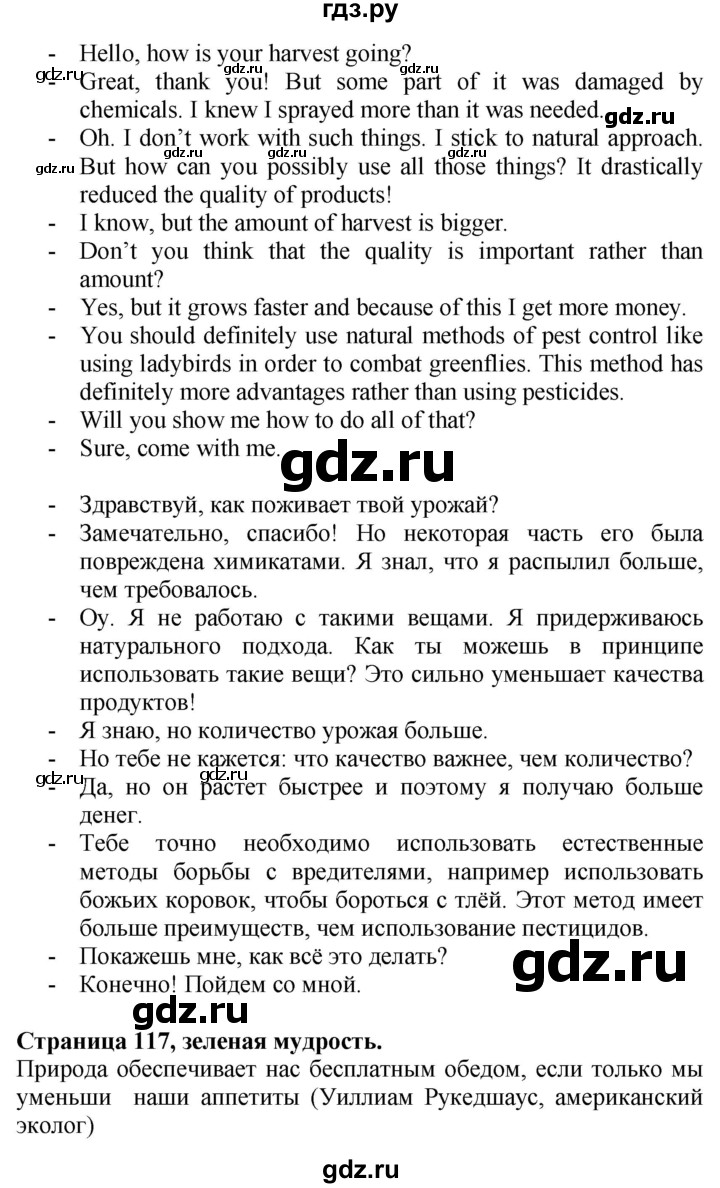
#### 4. Project: Role-Play Dialogue
**Organic Farmer (OF):** Hello! Have you ever thought about converting your farm to organic farming?
**Conventional Farmer (CF):** Hi! Not really. Conventional methods give me high yields and keep production costs low. Why should I change?
**OF:** Well, chemical pesticides and synthetic fertilizers damage the soil and kill beneficial insects. In the long run, the soil loses its natural nutrients.
**CF:** That might be true, but how would I control pests and weeds without chemicals?
**OF:** You can use natural pest control, like ladybirds against greenfly, and practice crop rotation. It enriches the soil naturally.
**CF:** But organic farming requires more manual labor, and the food is more expensive to produce.
**OF:** Yes, but consumers today are willing to pay more for healthy, chemical-free food. Plus, you’ll be saving the environment for future generations!
**CF:** That sounds convincing. Maybe I could start by trying organic methods on just one field.
**OF:** That's a great idea! I'd be happy to help you get started.
---
#### GREEN Wisdom
> *"Nature provides a free lunch, but only if we control our appetites."* — **William Ruckelshaus**
> **Перевод:** «Природа предоставляет нам бесплатный обед, но только если мы контролируем свой аппетит».
> **Смысл:** Природа способна обеспечивать человека всем необходимым, но если мы будем бездумно и чрезмерно истощать её ресурсы, последствия окажутся разрушительными.
---
### Разбор и пояснения к заданиям
1. **Задание 3a (Грамматика и лексика):**
* **cost:** устойчивое сочетание *a cost to the environment* («цена/урон для окружающей среды»).
* **that:** относительное местоимение, связывающее существительные (*chemicals*) с придаточным определительным предложением.
* **of:** предлог входит в состав устойчивого предложного оборота причины *because of* (перед существительным).
* **the:** фиксированная идиома *on the other hand* («с другой стороны»).
* **added:** пассивный залог (*are added* — «добавляются в почву»).
* **each:** определитель со значением «каждый по отдельности» (*each year* — «каждый год»).
2. **Задание 4 (Диалог):**
* Для успешного разыгрывания диалога важно показать конфликт интересов: традиционный фермер делает акцент на **быстрой выгоде, объемах и удобстве**, а органический — на **экологии, здоровье человека и долгосрочной пользе для почвы**.
Оцени решение:
Спасибо за оценку!