


ГДЗ по английскому языку 10 класс Афанасьева Spotlight Базовый уровень страница - 115

Авторы: О. В. Афанасьева, Д. Дули, И. В. Михеева, Б. Оби, В. Эванс
Серия: Spotlight
Тип книги: Учебник
Год: 2015-2024


 Премиум

### Итоговый ответ
#### 1 a
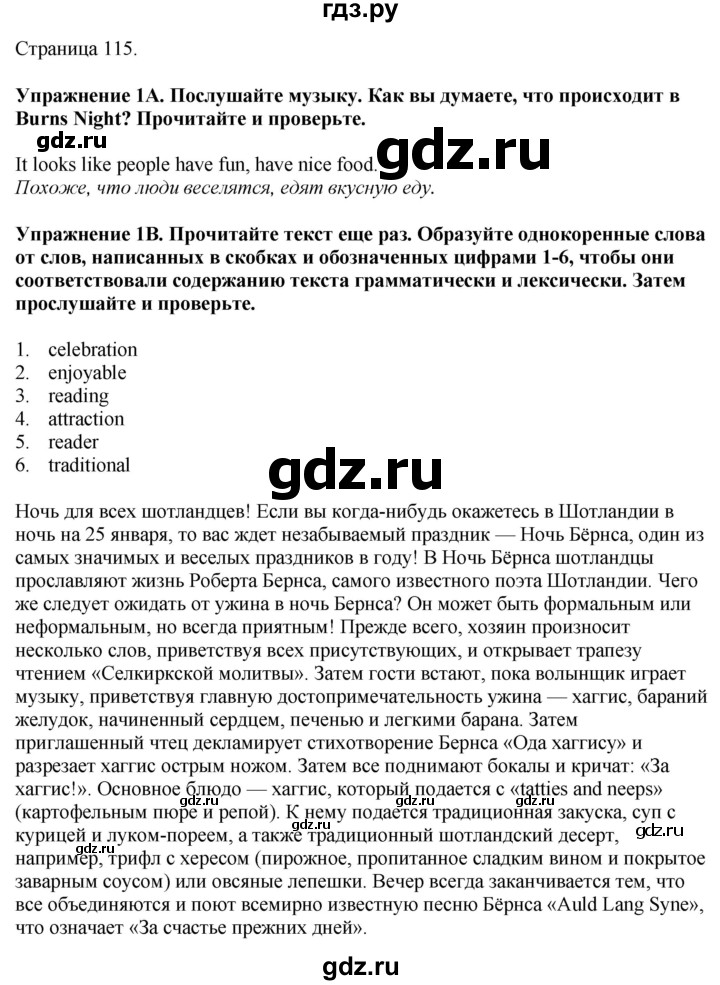
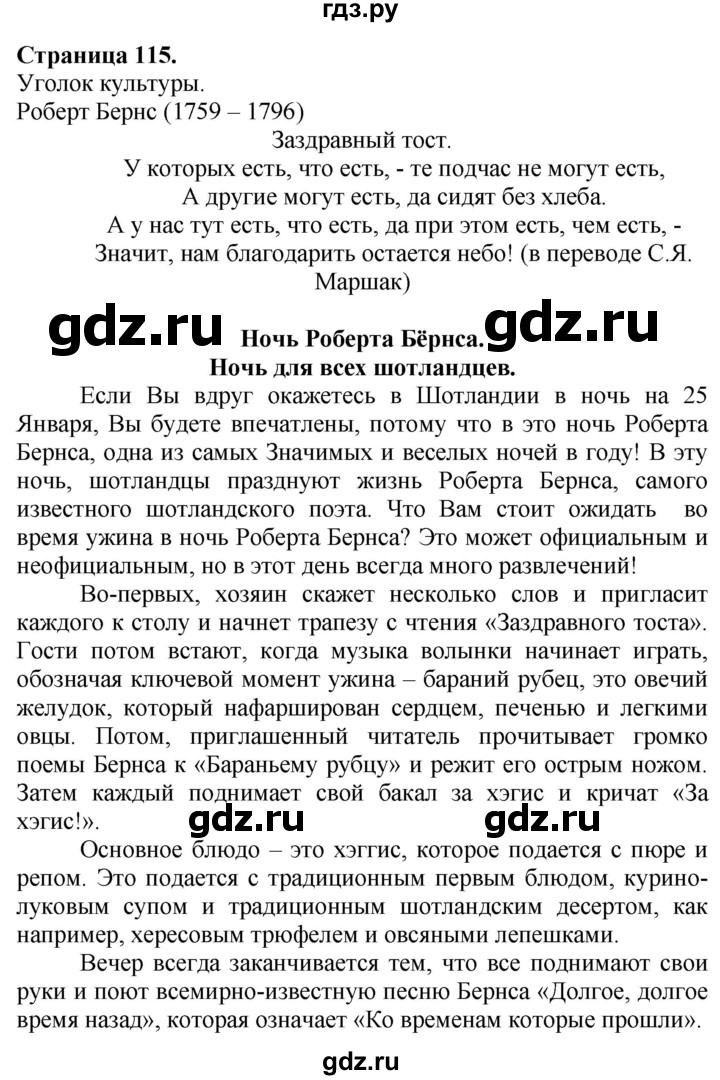
**Answer:** On Burns Night, people celebrate the life and poetry of Robert Burns, the national poet of Scotland. They gather for a special dinner (*Burns Supper*), listen to traditional bagpipe music, recite Burns' poems, eat haggis with potatoes and turnips (*neeps and tatties*), make funny speeches, and sing traditional songs like *Auld Lang Syne*.
---
#### 1 b
1. **celebrations**
2. **enjoyable**
3. **reading**
4. **attraction**
5. **reader**
6. **traditional**
---
#### 2 a
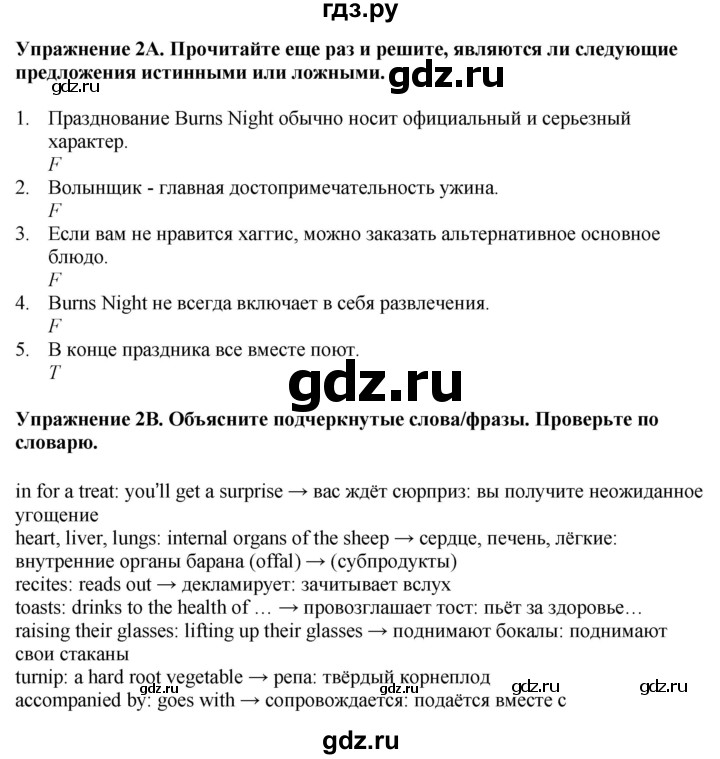
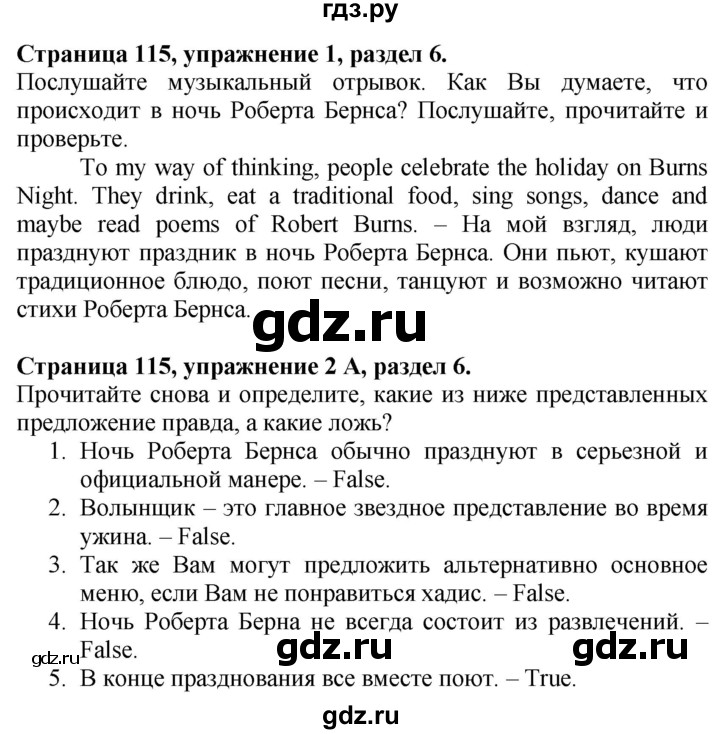
1. **False** (*Burns Night is a lively, fun, and warm celebration, not a stiff or overly formal event.*)
2. **False** (*The haggis itself is the star attraction of the supper, though it is accompanied by a bagpiper.*)
3. **False** (*The text does not mention alternative main courses; traditional haggis is the central dish.*)
4. **False** (*Entertainment—poetry, music, toasts, and dancing—is always a core part of the celebration.*)
5. **True** (*At the end of the evening, all guests join hands and sing "Auld Lang Syne" together.*)
---
#### 2 b
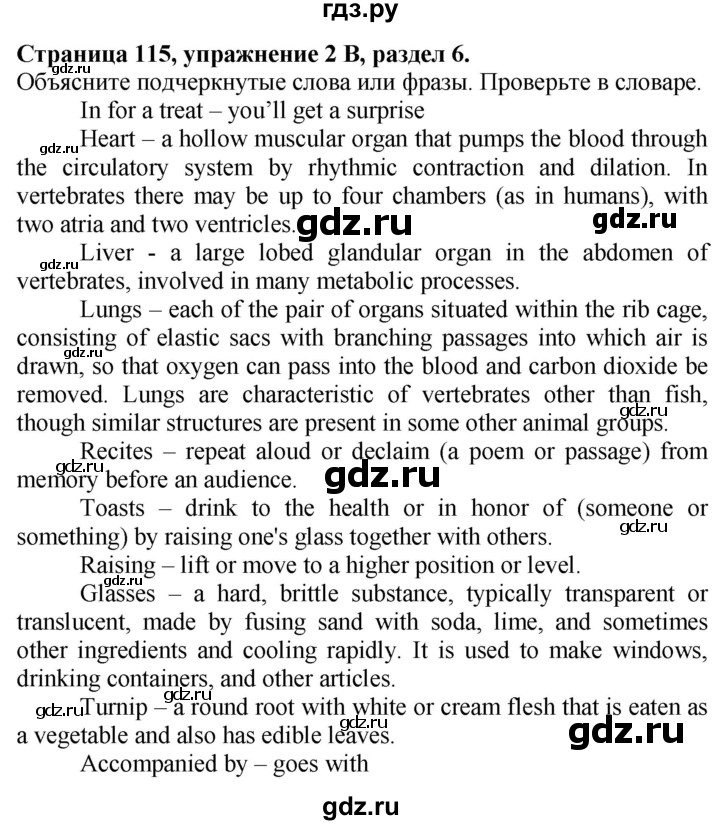
* **in for a treat** — going to experience something very pleasant, enjoyable, or special.
* **piped in** — welcomed or escorted into the room to the sound of bagpipes.
* **star attraction** — the main focus of attention or the highlight of an event.
* **addresses** — speaks directly to, recites a poem/speech to.
* **rounds off** — finishes or completes something in a satisfying, fitting way.
---
#### 3 (Speaking notes & Monologue)
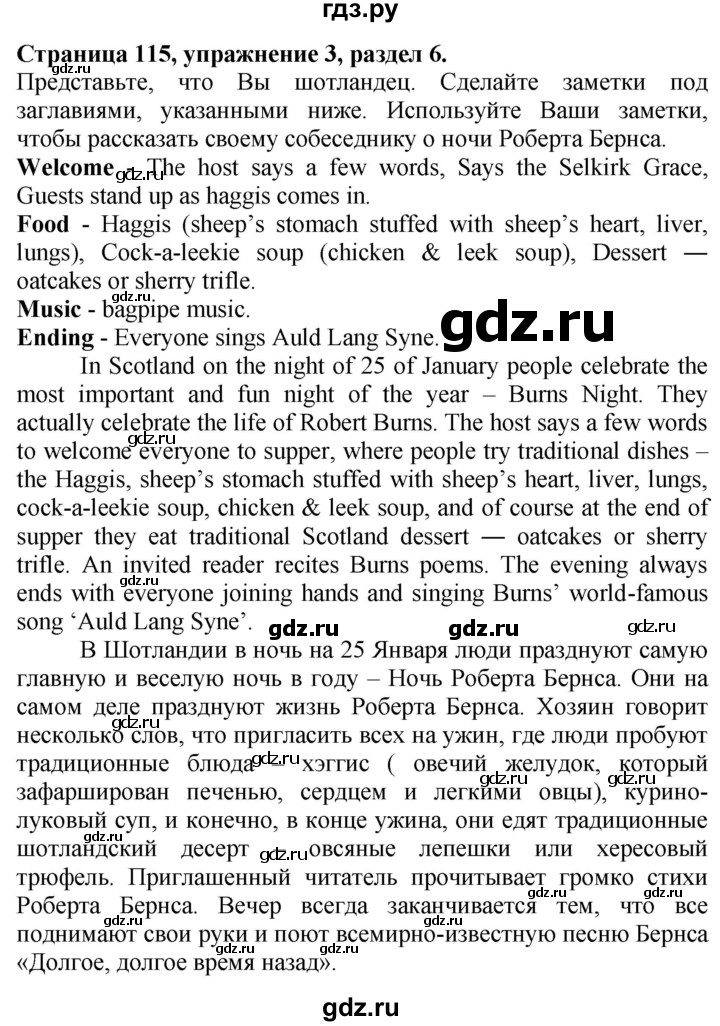
**Notes:**
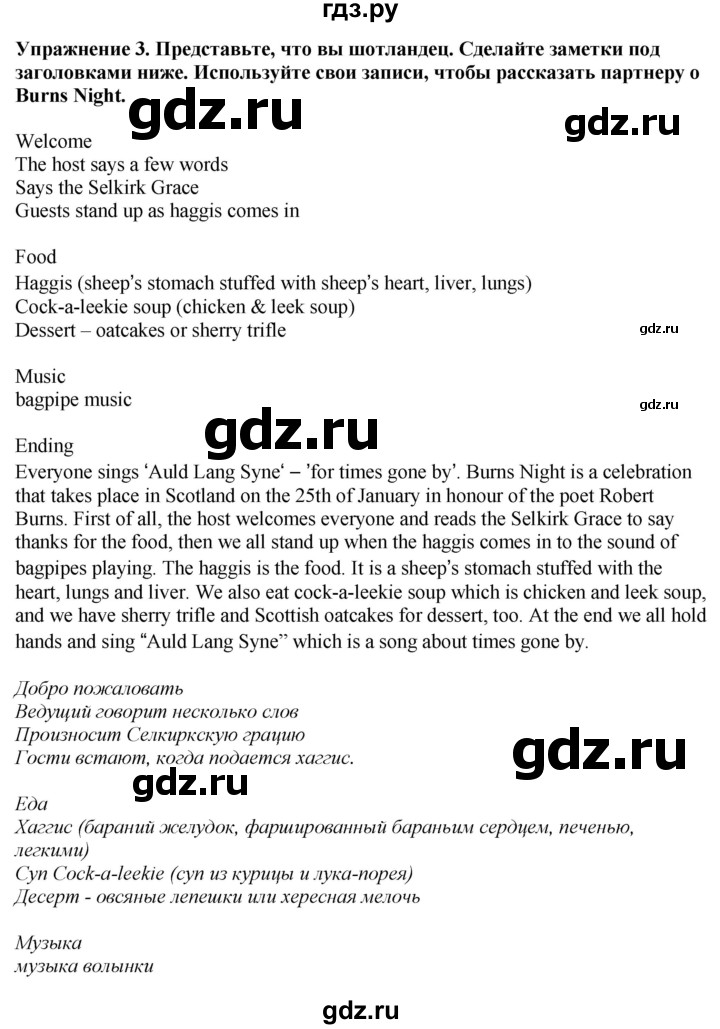
* **Welcome:** host welcomes guests, recitation of the Selkirk Grace (a short thanksgiving prayer).
* **Food:** traditional Scottish soup (starter), haggis served with *neeps and tatties* (mashed turnips and potatoes), dessert (like cranachan or tipsy laird).
* **Music:** bagpipe playing (to welcome the haggis), traditional Scottish folk music and fiddle tunes.
* **Ending:** speeches, toasts to the lasses and lads, joining hands to sing *Auld Lang Syne*.
**Sample Speech:**
> "Hello! As a Scotsman, let me tell you about Burns Night, which we celebrate on the 25th of January in honor of our great poet, Robert Burns. The evening starts with a warm **welcome** from the host and the reading of the Selkirk Grace. The **food** is the highlight of the night: after a hearty soup, the haggis is brought in to the sound of bagpipes and served with *neeps and tatties*. Throughout the evening, there is fantastic Scottish **music**, poetry readings, and humorous toasts. Finally, the **ending** is very touching: we all stand up, join hands in a big circle, and sing *Auld Lang Syne* together."
---
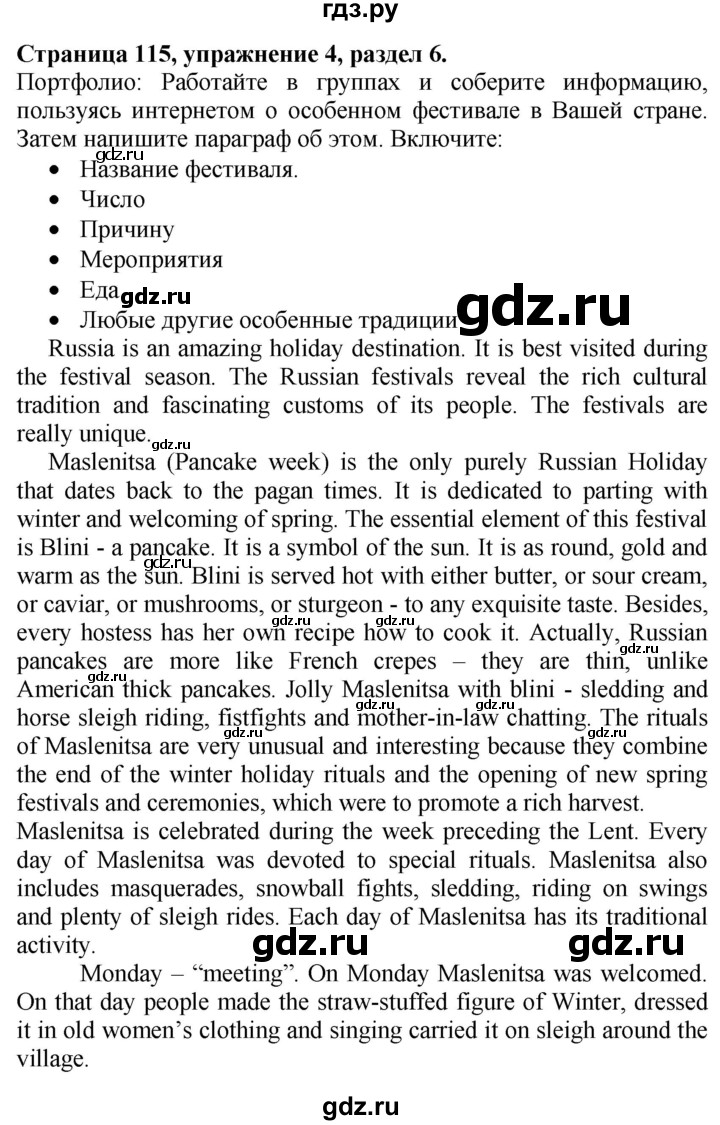
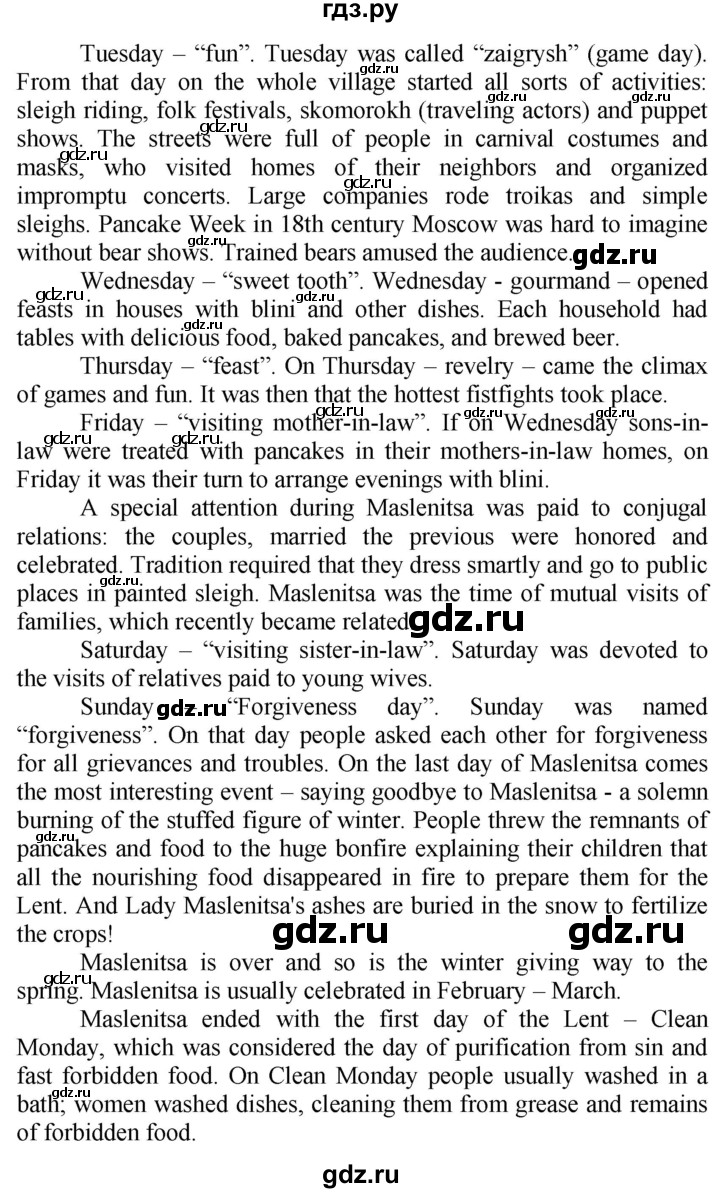
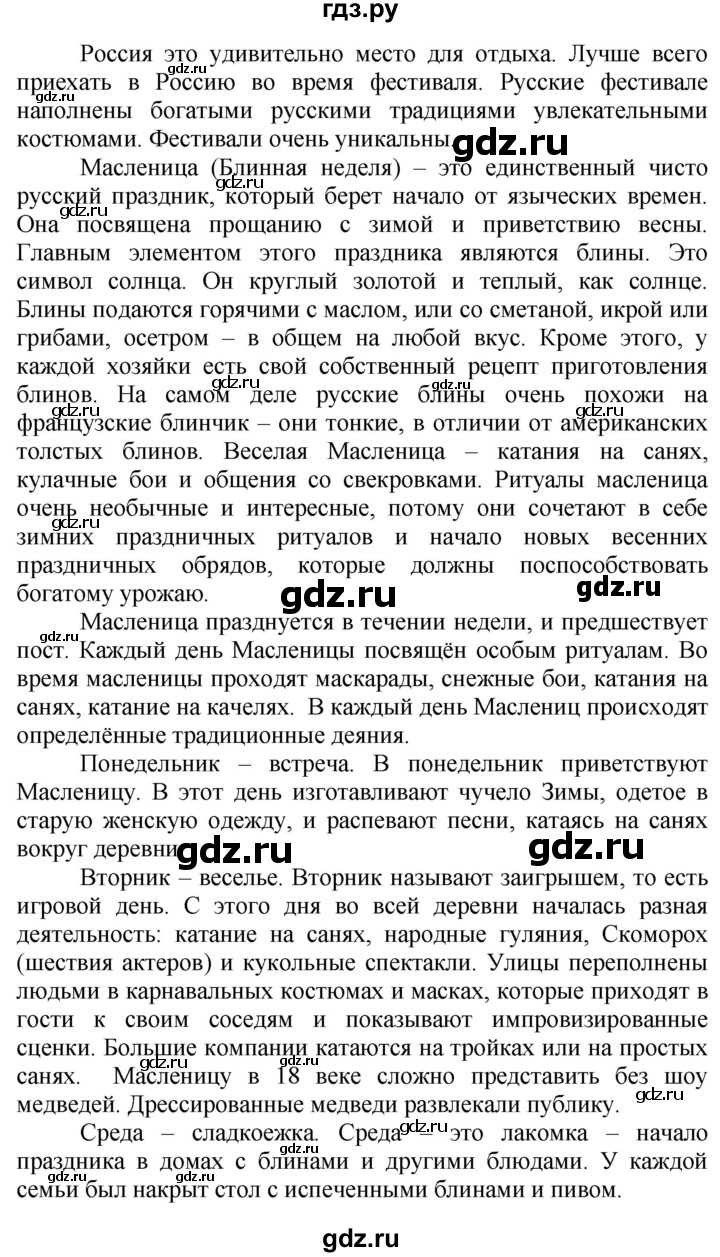
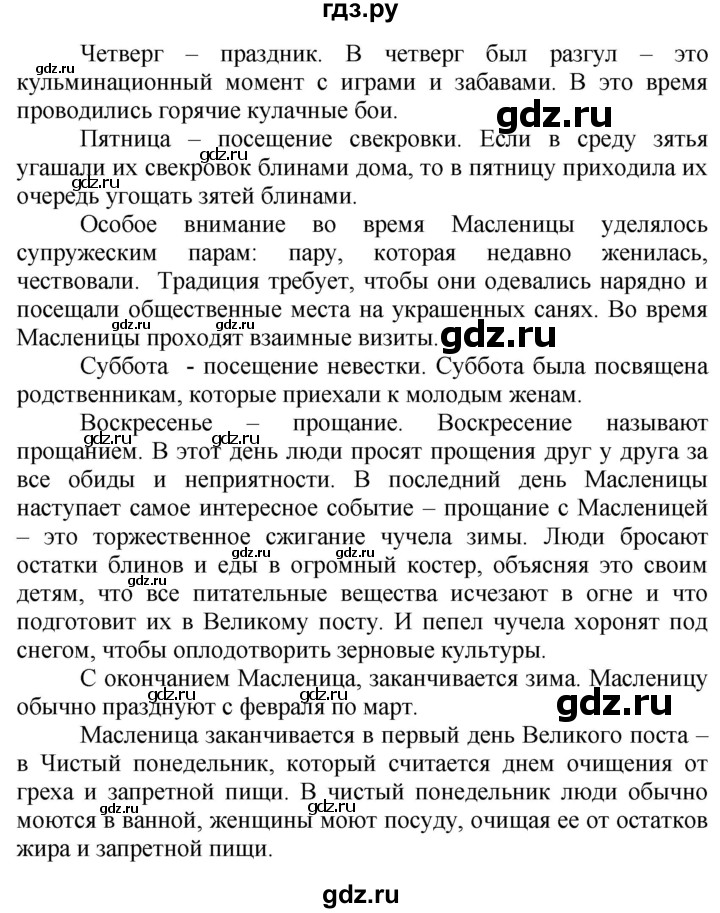
#### 4 (ICT Portfolio)
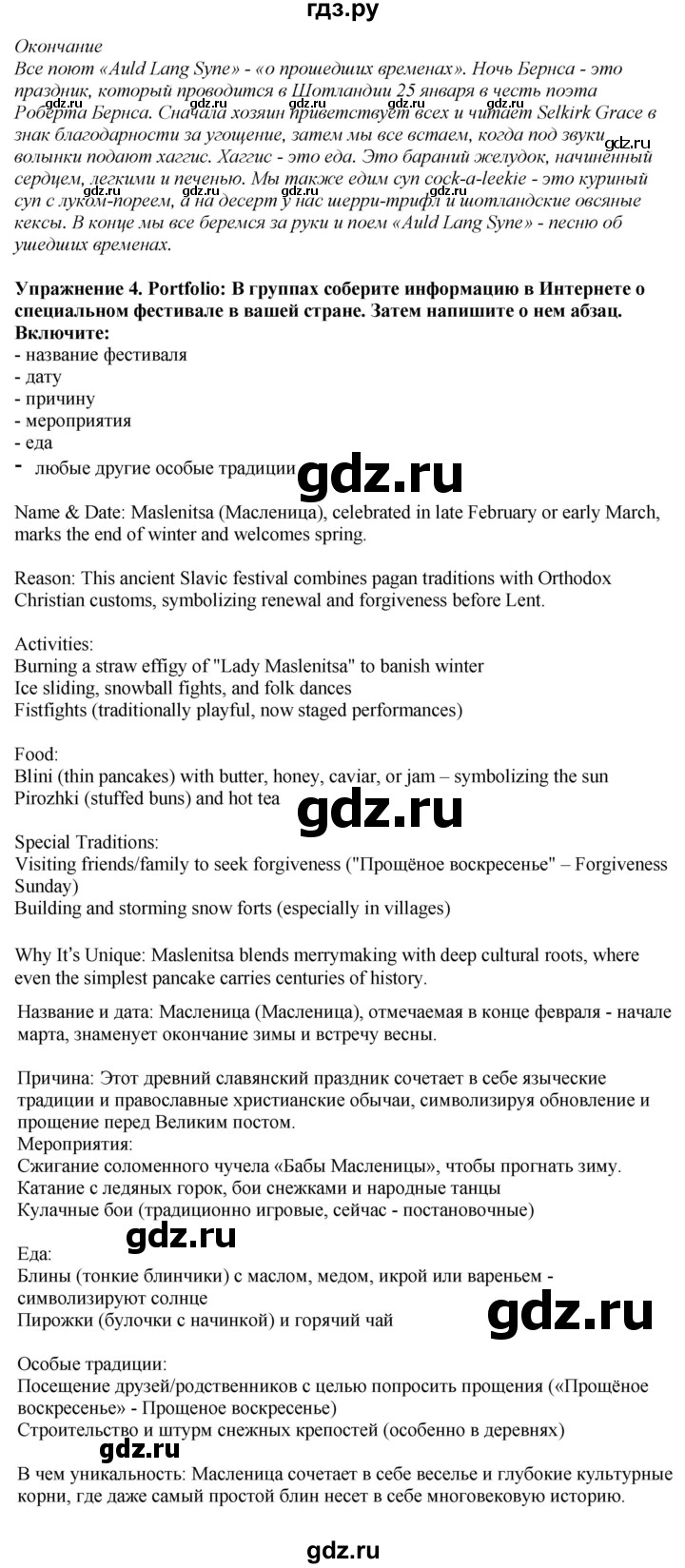
**Festival:** Maslenitsa (Butter Week / Pancake Week)
> **Maslenitsa: Welcoming Spring in Russia**
> One of the most beloved traditional festivals in Russia is **Maslenitsa**, also known as Pancake Week. It is celebrated in late February or early March, exactly one week before the beginning of Great Lent. The purpose of the festival is to say goodbye to the harsh winter and welcome the warmth of spring. During the week, towns and villages host open-air carnivals, street games, folk dances, sleigh rides, and fist fights. The signature **food** of Maslenitsa is *blini* (thin Russian pancakes), which symbolize the warm golden sun; they are eaten hot with butter, jam, honey, sour cream, or caviar. Another famous **tradition** takes place on the last day, Forgiveness Sunday, when people ask each other for forgiveness and burn a straw effigy of Lady Maslenitsa to mark the final farewell to winter.
---
### Подробное объяснение и грамматический разбор
* **К заданию 1 b (Словообразование):**
1. *celebrate* $\rightarrow$ **celebrations**: после прилагательных *important and fun* требуется существительное во множественном числе (*one of the most... celebrations*).
2. *enjoy* $\rightarrow$ **enjoyable**: требуется прилагательное для описания существительного *evening*.
3. *read* $\rightarrow$ **reading**: герундий / отглагольное существительное, обозначающее процесс («чтение стихов»).
4. *attract* $\rightarrow$ **attraction**: существительное в устойчивом сочетании *star attraction* («главный номер программы», «гвоздь программы»).
5. *read* $\rightarrow$ **reader**: существительное с суффиксом деятеля *-er*, обозначающее человека, читающего стих («чтец»).
6. *tradition* $\rightarrow$ **traditional**: прилагательное перед существительным *songs* («традиционные песни»).
* **К заданию 2 a (True/False):**
* Текст подчёркивает неформальную, тёплую атмосферу праздника, центральную роль блюда хаггис и традиционное хоровое исполнение *Auld Lang Syne*, что позволяет однозначно определить верность утверждений.
Спасибо за оценку!


Открой больше возможностей
Войди через VK — задавай вопросы ИИ и сохраняй ГДЗ в избранное
